Art of the Month

Common Era history would have you believe that there is no history from the continent of Africa that would require chronicling.

I disagree.

There is rich valuable information that can be determined from this history. It just needs to be presented so that each individual can make up their own minds.

We have established through a biblical context that people of African descent have been viable since history keeping began. After walking the road with Jesus and Simon of Cyrene, we move to another part of the continent and a little later in time.

Between the 2 and 3rd Century AD, the Kingdom of Aksum (which is now present-day Eritrea and northern Ethiopia) traded gold and ivory into Middle East, India, and China. This was a wealthy civilization that thrived for centuries. They also exported frankincense, myrrh, emeralds, salt, and live animals. It established economic strength, noted in the image as the coin, which held the image of its leaders.

Meanwhile a tribe of about 4,000 people in 200 AD grew to about 26,000 by 800 AD in a settlement in Northern Nigeria. They developed a method to grow rice using tools made of iron. This system would become a game changer later in history. It is noted in the image as white mountain. The other mountains represent gold and copper which were also items other nations wanted.

Different tribes throughout the continent of Africa would gather their natural resources and trade them with countries around the world. Although many of the tales will never be told, Africans began globalization by 150 BC as notes from Chinese Courts tell of ambassadors from Ethiopia bringing goods.

By 1000 AD, Madagascar was part of the route to trading with China through the town of Kilwa on Tanzania. Archeological digs in the town reveal Chinese porcelain.

Stereotypes of people from African countries show them as primitive uneducated people who didn’t know how to manage their own lives, less alone build booming economies.  For a very long time they have been the innovators that make the world a better place.

Affirmation

Madam CJ Walker was not born with a lot of opportunities. She was the first child her parents had that was born free of slavery. When both parents died she was young and was raised by her sister. But the woman born Sarah Breedlove was able.

Sarah married young and had a child. She was determined her daughter would have all of the things she never had. She started out doing the things she knew to do, but later learned new things. She was able.

A woman who grew up without parents, without a formal education, and all of the other things we are waiting on became very successful. She was able.

Tell yourself. You are able.

Black History is Business History

I will never forget the first time I heard an instructor tell the class that the first person to successful sale products door to door was some Caucasian man in the 1950s. He obviously had never heard of Sarah Breedlove or Annie Malone, women who became millionaires by selling their products door to door. They started as far back as 1890. Breedlove became Madam CJ Walker who sold haircare and grooming products.

This Is Our History

Madam CJ Walker was born Sarah Breedlove in Delta, Louisiana in 1887. After moving to St Louis in 1888, she worked at a laundry and became a part of the community.  She learned about haircare from her brothers who were barbers. She became an agent for Annie Malone, who owned a company that catered to African American hair care.  Walker would later become Malone’s biggest rival.

Walker moved to Denver in 1905 to sell Malone’s products and start to create her own.  She met and married Charles Walker. She began selling her products door to door, and her market grew to the point where she could hire other people to sell them for her.  She opened a college where she taught other women how to take care of their hair. She also opened a manufacturing plant to make her products.  She created a method of grooming that helped promote healthy hair and scalps. Her goal was to teach women how to live better.

She became a millionaire and her products were sold all across the US and the Caribbean. She supported organizations like the YMCA and scholarships for education of African Americans. She tried to fulfill a need in the community.

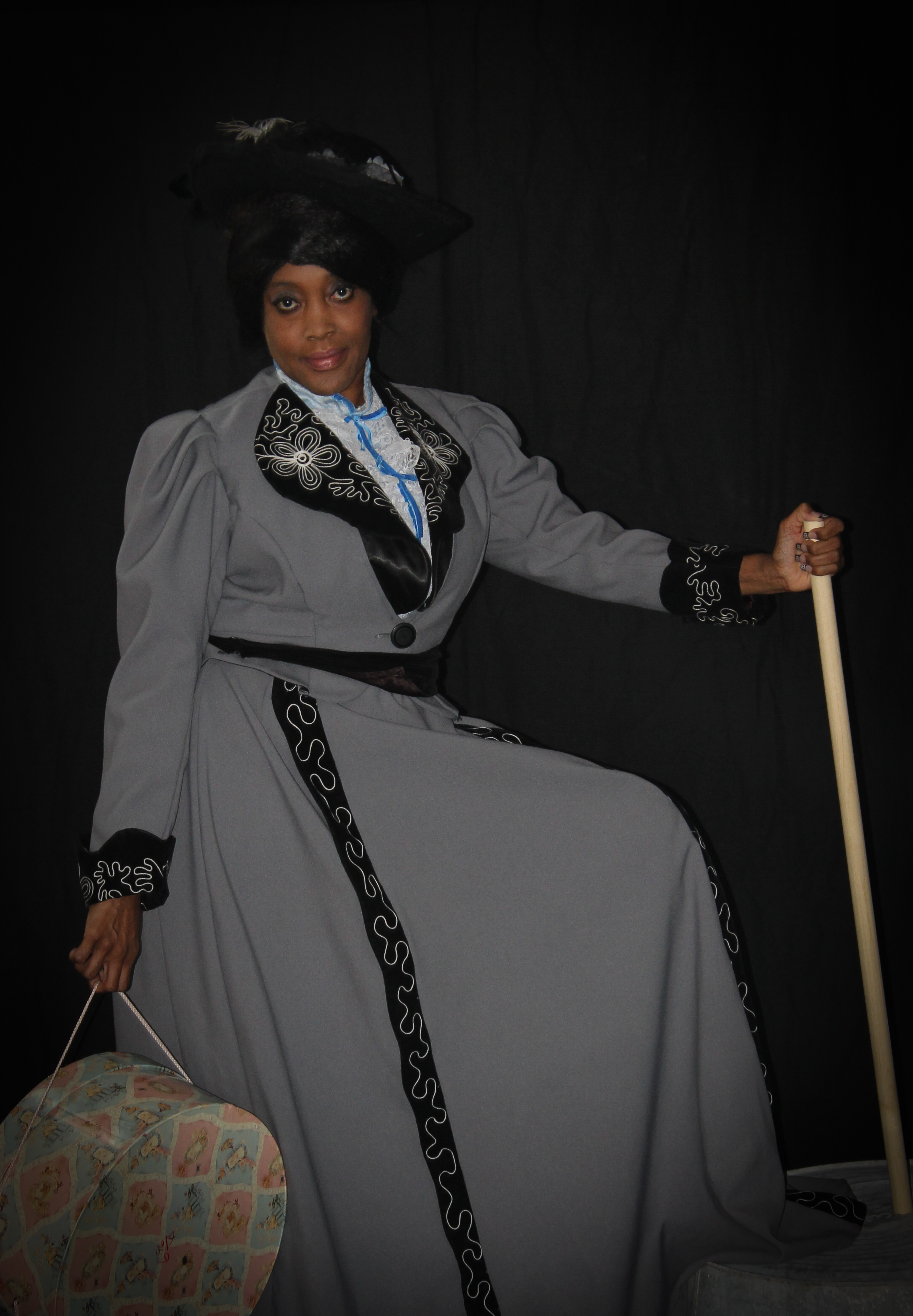
In this image it spoke to a woman who was able to be where she was. It did not limit her.

Book of the Quarter

This week we focus on business. In this section of the book we take a moment from when Zo is having a chat with her new friend Andrew. She is running her plans by him. Remember this is 1912.

“I gonna run by Mr. Sweet tomorrow an see if he will let me write for his paper.”

“His newspaper?”

“Yes, sir.”

“Girl, he won’t let no woman do that kind of work.”

“I have experience. I even have some bylines.”

Andrew sighed.

“You will be better going to clean someone’s house. I know this little family that can use someone.”

She looked at him like he had insulted her.  He needed to know she as not some ordinary heifer. She was capable of much more.

“I don’t clean other people’s houses. I am an educated woman.”

Destiny’s Dilemma

An African American woman moved home to take care of her dying mother giving up the opportunity to experience a world beyond segregation. Zoraida Hughes Williams finds that some things have changed about her hometown of Fort Worth, Texas while some have stayed the same, like Hell’s Half Acre, an area where saloons, prostitution and gambling runs wild. Like most of the residents, she wants to keep her head down and stay away from trouble, but it comes in the unlikely form of an Anglo Baptist preacher. He messes up everything and almost gets them killed.

Available on Amazon.com

or Books2read.com which include Barnes & Noble, Apple, Indigo and more.