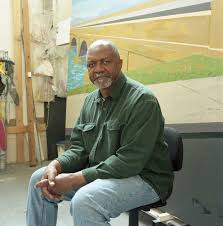
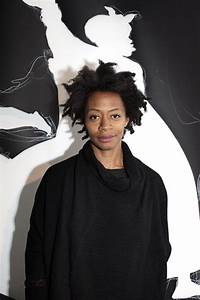
Kerry James Marshall is an American artist and professor, known for his paintings of Black figures. He previously taught painting at the School of Art and Design at the University of Illinois at Chicago. In 2017, Marshall was included on the annual Time 100 list of the most influential people in the world. (Wikipedia)
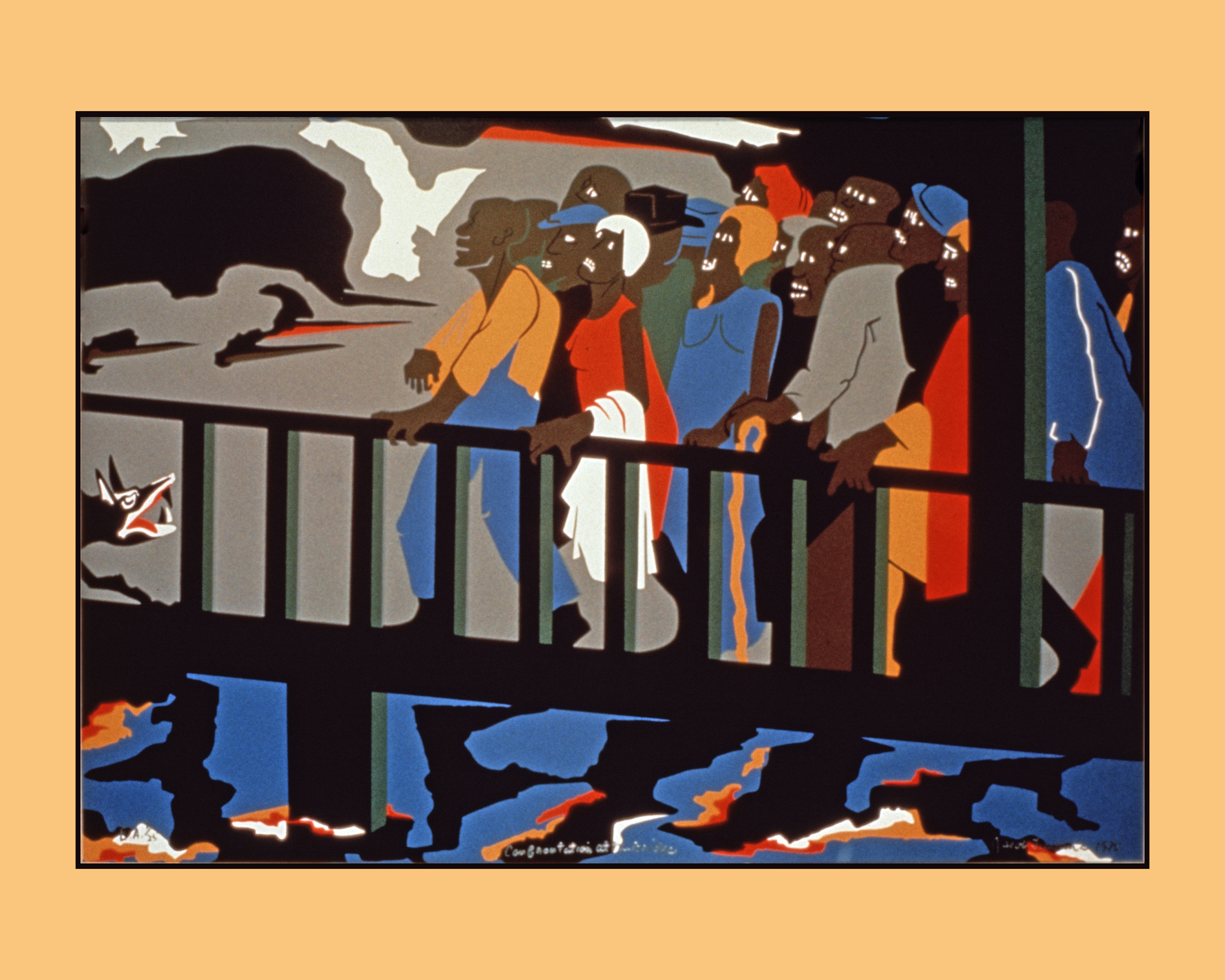
Artist Jacob Lawrence’s powerful Confrontation at the Bridgedepicts the 1965 Selma to Montgomery marches for voting rights that would enable African Americans to register and vote without harassment.
Lawrence uses strong colors and expressive composition to highlight the strength and courage of the peaceful African-American marchers. They dominate the image with their forward movement. The unarmed marchers were confronted on the Edmund Pettus Bridge by state troopers who violently attacked and beat them. Lawrence clearly shows a mood of violence by the snarling dog, the dark sky, and the marchers’ worried faces. His choice to not show any state troopers is important and we know they are right there, just outside of the image. He focuses the artwork on the brave act of the African-American marchers who are taking (dangerous) action for their future.
The Selma to Montgomery marches were three protest marches in 1965 for voting rights and racial justice. The first march took place on March 7. State troopers and locals attacked the unarmed marchers with billy clubs and tear gas after they passed over the Edmund Pettus Bridge. Photos of the beaten and bloodied African-American marchers were seen around the world. The event became known as “Bloody Sunday”. The second march took place March 9. Troopers and marchers confronted each other at the bridge, but Martin Luther King Jr. led the marchers back to Selma. The third march started on March 21 after President Johnson committed to protecting the marchers with 1,900 members of the National Guard and FBI agents. Alabama Governor Wallace refused to do this. Over 25,000 people joined the marchers to the Alabama State Capitol in Montgomery, arriving on March 25. The Voting Rights Act became law on August 6, 1965.
This print was created by Jacob Lawrence when he was commissioned to produce a print to celebrate the United States’ bicentennial in 1976.
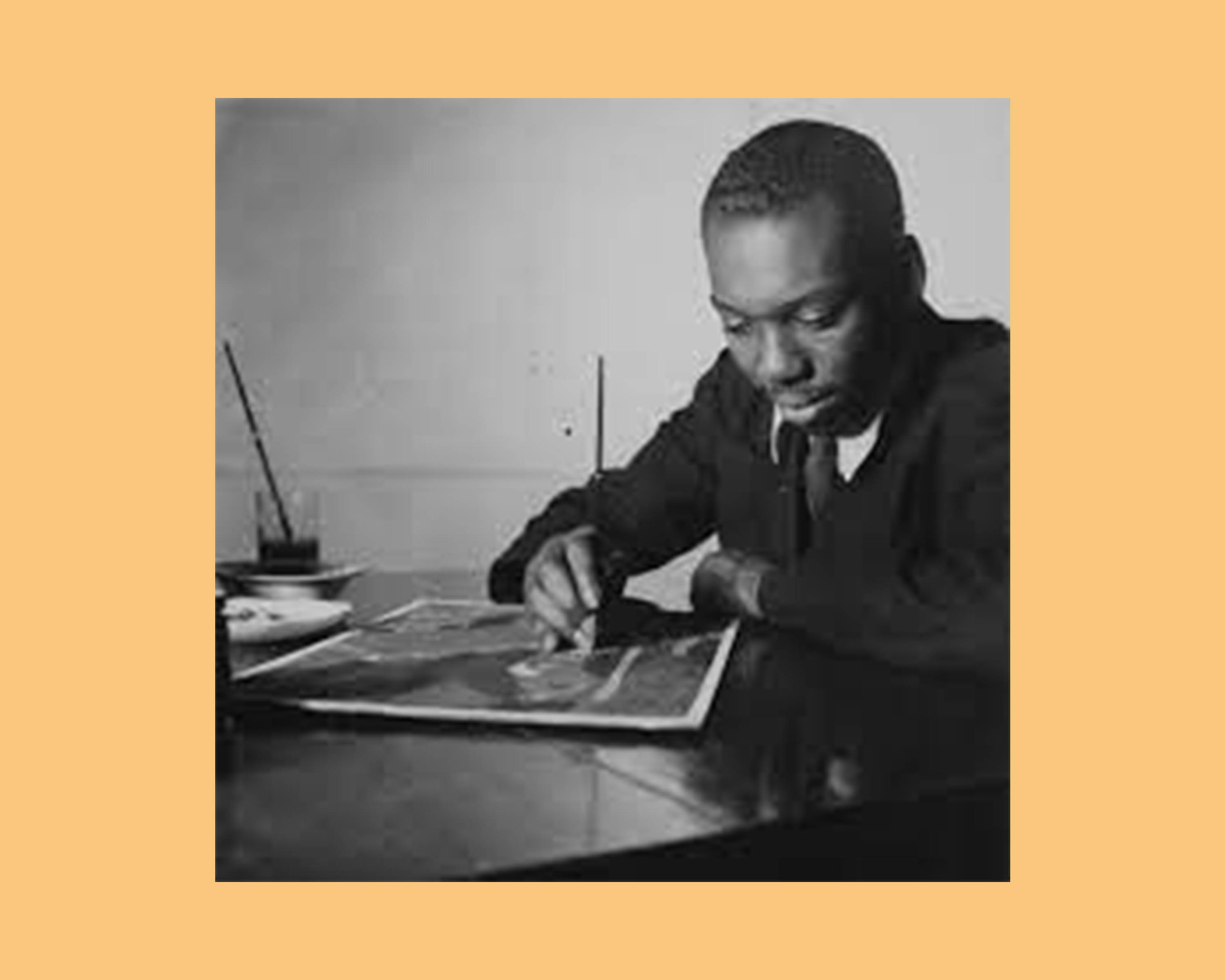
Born in Atlantic City, New Jersey, Lawrence grew up in Harlem during the Depression. Harlem was an active cultural center then, and Lawrence became interested in the arts while still a teenager. He received early training at art workshops sponsored by the federal government’s Works Progress Administration (WPA) in Harlem and then studied at the American Artists School in New York. From 1938 to 1939, Lawrence worked in the Federal Arts Project and produced some of his earliest major works. His first important solo exhibition in 1944, at New York’s Museum of Modern Art, secured his place as an important commentator on the American scene, particularly African American experiences. Lawrence died on 9 June 2000.
Jacob Lawrence with a panel from the Frederick Douglass series, c. 1939. Harmon Foundation Collection, National Archives and Records Administration, College Park, Md.
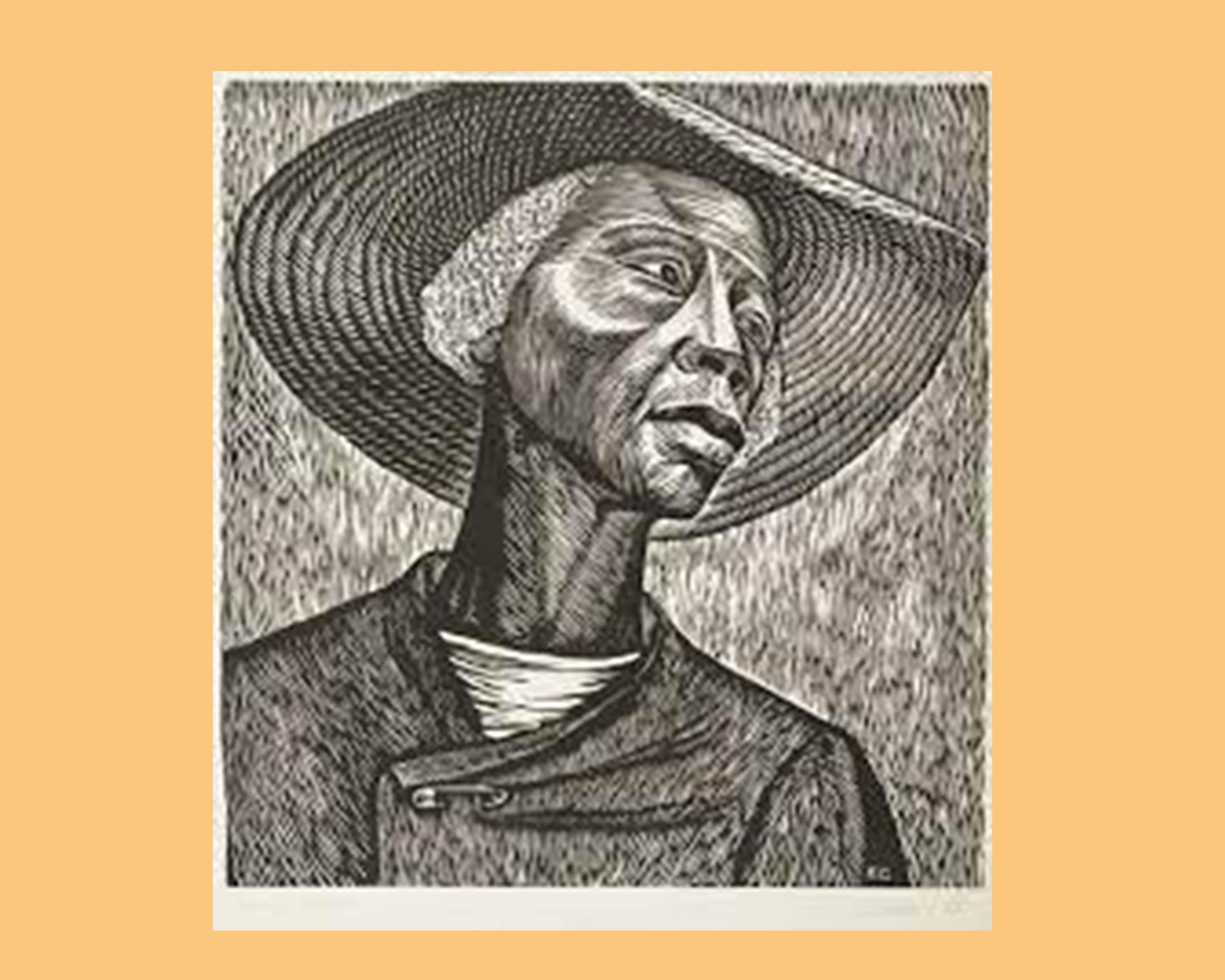
“Sharecropper” is a powerful portrait of an anonymous woman that calls attention to the hardships experienced by tenant farmers of the American South, who were required to pay for the land they rented with part of their crop and thus often faced lifelong debt. She created “Sharecropper” at the Taller de Gráfica Popular (People’s Graphic Workshop) in Mexico City, which was dedicated to the production of socially engaged prints.”
Elizabeth Catlett’s artwork and life painted a noble and human way of life for African American and Mexican working-class women. Her work tells accurate stories of their lives.
She was born in the United States in Washington, DC, in 1915. Raised by her mother because her father died shortly after she was born, Catlett spent summers with her grandparents in North Carolina.
She graduated from Howard University with a degree in Art and the University of Iowa with a Masters in Fine Arts degree. In 1940, she got a job as the department chair of Art at Dillard in New Orleans.
The first female professor of sculpture at the National Autonomous University of Mexico, School of Fine Arts San Carlos, in Mexico City, Catlett taught there until she retired in 1975.
Her work is collected in America, Mexico and the Czech Republic.
In addition to supporting marginalized communities in protests marches, Catlett was also commissioned to create monuments for the Ralph Ellison, Louis Armstrong and at Howard University. Social justice was a matter that filled her work with images of Dr. Martin Luther King, Jr., Black Power and other African American figures.
General Moses is a drawing by Charles White of Harriet Tubman. She sits on these rocks like she is on a throne, giving counsel to many. The first time I saw this I remember thinking wow, what a powerful woman this was. This is an ink drawing created by Charles White in 1965.
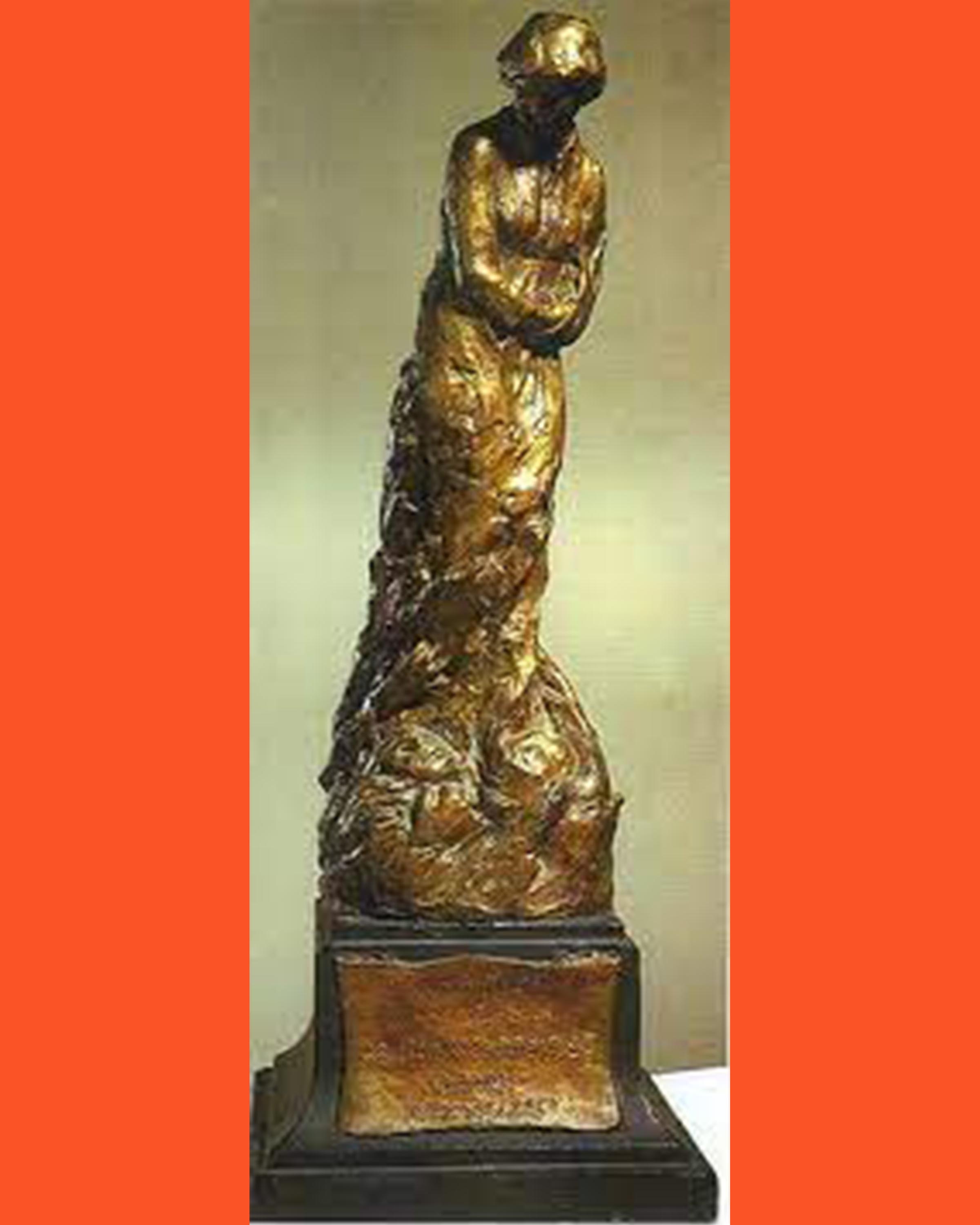
Mother and Child Sorrow by Meta Vaux Warrick Fuller in 1962 and is a bronze cast sculpture. I love that a woman was creating art that spoke to the abuse African Americans received during that time in history. Cheers to women who tell our stories by any means.
When I first saw this work by Warrick I thought WOW.
In Memory of Mary Turner: As a Silent Protest Against Mob Violence
This sculpture, depicting a woman cradling an infant in her arms and leaning away from grasping hands and flames at the base, was created in response to the vicious lynching of a young woman named Mary Turner in 1918. Mary Turner’s husband had been lynched and she publicly denounced his murder. In response, a mob of hundreds captured her, hung her upside down from a tree, and brutally killed her and her unborn child.
Artist Meta Warrick Fuller’s sculpture is one of the first created by an African American specifically depicting the brutality of lynch mobs.
Museum of African American History, Boston & Nantucket
African American stories were not told during her time. At least not the truth. She became known for using her work to address social injustice towards African Americans during her lifetime. Meta Vaux Warrick Fuller was a poet, painter and sculptor at the turn of the 20th Century. Born in Philadelphia in 1877, her parents were able to send her to a good school which helped develop her artistic ability. Her parents were part of the African American middle class with successful businesses.
Fuller’s work was shown in high school projects at the 1893 World’s Columbian Exposition in Chicago. She received a scholarship to a university and after graduation, she moved to Paris, France to study with Raphael Collin. Henry Ossawa Tanner, the first African American painter to gain international fame, was also a family friend.
In 1907 Fuller won a gold medal for her work in an exhibition at the 1907 Jamestown Tercentennial. She created 150 dioramas depicting the progress African Americans had made from when slaves landed in Jamestown to the beginning of 1900.
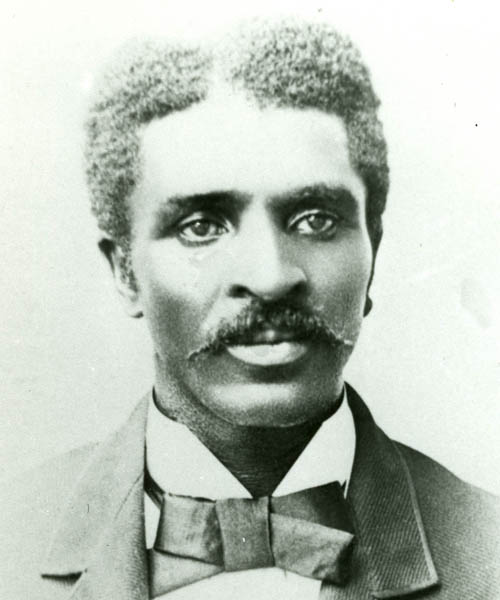
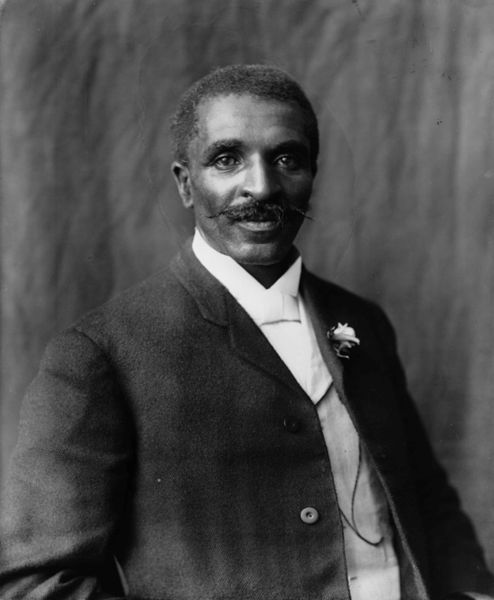
George Washington Carver became one of the leading agronomists of his time, pioneering numerous uses for peanuts, soybeans, and sweet potatoes. Born a slave in Missouri in midst of the Civil War, Carver was fascinated by plants from an early age. As the first African-American undergraduate student at Iowa State, he studied soybean fungi and developed new means of crop rotation. After earning his master’s degree, Carver accepted a job at Alabama’s Tuskegee Institute, a leading university of African Americans. It was at Tuskegee that Carver made his greatest contributions to science, developing more than 300 uses for the peanut alone, including soap, skin lotion, and paint. (information from thoughtco.com)











 UPP Creative Media