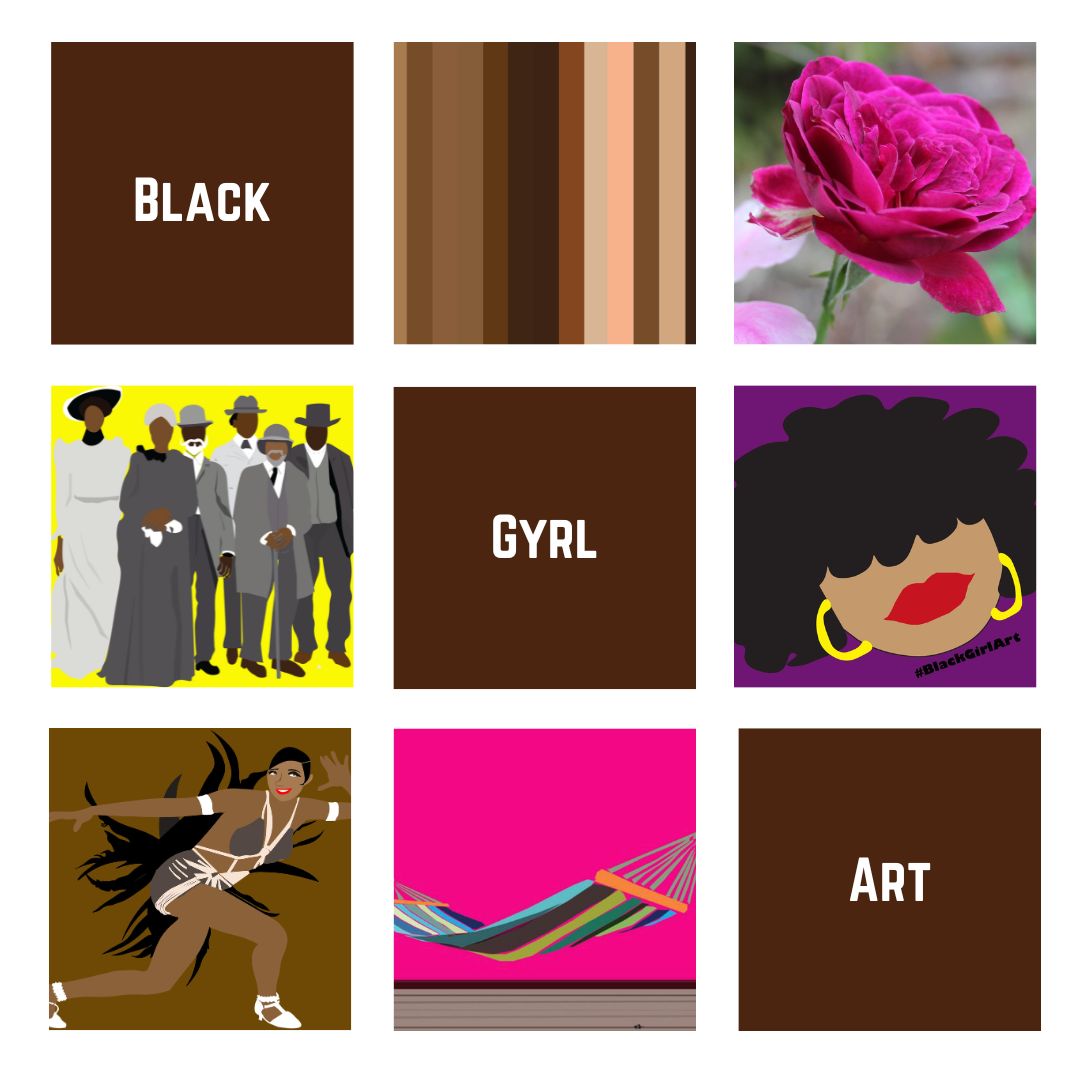
Art of the Month

African American women are a force of strength and resilience, leaving an indelible mark on the world throughout history. Despite the many challenges designed to hold us back, we have never been defeated. When laws were created to suppress our hair, we responded with creativity—crafting headscarves that became timeless symbols of style and strength. We turned our hair into art, weaving stories and even maps into our styles.

Trailblazers like fashion designer Zelda Wynn Valdes broke barriers, opening her own fashion house and designing the iconic Playboy Bunny costume—making history with every stitch.

We’ve always known that Black is beautiful. That truth gained widespread recognition during the 1950s and 60s, when a movement arose to celebrate the natural beauty of African American women. It was a time of bold defiance against societal norms. Instead of conforming by straightening their hair, women embraced their roots—literally—with full, glorious afros.

We’ve turned something as simple as a look into a statement, a culture, a way of life.

Art of the Month

Josephine Baker

Josephine Baker (3 June 1906 – 12 April 1975) was an American-born French dancer, singer and actress. Her career was centered primarily in Europe, mostly in her adopted France. She was the first black woman to star in a major motion picture, the 1927 silent film Siren of the Tropics, directed by Mario Nalpas and Henri Étiévant.

She was born in St Louis, Missouri, as Freda Josephine McDonald where she had a very rough beginning. She dropped out of school at age 12 and had two failed marriages at ages 13 and 15.  Then she joined a vaudeville troupe that took her to New York City. She later became part of a show, Shuffle Along in the chorus line. This would be one of the first steps to her success. She joined the cast in the chorus.

She used comedy to make herself stand out in the chorus line, and later launch a career that sent her overseas because prejudice limited what she could accomplish in the United States. In Paris she became a success which led to a career that spanned all over Europe.  Some have called her the first Beyonce in that she starred in theater and movies in France and became a standout star.

She did not limit her life to performance, during World War II she became a spy for the French Resistance and later received a medal for her work. In the 1950s became active in the Civil Rights Movement traveling throughout the southern part of the United States. Ever the humanitarian, she also adopted 12 children from around the world and raise them.

https://en.wikipedia.org/wiki/Josephine_Baker

Affirmation

The thing about jubilation is that it is a choice. You choose to celebrate and be happy about whatever you want. You are in complete control of that. In the month of June, a group of African American individuals began celebrating freedom.  It stuck. It was not determined by how many people chose to do or if the non-African people thought it was okay or not.  It was their choice. I am glad they did.