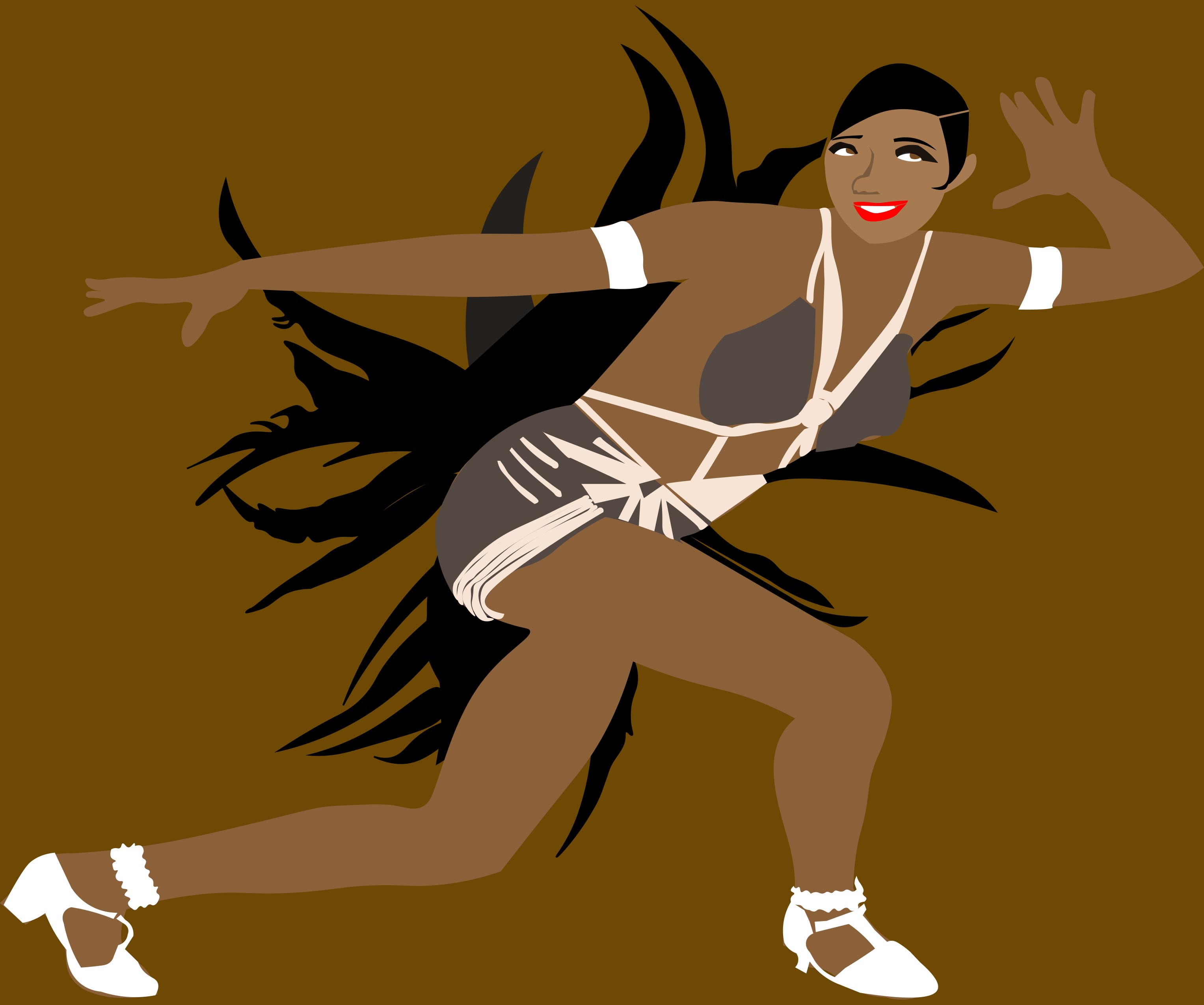
Art of the Month

Nzinga Mbande was born into the ruling family of Ndongo in 1583 in Central West Africa. Nzinga received military and political training as a child, and she also became an ambassador to the Portuguese Empire. She was a Southwest African ruler who ruled as queen of the Ambundu Kingdoms of Ndongo (1624–1663) and Matamba (1631–1663), located in present-day northern Angola.

She was the daughter of Ngola Kilombo of Ndongo. Her mother, Kengela ka Nkombe, was one of her father’s slave wives and his favorite concubine. According to legend, the birthing process was very difficult for Kengela, her mother; Njinga received her name because the umbilical cord was wrapped around her neck (the Kimbundu verb kujinga means to twist or turn).

Children of the royal household who survived difficult or unusual births were believed to possess spiritual gifts, and some saw their births as an indicator the person would grow to become a powerful and proud person. Njinga had two sisters, Kambu, or Lady Barbara and Funji, or Lady Grace. She also had a brother, Mbandi, who was heir apparent to throne.

The Portuguese first came to Ndongo in 1575 when they established a trading post in Luanda. By the 1580s, large parts of Ndongo had fallen under Portuguese control, who burned villages and took hostages who later turned into slaves. Nzinga’s father, Ngola Kilombo Kia Kasenda became the king of Ndongo in 1583. He had a difficult time fighting the Portuguese  and other local kingdoms who tried to take over.

As an ambassador, Nzinga tried to negotiate peace with the Portuguese. She demanded that Portugal remove the forts built inside Ndongan territory and was adamant that Ndongo would not pay tribute to Portugal, noting that only conquered peoples paid tribute and her people had not been defeated. As a power play, the Portuguese would not give her a chair during negotiations. Members of her party would form a human chair so that she was always on the same level as her counterparts.

Nzinga assumed power over Ndongo after the death of her father and brother, who both served as kings, and she went on to conquer Matamba. To weaken the Portuguese colonial administration, Nzinga dispatched messengers (makunzes) to encourage Mbande slaves to flee Portuguese plantations and join her kingdom. This strengthen her kingdom as the escapees joined her kingdom.

She ruled during a period of rapid growth in the African slave trade by the Portuguese Empire in South West Africa. Nzinga fought for the independence of her kingdoms against the Portuguese in a reign that lasted 37 years. She died in 1663.

She is remembered  as the Mother of Angola, the fighter of negotiations. Statues were made in her honor

https://en.wikipedia.org/wiki/Nzinga_of_Ndongo_and_Matamba

Affirmation

I believe that God is good. I know He has a purpose for me because the Bible told me so. I am going to make sure I walk in that purpose. I spend time in prayer and bible study to make sure I am aligned to His purpose. I have found His purpose for me is always bigger than anything I have ever come up with.

Art of the Month

Nzinga Mbande was born into the ruling family of Ndongo in 1583 in Central West Africa. Nzinga received military and political training as a child, and she also became an ambassador to the Portuguese Empire. She was a Southwest African ruler who ruled as queen of the Ambundu Kingdoms of Ndongo (1624–1663) and Matamba (1631–1663), located in present-day northern Angola.

She was the daughter of Ngola Kilombo of Ndongo. Her mother, Kengela ka Nkombe, was one of her father’s slave wives and his favorite concubine. According to legend, the birthing process was very difficult for Kengela, her mother; Njinga received her name because the umbilical cord was wrapped around her neck (the Kimbundu verb kujinga means to twist or turn).

Children of the royal household who survived difficult or unusual births were believed to possess spiritual gifts, and some saw their births as an indicator the person would grow to become a powerful and proud person. Njinga had two sisters, Kambu, or Lady Barbara and Funji, or Lady Grace. She also had a brother, Mbandi, who was heir apparent to throne.

The Portuguese first came to Ndongo in 1575 when they established a trading post in Luanda. By the 1580s, large parts of Ndongo had fallen under Portuguese control, who burned villages and took hostages who later turned into slaves. Nzinga’s father, Ngola Kilombo Kia Kasenda became the king of Ndongo in 1583. He had a difficult time fighting the Portuguese  and other local kingdoms who tried to take over.

As an ambassador, Nzinga tried to negotiate peace with the Portuguese. She demanded that Portugal remove the forts built inside Ndongan territory and was adamant that Ndongo would not pay tribute to Portugal, noting that only conquered peoples paid tribute and her people had not been defeated. As a power play, the Portuguese would not give her a chair during negotiations. Members of her party would form a human chair so that she was always on the same level as her counterparts.

Nzinga assumed power over Ndongo after the death of her father and brother, who both served as kings, and she went on to conquer Matamba. She ruled during a period of rapid growth in the African slave trade by the Portuguese Empire in South West Africa. Nzinga fought for the independence of her kingdoms against the Portuguese in a reign that lasted 37 years.

https://en.wikipedia.org/wiki/Nzinga_of_Ndongo_and_Matamba

Art of the Month

Nzinga Mbande was born into the ruling family of Ndongo in 1583 in Central West Africa. Nzinga received military and political training as a child, and she also became an ambassador to the Portuguese Empire. She was a Southwest African ruler who ruled as queen of the Ambundu Kingdoms of Ndongo (1624–1663) and Matamba (1631–1663), located in present-day northern Angola.

She was the daughter of Ngola Kilombo of Ndongo. Her mother, Kengela ka Nkombe, was one of her father’s slave wives and his favorite concubine. According to legend, the birthing process was very difficult for Kengela, her mother; Njinga received her name because the umbilical cord was wrapped around her neck (the Kimbundu verb kujinga means to twist or turn).

Children of the royal household who survived difficult or unusual births were believed to possess spiritual gifts, and some saw their births as an indicator the person would grow to become a powerful and proud person. Njinga had two sisters, Kambu, or Lady Barbara and Funji, or Lady Grace. She also had a brother, Mbandi, who was heir apparent to throne.

The Portuguese first came to Ndongo in 1575 when they established a trading post in Luanda. By the 1580s, large parts of Ndongo had fallen under Portuguese control, who burned villages and took hostages who later turned into slaves. Nzinga’s father, Ngola Kilombo Kia Kasenda became the king of Ndongo in 1583. He had a difficult time fighting the Portuguese  and other local kingdoms who tried to take over.

Nzinga assumed power over Ndongo after the death of her father and brother, who both served as kings, and she went on to conquer Matamba. She ruled during a period of rapid growth in the African slave trade by the Portuguese Empire in South West Africa. Nzinga fought for the independence of her kingdoms against the Portuguese in a reign that lasted 37 years.

This artwork is by my brother, Devin Anderson

https://en.wikipedia.org/wiki/Nzinga_of_Ndongo_and_Matamba

Affirmation

In order to start being purposeful, I have to know what I value and understand what I believe. I value diverse voices and historical stories that champion them.  I want to impact the world and stand up for justice. Most important, I want to encourage faith in God that leads to life changing experiences. I will try to measure all of my goals against these values.

Art of the Month

Nzinga Mbande was born into the ruling family of Ndongo in 1583 in Central West Africa. Nzinga received military and political training as a child, and she also became an ambassador to the Portuguese Empire. She was a Southwest African ruler who ruled as queen of the Ambundu Kingdoms of Ndongo (1624–1663) and Matamba (1631–1663), located in present-day northern Angola.

She was the daughter of Ngola Kilombo of Ndongo. Her mother, Kengela ka Nkombe, was one of her father’s slave wives and his favorite concubine. According to legend, the birthing process was very difficult for Kengela, her mother; Njinga received her name because the umbilical cord was wrapped around her neck (the Kimbundu verb kujinga means to twist or turn).

Children of the royal household who survived difficult or unusual births were believed to possess spiritual gifts, and some saw their births as an indicator the person would grow to become a powerful and proud person. Njinga had two sisters, Kambu, or Lady Barbara and Funji, or Lady Grace. She also had a brother, Mbandi, who was heir apparent to throne.

She assumed power over Ndongo after the death of her father and brother, who both served as kings, and went on to conquer Matamba. She ruled during a period of rapid growth in the African slave trade by the Portuguese Empire in South West Africa. Nzinga fought for the independence of her kingdoms against the Portuguese in a reign that lasted 37 years.

https://en.wikipedia.org/wiki/Nzinga_of_Ndongo_and_Matamba1

Affirmation

September 4

This month the word is Purposeful. It means intentional. Having a useful purpose. I know that I am here for a purpose. Why am I here? What am I called to do? Do I make a difference? If so, how? I look at my vision and mission to check how my actions are aligned. Am I really living in my purpose? Let’s see what God says.