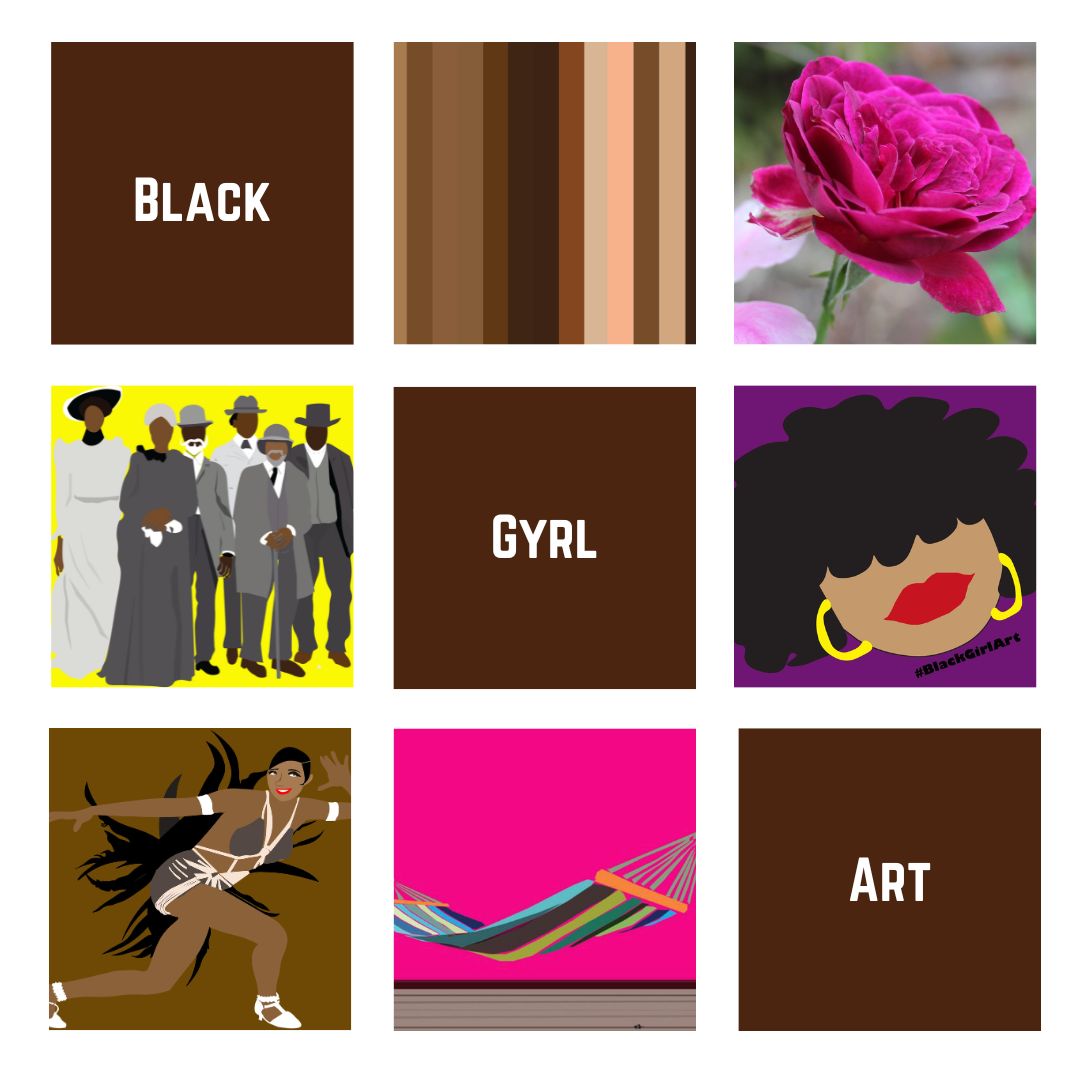
Here is art that tells a story. It is available for purchase.
postcards

or prints

TV Talk with the Sistas
This classic movie has a very loose storyline that they managed to weave some African American history into. It plays to many stereotypes but has some of the best talent that every came from the African American community. Listen to the Sistas take on this gem.
Listen Season 8 Episode 2

Nannie Helen Burroughs meets us at the intersection of gender, race, and profession. She was an educator, civil rights activists, feminist, and businesswoman.
Burroughs was born May 2, 1879, in Orange Virginia. Her parents were formerly slaves, and her father was a farmer and Baptist preacher. Her father died when she was young, so Burroughs and her mother moved to Washing DC.
She attended high school in DC where she met Anna Julia Cooper and Mary Church Terrell, who were suffragists and civil rights activists.
After graduation she applied for a job with the District but could not get one because her skin was too dark. This set in her the determination to ensure women of her skin tone could improve their situation.
From 1898 to 1909 Burroughs went to work for the National Baptist Convention in Kentucky. She was one of the founders of the Women’s Convention and served as president for 13 years. She also found the National Training School in 1908 that provided evening classes for women who had no other means of education.
In 1908 she opened the National Training School. Her goal was to uplift the race. The main themes of the school was the three B’s: the Bible, the bath, and the broom.
In 1920 she wrote two plays, one The Slabtown District Convention and Where is My Wandering Boy Tonight?
In 1928, Burroughs was appointed committee chairwoman by the Hoover Administration for the White House Conference 1931 Home Building and Ownership. She also spoke at conferences.
She died in May of 1961

Here is Episode 1 of Season 8!
In Season Seven we talked about some of the best African American movies ever. The list was so long we decided to finish it in Season Eight.
A movie used to be pieces of film that were put together to tell a story. These stories could evoke emotions and leave you feeling some kind of way. In Season Seven of TV Talk we are going to tell you about the best African American movies ever. Some of them were made by AA, while others were only stories that included AA. All of these movies were life changing.
He didn’t fly through the air or wasn’t faster than a speeding train, but this man was the black super hero of the 1970s. Everyone knows that Issac Hayes theme and when it comes on, people who know think about one thing, our black superhero.
Listen Season 8 Episode 1

African American women are a force of strength and resilience, leaving an indelible mark on the world throughout history. Despite the many challenges designed to hold us back, we have never been defeated. When laws were created to suppress our hair, we responded with creativity—crafting headscarves that became timeless symbols of style and strength. We turned our hair into art, weaving stories and even maps into our styles.
Trailblazers like fashion designer Zelda Wynn Valdes broke barriers, opening her own fashion house and designing the iconic Playboy Bunny costume—making history with every stitch.
We’ve always known that Black is beautiful. That truth gained widespread recognition during the 1950s and 60s, when a movement arose to celebrate the natural beauty of African American women. It was a time of bold defiance against societal norms. Instead of conforming by straightening their hair, women embraced their roots—literally—with full, glorious afros.
We’ve turned something as simple as a look into a statement, a culture, a way of life.
With chapgpt

Women’s History
African American women are a force of strength and resilience, leaving an indelible mark on the world throughout history. Despite the many challenges designed to hold us back, we have never been defeated. When laws were created to suppress our hair, we responded with creativity—crafting headscarves that became timeless symbols of style and strength. We turned our hair into art, weaving stories and even maps into our styles.
Trailblazers like fashion designer Zelda Wynn Valdes broke barriers, opening her own fashion house and designing the iconic Playboy Bunny costume—making history with every stitch.
We’ve always known that Black is beautiful. That truth gained widespread recognition during the 1950s and 60s, when a movement arose to celebrate the natural beauty of African American women. It was a time of bold defiance against societal norms. Instead of conforming by straightening their hair, women embraced their roots—literally—with full, glorious afros.
We’ve turned something as simple as a look into a statement, a culture, a way of life.
With chapgpt

You can now find some of Season 7 on YouTube. TV Talk YouTube

African American women are a force of strength and resilience, leaving an indelible mark on the world throughout history. Despite the many challenges designed to hold us back, we have never been defeated. When laws were created to suppress our hair, we responded with creativity—crafting headscarves that became timeless symbols of style and strength. We turned our hair into art, weaving stories and even maps into our styles.
Trailblazers like fashion designer Zelda Wynn Valdes broke barriers, opening her own fashion house and designing the iconic Playboy Bunny costume—making history with every stitch.
We’ve always known that Black is beautiful. That truth gained widespread recognition during the 1950s and 60s, when a movement arose to celebrate the natural beauty of African American women. It was a time of bold defiance against societal norms. Instead of conforming by straightening their hair, women embraced their roots—literally—with full, glorious afros.
We’ve turned something as simple as a look into a statement, a culture, a way of life.
With chapgpt

African American women are a force of strength and resilience, leaving an indelible mark on the world throughout history. Despite the many challenges designed to hold us back, we have never been defeated. When laws were created to suppress our hair, we responded with creativity—crafting headscarves that became timeless symbols of style and strength. We turned our hair into art, weaving stories and even maps into our styles.
Trailblazers like fashion designer Zelda Wynn Valdes broke barriers, opening her own fashion house and designing the iconic Playboy Bunny costume—making history with every stitch.
We’ve always known that Black is beautiful. That truth gained widespread recognition during the 1950s and 60s, when a movement arose to celebrate the natural beauty of African American women. It was a time of bold defiance against societal norms. Instead of conforming by straightening their hair, women embraced their roots—literally—with full, glorious afros.
We’ve turned something as simple as a look into a statement, a culture, a way of life.
With chapgpt