He was a Revolutionary

I am at the age when I watch a movie with cowboys and Indians, I root for the Indians.

It has been firmly established that we cannot depend on textbooks or schools to educate us in matters of history when related to people who do not make up the majority of the population.

Storytelling in movies work for me.

Sardar Udham is a quaint little film on Prime right now that paints a picture of the UK government you will not see in shows like The Crown or Call the Midwife. In the latter stories we are given a touch of prejudice here or some injustice there but the shows leave you with an overall we still feel good about things.

Let me first admit, I had never heard the story of Udham Singh. As the two hour and forty three minute movie weaved its story there was much googling and binging on my part. How did I not know about this? Singh was a freedom fighter working for the independence of India during the time of their occupation by the British Government.

This movie tells the story of how Singh assassinates a British official who gave the order for the 1919 Jallianwala Bagh massacre in Amritsar. The officer’s order allows British soldiers to shoot and kill 20,000 peaceful protesters made up of men, women and children.

The movie was beautifully shot. The story was told like one of the rugs his machine made going back and forth. The flashbacks served to remind him what his mission was. But the story was so big, characters got lost as they began to come and go. But it was still worth it. It told the story of a man who thought his people mattered. And I love how the producers pointed out that the British Government still had not apologized for the massacre yet.

Just when you think the oppressor can’t get any worse, a story like this shows up. It helps you understand the depths of the depravity of mankind. It tells a story I am sure some people want erased.

This movie allows me to understand the horrors other people have experienced and even though I cannot relate, I can empathize. Most importantly, it teaches me how to plan the counter attack if this type of things ever happens again. I know some of y’all are tired of being work. But you better stay woke.

All You Need is a Bike and Pocketbook

Style. Class. And an X chromosome.  These are the ingredients for a successful detective. 

Phryne Fisher and Jessica Fletcher.  dynamic crime fighters whose attention to detail have foiled the plans of many criminals

These damsels are not in distress they are in fact applying stress to all who dare to break the law. Listen as the Sistas explain what makes them so good.

Episode 4 She Murdered It

TV Show of the Week

Call the Midwife has been one of my favorite shows for years. But this year I made a discovery. You can watch this show online at pbs.com. No streaming service is needed.

This show is about a group of nuns and nurses who are midwives in a section of London on the 1950s and 60s. I like shows that trying to help me understand what life was like in another place and time. But this is not a family show unless you ready to have that talk about where babies come from. And think about this…babies have been born at home way longer than they have been born in hospitals.

The characters are fun and the storylines can be corny. Sister Monica Joan is my favorite, but I don’t understand crap she say. The last couple of years, they have begun casting people who look like me. Yay! Give it a try.

Artist of the Week

When I first saw this work by Warrick I thought WOW.

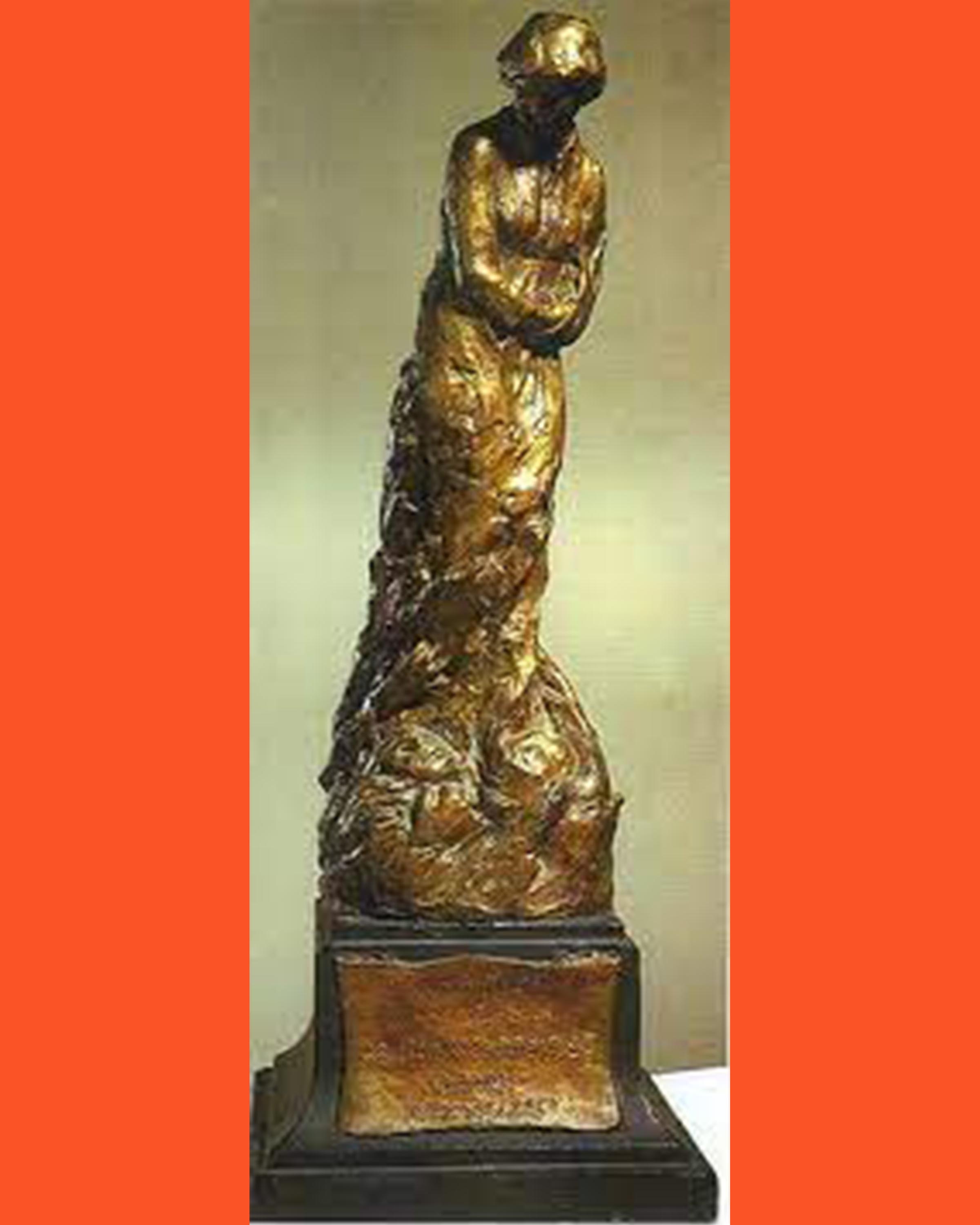
In Memory of Mary Turner: As a Silent Protest Against Mob Violence

This sculpture, depicting a woman cradling an infant in her arms and leaning away from grasping hands and flames at the base, was created in response to the vicious lynching of a young woman named Mary Turner in 1918. Mary Turner’s husband had been lynched and she publicly denounced his murder. In response, a mob of hundreds captured her, hung her upside down from a tree, and brutally killed her and her unborn child.

Artist Meta Warrick Fuller’s sculpture is one of the first created by an African American specifically depicting the brutality of lynch mobs.

Museum of African American History, Boston & Nantucket

Art Auction

My art reflects my faith, love of history and African American culture.

Consider bidding on one of these pieces of art to help raise money to pay for repairs on my Cousin Alice’s home. The person with the highest bid will win the image they bid on.

There are five choices to bid on. They will be printed on canvas.

The bidding starts at $65. Email me your bid at uppcreative@gmail.com

Art of the Month

Participating in something you have no control over requires much control.

Bert Williams (1874-1922) was born in the Bahamas. In 1918 the New York Times wrote he was one of the greatest comedians in the world. Williams was also at one time was one of the highest paid performers in vaudeville and on Broadway. He and his team were one of the first African Americans to perform on Broadway, in a show titled Dahomey, a musical in 1903.

Because of his race, he was usually the solo African American performer in a vaudeville show, which meant he travelled, ate and slept separately from the Caucasian performers. He would be alone and separated from everyone else.  A white supremist groups threatened theater owners to only have one black performer per show.  When he signed with Ziegfeld’s Follies, Caucasian performers demanded he be fired, but management refused. He became so popular that others wanted to work with him.

Hattie McDaniel (1893-1952) was an African American actress and holds the distinction of being the first woman of color to win an Oscar. She won for the role of Mammy in Gone with the Wind. She appeared in over 300 films and was also a singer.

Even though she made enough money to live well, she found that it did not stop discrimination. She almost didn’t get to attend the Oscar ceremony where she won because it was segregated and didn’t allow African Americans in.  She also had to file lawsuits to stay in her neighborhood because deeds restricted African Americans from purchasing there and was denied the right to be buried in the cemetery of her choice because race restrictions. She didn’t allow other people’s rules to allow it to limit her.

It took incredible self-control to continue to work and perform routinely. It took discipline to continue to give great performances every time. It took heart not to give up and go do something that was more just.