TV Show of the Week

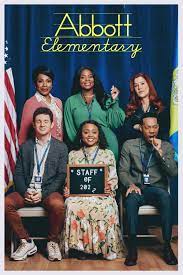
This is a Regina recommendation. I mean I have watched it and thought it was amusing, but she is a fan. I am still on the fence (only because some of the characters are annoying) But the story has it moments where it is funny.

If kind of reminds me of Mary Tyler Moore in and I’m Gonna Get You Sucka kinda of way. The main character has a good heart in a very naïve kinda way surrounded by a cast of characters that..well. You need to experience them for yourself. I am sure you will find a favorite in one of them.

Try this show. It is on ABC.
TV Show of the Week

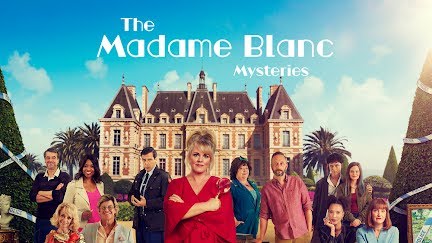
This is a cute little murder mystery I stumble upon on Prime via Acorn TV. An antique dealer’s husband is murdered in France after purchasing a very expensive ring. When she goes to collect the belongings she discovers that her husband had a double life. The first season she spends looking for the person who stole the ring.

This story is fun, the characters are quirky and the scenery is beautiful. Sometimes the characters speak French, but it allows you to feel like the main character with her limit language abilities. I always give plus points for multiracial casts. It also has a creepy edge with sinister characters who lurk in the background.

Try the Madame Blanc Mysteries and let me know what you think.

Artist of the Week

Selma Hortense Burke was an American sculptor and a member of the Harlem Renaissance movement. Burke is best known for a bas relief portrait of President Franklin D. Roosevelt that may have inspired the profile found on the obverse of the dime.

Selma Burke was born on December 31, 1900, in MooresvilleNorth Carolina, the seventh of 10 children of Reverend Neil and Mary Elizabeth Colfield Burke.[6][7] Her father was an AME Church Minister who worked on the railroads for additional income. As a child, she attended a one-room segregated schoolhouse, and often played with the riverbed clay found near her home.[3][8] She would later describe the feeling of squeezing the clay through her fingers as a first encounter with sculpture, saying “It was there in 1907 that I discovered me.”[9] Burke’s interest in sculpture was encouraged by her maternal grandmother, a painter, although her mother thought she should pursue a more financially stable career.[10]

Selma Burke died at the age of 94 on August 29, 1995 in New Hope, Pennsylvania, where she had lived since the 1950s.

https://en.wikipedia.org/wiki/Selma_Burke

Christmas Movie of the Week

I love a movie with African American people in it and to make it be around Christmas makes it even better. This story is on a serious subject, done with comedy and real information. There are times I thought I was in the doctor’s office myself, but it was a learning experience. But you have to love the imagination that can take a hint of Scrooge and mix it with some culture and add purpose to it. I think I found this on Prime.

Artist of the Week

This was one of the first pieces of Kerry James Marshall that I saw live in a museum. I loved it and could not wait to show it to anyone who would come with me. Africa Restored (Cheryl as Cleopatra) (2003) There are a million little stories in buttons and memorabilia across this work. They each tell a story of a history of a people.

Kerry James Marshall describes Africa Restored (Cheryl as Cleopatra) as “the shape of Africa reconfigured as a cubist sculpture.” Reversing art-historical narratives of modernist painting’s appropriation of African sculpture, it offers a complex meditation on African ancestry and black aesthetics. Africa Restored formally references the nkisi nkondi, or power figures, of the Democratic Republic of Congo. These sculptures were crafted as basic armatures into which accretions of metals, mirrors, and nails were driven to activate their force. (Art Institute of Chicago)

Artist of the Week

“While the tonal values of Marshall’s figures are universal, their impressions are extremely varied— Marshall’s figures assume all facets of black life. Marshall’s 2012 painting, School of Beauty, School of Culture portrays a scene inspired by the cosmetology school “Your School of Beauty Culture” located in the Bronzeville neighborhood of Chicago’s South Side. The world defined in Marshall’s painting designates a space in which black women determine their own images of ideal beauty. With a nod to Hans Holbein the Younger’s The Ambassadors, Marshall uses the anamorphic Sleeping Beauty head to register Euro-centric standards of beauty, populated in the academy for centuries, as a distorted reality. “

Artist of the Week

Kerry James Marshall is an American artist and professor, known for his paintings of Black figures. He previously taught painting at the School of Art and Design at the University of Illinois at Chicago. In 2017, Marshall was included on the annual Time 100 list of the most influential people in the world. (Wikipedia)

Artist of the Week

Artist Jacob Lawrence’s powerful Confrontation at the Bridgedepicts the 1965 Selma to Montgomery marches for voting rights that would enable African Americans to register and vote without harassment.

Lawrence uses strong colors and expressive composition to highlight the strength and courage of the peaceful African-American marchers. They dominate the image with their forward movement. The unarmed marchers were confronted on the Edmund Pettus Bridge by state troopers who violently attacked and beat them. Lawrence clearly shows a mood of violence by the snarling dog, the dark sky, and the marchers’ worried faces. His choice to not show any state troopers is important and we know they are right there, just outside of the image. He focuses the artwork on the brave act of the African-American marchers who are taking (dangerous) action for their future.

The Selma to Montgomery marches were three protest marches in 1965 for voting rights and racial justice. The first march took place on March 7. State troopers and locals attacked the unarmed marchers with billy clubs and tear gas after they passed over the Edmund Pettus Bridge. Photos of the beaten and bloodied African-American marchers were seen around the world. The event became known as “Bloody Sunday”. The second march took place March 9. Troopers and marchers confronted each other at the bridge, but Martin Luther King Jr. led the marchers back to Selma. The third march started on March 21 after President Johnson committed to protecting the marchers with 1,900 members of the National Guard and FBI agents. Alabama Governor Wallace refused to do this. Over 25,000 people joined the marchers to the Alabama State Capitol in Montgomery, arriving on March 25. The Voting Rights Act became law on August 6, 1965.

This print was created by Jacob Lawrence when he was commissioned to produce a print to celebrate the United States’ bicentennial in 1976.

Artist of the Week

Born in Atlantic City, New Jersey, Lawrence grew up in Harlem during the Depression. Harlem was an active cultural center then, and Lawrence became interested in the arts while still a teenager. He received early training at art workshops sponsored by the federal government’s Works Progress Administration (WPA) in Harlem and then studied at the American Artists School in New York. From 1938 to 1939, Lawrence worked in the Federal Arts Project and produced some of his earliest major works. His first important solo exhibition in 1944, at New York’s Museum of Modern Art, secured his place as an important commentator on the American scene, particularly African American experiences. Lawrence died on 9 June 2000.

Jacob Lawrence with a panel from the Frederick Douglass series, c. 1939. Harmon Foundation Collection, National Archives and Records Administration, College Park, Md.

Art of the Week

“Sharecropper” is a powerful portrait of an anonymous woman that calls attention to the hardships experienced by tenant farmers of the American South, who were required to pay for the land they rented with part of their crop and thus often faced lifelong debt. She created “Sharecropper” at the Taller de Gráfica Popular (People’s Graphic Workshop) in Mexico City, which was dedicated to the production of socially engaged prints.”

https://www.metmuseum.org/art/collection/search/364497