Art of the Month

Tignon Law

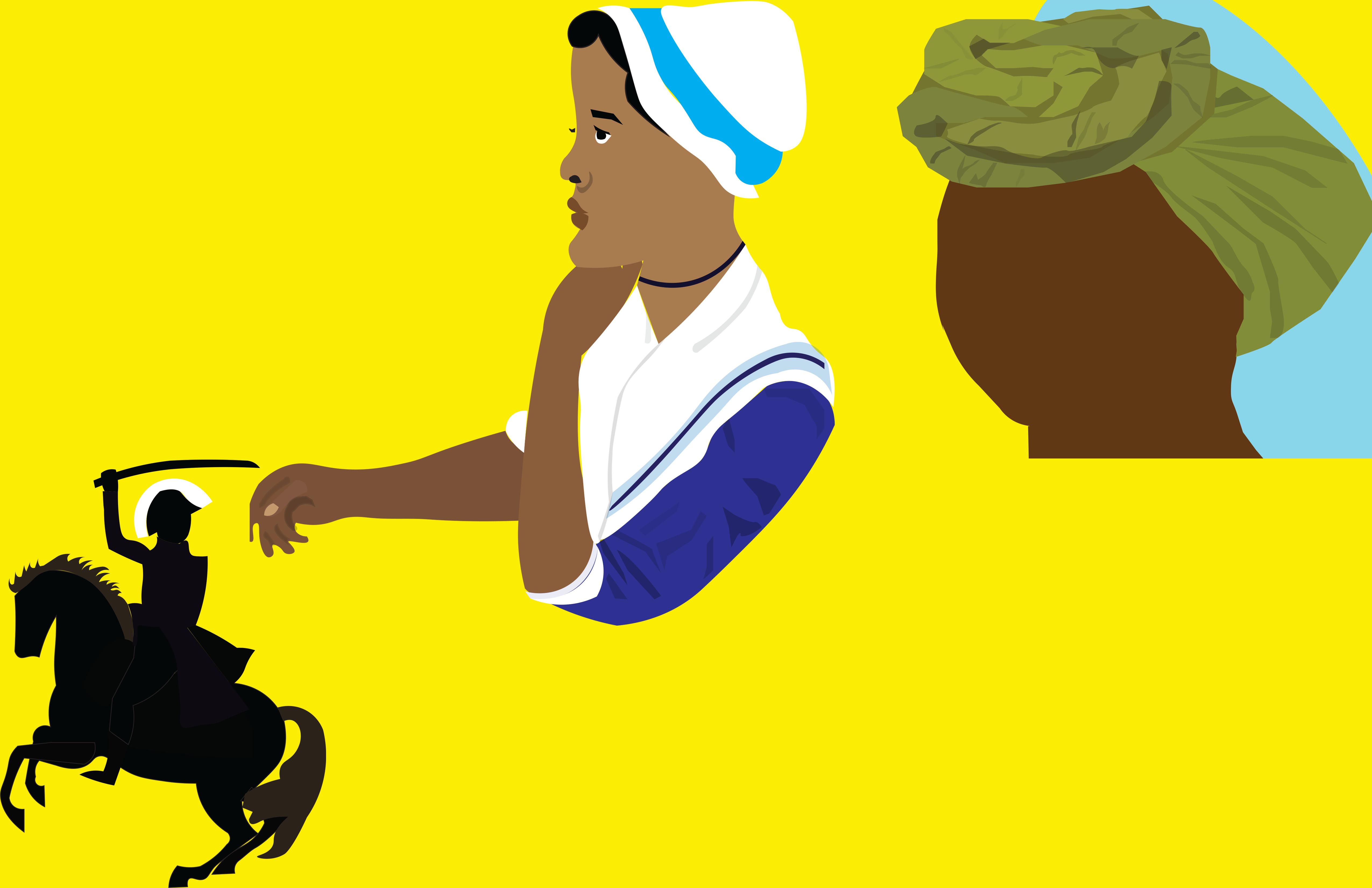
By the 1700 The institution of slavery reached around the world. Captured Africans were not passive about the institution. They fought where they stood. In 1786 Governor Don Estevan Miro of New Orleans passed the Tignon Law that stated all Creole women of color must tie up their hair and dress as in the slave class whether they are slave or free. In trying to limit the standards of beauty to this section of the population, they shaped the way women of color would react for centuries.

Haiti Revolution

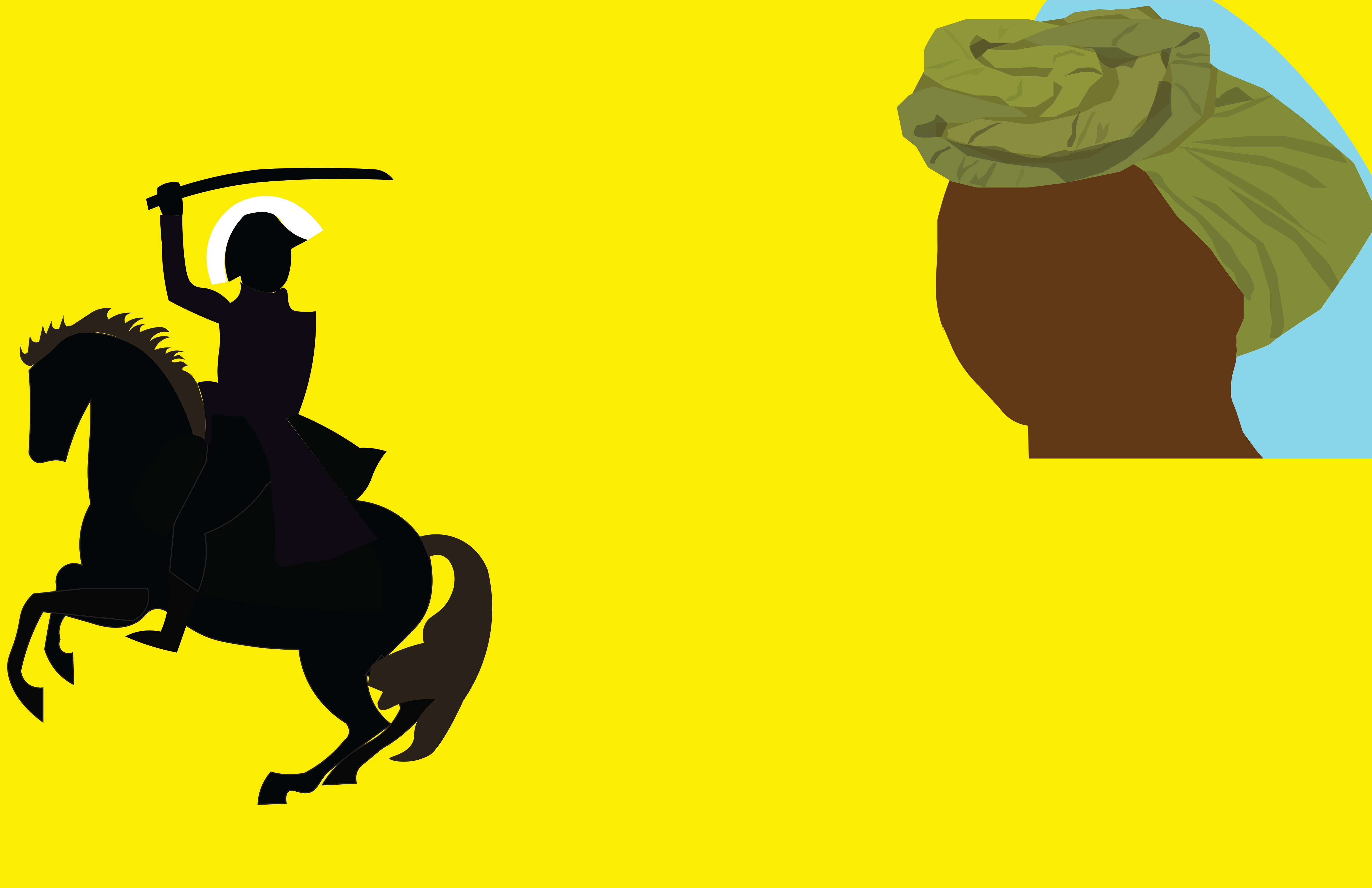
The Haitian Revolution was a successful insurrection by self-liberated slaves against French colonial rule in Saint-Domingue, now the sovereign state of Haiti. The revolt began on 22 August 1791, and ended in 1804 with the former colony’s independence.

https://en.wikipedia.org/wiki/Haitian_Revolution

Phillis Wheatley

(c. 1753 – December 5, 1784) was an American author who is considered the first African-American author of a published book of poetry. Born in West Africa, she was sold into slavery at the age of seven or eight and transported to North America, where she was bought by the Wheatley family of Boston. After she learned to read and write, they encouraged her poetry when they saw her talent.

https://en.wikipedia.org/wiki/Phillis_Wheatley

Olaudah Equiano

Olaudah Equiano was the son of a chief of the Igbo people in West Africa, but was seized and sold into slavery as a small boy. He was sold a several times and purchased his freedom in 1766. He was part of an abolitionist group called the Sons of Africa made of Africans living in Britain. In his autobiography of 1789, he looked back on life in his homeland, remembering it as “a charming fruitful vale.” He was a writer and abolitionist.

Sommerset Case

James Sommersett was the subject of a landmark legal case in Great Britain, which was the first major step in imposing limits on Trans-Atlantic African slavery. Sommersett was originally purchased in Virginia and had been bought to Britain by Stewart from Boston, Massachusetts in 1769.  He fled two years later. Sommersett’s cause was taken up by Granville Sharp, a member of Parliament and the leading abolitionist of his era.

At issue was whether a slave, even if owned in British Colonial America was by dint of residing in Britain still to be legally regarded as chattel or should be considered free. Francis Hargrave argued that by being on the soil of Great Britain, Sommersett could not remain enslaved.  On June 22, 1772 Lord Mansfield decided in Somerset v. Stewart that Sommersett was to be released since no English law sanctioned slavery in Great Britain.

The case also moved the debate over slavery to the British Parliament. Britain’s highest legislative body ended the Empire’s participation in the Trans Atlantic Slave Trade in 1807.

n.wikipedia.org/wiki/Somerset_v_Stewart

Quote

Robert Smalls (April 5, 1839 – February 23, 1915) was an American politician, publisher, businessman, and maritime pilot. Born into slavery in Beaufort, South Carolina, he freed himself, his crew, and their families during the American Civil War by commandeering a Confederate transport ship, CSS Planter, in Charleston harbor, on May 13, 1862, and sailing it from Confederate-controlled waters of the harbor to the U.S. blockade that surrounded it. After the American Civil War he returned to Beaufort and became a politician, winning election as a Republican to the South Carolina Legislature and the United States House of Representatives during the Reconstruction era.

https://en.wikipedia.org/wiki/Robert_Smalls

Art of the Month

Tignon Law

By the 1700 The institution of slavery reached around the world. Captured Africans were not passive about the institution. They fought where they stood. In 1786 Governor Don Estevan Miro of New Orleans passed the Tignon Law that stated all Creole women of color must tie up their hair and dress as in the slave class whether they are slave or free. In trying to limit the standards of beauty to this section of the population, they shaped the way women of color would react for centuries.

Haiti Revolution

The Haitian Revolution was a successful insurrection by self-liberated slaves against French colonial rule in Saint-Domingue, now the sovereign state of Haiti. The revolt began on 22 August 1791, and ended in 1804 with the former colony’s independence.

https://en.wikipedia.org/wiki/Haitian_Revolution

Phillis Wheatley

Phillis Wheatley Peters, also spelled Phyllis and Wheatly (c. 1753 – December 5, 1784) was an American author who is considered the first African-American author of a published book of poetry.[2][3] Born in West Africa, she was sold into slavery at the age of seven or eight and transported to North America, where she was bought by the Wheatley family of Boston. After she learned to read and write, they encouraged her poetry when they saw her talent.

https://en.wikipedia.org/wiki/Phillis_Wheatley

Quote

Anna Julia Haywood Cooper (1858-1964) was a writer, teacher, and activist who championed education for African Americans and women.

Born into bondage in 1858 in Raleigh, North Carolina, Anna Haywood married George A.G. Cooper, a teacher of theology at Saint Augustine’s, in 1877. When her husband died two years later, Cooper decided to pursue a college degree. She attended Oberlin College in Ohio on a scholarship, earning a BA in 1884 and a masters degree in mathematics in 1887. After graduation, Cooper worked at Wilberforce University and Saint Augustine’s before moving to Washington, D.C. to teach at Washington Colored High School. During her years as a teacher and principal at M Street High School, Cooper also completed her first book, titled A Voice from the South: By a Black Woman of the South, published in 1892, and delivered many speeches calling for civil rights and women’s rights.

On February 27, 1964, Cooper died in Washington, DC at the age of 105.

Art of the Quarter

Tignon Law

By the 1700 The institution of slavery reached around the world. Captured Africans were not passive about the institution. They fought where they stood. In 1786 Governor Don Estevan Miro of New Orleans passed the Tignon Law that stated all Creole women of color must tie up their hair and dress as in the slave class whether they are slave or free. In trying to limit the standards of beauty to this section of the population, they shaped the way women of color would react for centuries.

Haiti Revolution

The Haitian Revolution was a successful insurrection by self-liberated slaves against French colonial rule in Saint-Domingue, now the sovereign state of Haiti. The revolt began on 22 August 1791, and ended in 1804 with the former colony’s independence.

https://en.wikipedia.org/wiki/Haitian_Revolution

Quote

This month will feature quotes from individuals who were born free.

Egbert “Bert” Austin Williams was one of the greatest entertainers in America’s history. Born in the Bahamas on November 12, 1874, he came to the United States permanently in 1885. Williams met George Walker in San Francisco in 1893 and the two formed what became the most successful comedy team of their time. When Walker retired in 1908 due to illness, Williams starred in Mr. Load of Koal (1909)–the last black musical on Broadway for more than ten years. Unable to continue producing shows without Walker, Williams signed on with the Ziegfeld Follies in 1910–the only black performer in this famous review. He explained this controversial move saying, “… colored show business is at a low ebb just now … it was far better to have joined a large white show than to have starred in a colored show, considering conditions.” Williams stayed with the Follies through 1919, after which he appeared with Eddie Cantor in Broadway Brevities (1920) and Under the Bamboo Tree (1921-22). While on tour with the latter show, his failing health caught up with him and he contracted pneumonia. Williams died in New York City on March 4, 1922.

https://www.loc.gov/item/ihas.200038860/

Art of the Month

By the 1700 The institution of slavery reached around the world. Captured Africans were not passive about the institution. They fought where they stood. In 1786 Governor Don Estevan Miro of New Orleans passed the Tignon Law that stated all Creole women of color must tie up their hair and dress as in the slave class whether they are slave or free. In trying to limit the standards of beauty to this section of the population, they shaped the way women of color would react for centuries.

Art of the Quarter

By the 1600 they were all participating in the slave trade, English, French, Spanish.  They were spreading it as they tried to expand their borders.

They called her Angela and she was one of the first women of African descent to land at Jamestown in 1619. In 1622 lived through the attack of Native Americans.  In 1625 she is listed as a Negro woman living in the household of Captain William Pierce. They do not think she was an indentured servant, but was probably made to serve indefinitely.

Angela was Angolan from the Ndongo Kingdom who had been capture in her native land and taken aboard the San Juan Bautista. The ship was headed to Veracruz, Mexico but some English privateers captured it. They split the enslaved individuals and went on their way.

Angela was brought to Jamestown a ship called the Treasurer. She was captured because she has a skillset that would make the owners a profit.

Don Miguel de Castro was an ambassador from the Kingdom of Congo in the 1600s. He travelled to Europe and South America representing the interest of the Congo. He was also a cousin to the Count of Sonho, a province in Angola.

A portrait was painted of him in 1643, one of 20 commissioned. Some of which ended up in the National Gallery of Denmark.

Nzinga Mbande (c. 1583 – 1663) was Queen of the Ambundu Kingdoms of Ndongo (1624–1663) and Matamba (1631–1663), located in present-day northern Angola. Born into the ruling family of Ndongo, Nzinga received military and political training as a child, and she demonstrated an aptitude for defusing political crises as an ambassador to the Portuguese Empire.

In 1624, Ana Nzinga inherited rule of Ndongo, a state to the east of Luanda populated primarily by Mbundu peoples. At that moment, the kingdom was under attack from both Portuguese as well as neighboring African aggressors. Nzinga realized that, to remain viable, Ndongo had to reposition itself as an intermediary rather than a supply zone in the slave trade. To achieve this, she allied Ndongo with Portugal, simultaneously acquiring a partner in its fight against its African enemies and ending Portuguese slave raiding in the kingdom.

Martín de Porres Velázquez OP was a Peruvian lay brother of the Dominican Order who was beatified in 1837 by Pope Gregory XVI and canonized in 1962 by Pope John XXIII. He is the patron saint of mixed-race people, barbers, innkeepers, public health workers, and all those seeking racial harmony.

Martin was born in the city of Lima, Viceroyalty of Peru, on 9 December 1579. He was the illegitimate son of a Spanish nobleman, Don Juan de Porras y de la Peña, and Ana Velázquez, a freed slave of African and Native descent. He had a sister named Juana de Porres, born two years later in 1581. After the birth of his sister, the father abandoned the family. Ana Velázquez supported her children by taking in laundry. He grew up in poverty and, when his mother could not support him, Martin was sent to a primary school for two years, and then placed with a barber/surgeon to learn the medical arts.

The Castillo de San Marcos is the oldest masonry fort in the continental United States; it is located on the western shore of Matanzas Bay in the city of St. Augustine, Florida. Originally built of wood by the Spanish, it was later created as a stone fortress in 1672. In 1687 enslaved people from the Carolinas would escape to fort because the Spanish would free them and give them jobs.

https://www.usatoday.com/in-depth/news/nation/2019/10/16/slaverys-history-angela-first-recorded-african-woman-jamestown/3895860002/

A Fistful of Shells, Toby Green

https://www.metmuseum.org/toah/hd/pwmn_2/hd_pwmn_2.htm

https://en.wikipedia.org/wiki/Martin_de_Porres

https://www.nps.gov/nr/travel/american_latino_heritage/castillo_de_san_marcos_national_monument.html

https://en.wikipedia.org/wiki/Castillo_de_San_Marcos