Best of both worlds. UPP Creative Shop

Best of both worlds. UPP Creative Shop
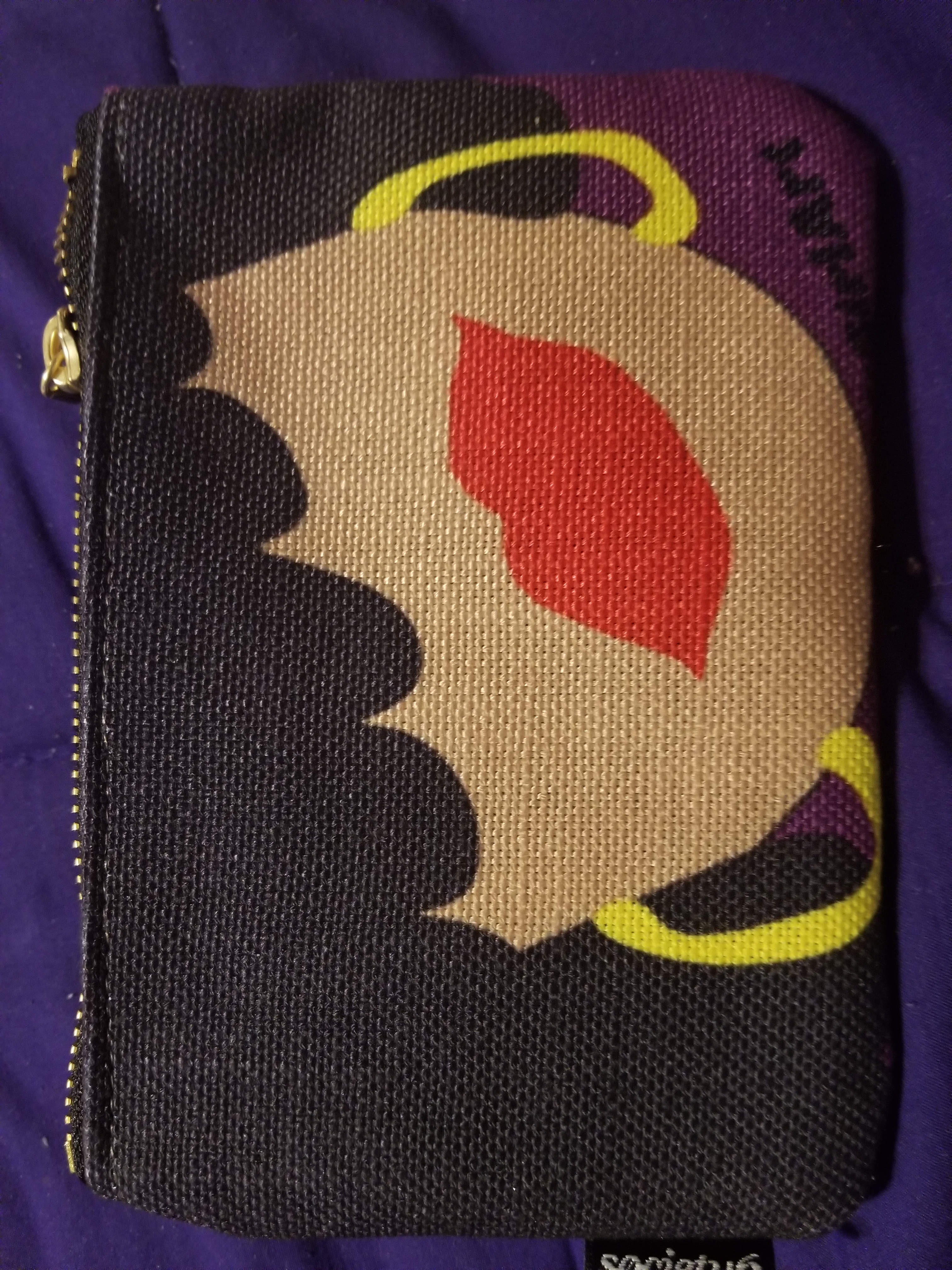
There are choices, sizes and colors to pick from. Shop Black Gyrl Art
Is she Praiser?

Or Maybe She has Your Heart. Either way, we got a shirt with the right message.

This month we will start to exam history of whose origins have background in the African Continent. These stories were absent in many of my history books, but I find it refreshing to see people who look like me doing marvelous things.
We are examining the world during the 1500s. People of color were living and doing incredible things. The Slave was in full force, but not all Africans were slaves. And those who were managed to do great things despite it.
Nzingha Mbande was born in 1583 and was Queen of Ambunde Kingdoms of Ndongo. She was born into a ruling family of Ndongo. She received military and political training as a child. She served as an ambassador to the Portuguese. Later she became ruler of her kingdom after her father and brother passed. She ruled for 37 years. She died in 1663.
Juan de Sesa or Juan Latino was an African Hispanic poet in Spain. He was brought to Spain as a slave with his mother to Dona Eliva. He was allowed to go to school with Eliva’s son. He eventually gain a bachelor’s degree from the University of Granada in 1546. He became a lecturer at the Cathedral School. He published three volumes of Latin poems between 1573 to 1585. He died after 1594.
Portrait of an African woman holding a clock
This is from a portrait of an elegant woman who was in a black dress. It is a fragment of a painting which originally may have been twice as large, but was damaged and cut down (Tomasso). It was painted around 1583 or 1585 and is attributed to Italian artist Annibale Carracci; if true, then he would have painted this in his early twenties. He came from an artistic family and was born in and worked in the city of Bologna until 1595. His early work consists of genre paintings and portraits like this one. (Barton).

My vision evolves. As the world around me changes and I learn more about it, so does the place where I am going. My vision evolves.

Connections
In this adventure thriller, Connections, Sandy and her best friend found missing relatives, spied on cheating spouses and caught a few bail jumpers. This private investigator never imagined the bad guys would chase her.
Running for her life, Sandy Herrick discovered that God was the only one with her who wasn’t talking smack, trying to kill her or get into her pants. As she and her friends try to figure out who framed them, they all discover that there was more to each other than they thought they knew.
As evil forces closed in on them, they have to determine who they trust and what they believe about each other. Would this be enough to save them?
Available on https://www.amazon.com/gp/product/B00C90PVQC/
or https://www.draft2digital.com/book/245541

SAMPLE
Sandy Herrick, a light skinned 42- year-old African-American woman, drove through the hood in her red Ford Taurus to her destination. Her radio was jamming with Ascension by Maxwell. She bobbed her dreaded hair as she sang with it. Dangling on the review mirror by a piece of rough cord was a button head drift pin that had been bent with each end overlapping. She had on a black Fila top that zippered in the front and a comfortable pair of jeans as she had been working out and wanted to show off her curves. While she didn’t have an 18 inch waist, it was smaller than her 36 top and she didn’t measure her bottom, so she decided to flaunt it. February in North Texas was a cross between winter and spring. The average high was about 50, but a clear sky and bright sun could make it feel warmer. The day before there was a good soaking rain, but the ground had dried up except for a few puddles.
“So shouldn’t I realize you’re the highest of the high. If you don’t then I’ll say it,
Don’t ever wonder.[1]”
She jammed all the way to her destination, dancing in the car. She reached it and parked her car down the street from a row of strip clubs. It was eleven o’clock in the morning and the lunch crowd was showing up. She pulled out her camera and favorite snack, Smores Teddy Grahams. She ripped the bag open as she changed the radio station. Fred Hammond came on, as a black Cadillac CTS rolled past her and pulled into one of the club parking lots.
She started singing with Hammond.
“I know you can. I know you will fight my battles if I just be still, Jesus be a fence all around me everyday.[2]”
She sang with the radio and took pictures of a little fat round Anglo American man as he got out of his car and walked into the club. She had a Canon EOS 5D Mark II that did everything except take the pictures for her.
“Jesus be a fence, Jesus be a fence.”
Her phone rang. She smirked as she answered it.
“You know you need to be doing this.”
“Uh?” the caller asked.
“Running errands for Bandit,” Sandy said.
“Bandit?”
“Your boss.”
“Girl, why you call that fool Bandit?”
“You remember that little Indian boy who used to hang out with Johnny Quest.”
“You are such a racist.”
“White people can’t call me racist.”
“Yeah, we can.”
“No you can’t. I do not receive that.”
“Hey, we need to..”
Sandy’s phone beeped with another call interrupting their conversation.
“Oh wait…It’s the other line,” she said. She saw it was Michael.
“Oops, it’s Bandit, I gotta take this one,” she said as she hung up and answered the other line.
“Hello.”
Michael’s East Indian accent asked her, “So where are you?”
Sometimes his English was perfect; sometimes he had an accent.
“Following that stupid guy married to your client,” she replied.
“Where is he?”
“In a strip club.”
“You are kidding.”
“No. And I don’t think it is his first time here. He seems to know the people.”
“Which club?”
“The one on Maschino Rd., Big Daddy’s, next to Ladies World and PTime.”
“Well don’t go inside. Wait outside.”
“No problem.”
She hung up and said to herself, “Brother you have only said a word.”
She watched more cars pull up to the strip clubs. They came in all shapes and sizes. She noticed most were in luxury cars and had dark tinted windows. Most waited patiently for valet parking. They filed into the club like it was bargain day. A black Charger sped past her and turned the corner. The windows were tinted dark, so she couldn’t see the passenger. It didn’t matter, because they had to get out of their car to walk into the club, regardless of where they parked. Then she realized she was out of Teddy Grahams. She looked down to find her bag that held all of her equipment. She searched for her extra bag. She hoped Natalie didn’t take it.
“Tap, Tap” on her window, surprised her so that she jumped and screamed a little. She looked up to see Michael Singh, an East Indian man in his late thirties or early forties, tapping on the window. Michael’s hair was slicked down to his head and his face was clean shaven. He had on a Robert Graham shirt in a wild red pattern with purple sleeve cuffs and neck. His tie matched the pattern of the shirt. She was surprised to see him. She unlocked the door to let him in. When he got in she could see that his black Berluti loafers matched his simple black slacks. He took off his sunglasses and loosened his tie as he got into the car. She thought he looked like a high dollar clown. He spent a lot of money on his clothes, but she thought they looked ridiculous. Michael was all about business. He knew how to make a buck and was very careful how he spent it.
“It is deserted around here,” Michael said as he looked up and down the street.
“Pretty much.”
“We need to make you not look so suspicious,” he said and put his arm around her.
Sandy protested. “I know what I’m doing.”
She hated when he tried to tell her what to do. He could be chauvinistic at times, but she wasn’t sure if this was one of those times. Sometimes he was just dumb. She eyed him suspiciously, but didn’t resist. She didn’t want to offend him and wanted to see what he was doing, so she leaned close to him to look like they were lovers.
Michael asked very matter of factly, “So, where all has he been?”
She gave her report, “Everywhere. For someone who is disabled, he gets around. He’s been to the market twice, TV repair shop, shoe shop, office supplies, but I think one of those places was a bookie joint.”
“You got it on the digital camera?”
“Yeah.”
“May I see it?”
Sandy held her digital Canon camera up and he took it from her. She asked, “You know how to work the camera?”
“I think I can manage…” he said arrogantly as he leaned back and pulled up the images.
As he flipped through the images on the camera, he also reached over and changed the station on her radio to an oldies station. She pulled away and looked at him.
“Excuse me?” Sandy asked.
Michael didn’t even look up from flipping through the pictures on the camera.
“The client is always right. Besides, it’s the Beatles,” he said and began to sing with them. “I feel fine anytime she’s around me.[3]” He exaggerated his accent to bug her.
He looked up for a moment, but before she could protest, he reached over and kissed her firmly on the lips. She was stunned. He looked at her shocked face and smiled.
“Don’t look so stunned, there is a cop watching us.”
She glanced to the front of Big Daddy’s and there was a motorcycle officer watching them.
They continued to embrace. Michael continued to click through the pictures on the camera.
“You need a class in sneak photography,” Michael criticized.
“You need to pay more if you want sneak photography.”
“I’m so glad that she’s my little girl, she’s so glad that she’s telling all the world,” he sang.
“Uh huh. Michael…” she whispered.
Michael looked up enough to see the police pulling up.
“Oh,” he said.
He dropped the camera in the bag between his feet, then Michael pulled Sandy closer and kissed her. She realized that he was much stronger than he looked and she fought her instincts to resist him. She was a curvy woman, who could take care of herself, and this caught her off guard. She had had clients try to kiss her, but she could usually out maneuver them. She wasn’t expecting this from him. He was a little on the stuck up side. She was a little on the homegirl side. The police officer tapped on the passenger window. Michael lowered the window.
“Yes sir?”
The police officer leaned into the open window.
“Just checking to make sure everything is okay. Is everything okay, ma’am?”
He was really checking her out to make sure she wasn’t a prostitute. She could see the look in his eye.
“Yes. Everything is fine,” she said slightly embarrassed.
“We have to get away from the kids when we can,” Michael said interrupting him and pulling Sandy closer. “It’s okay, we own this warehouse.”
The officer saw the expensive watch on Michael’s wrist and believed him.
The officer laughed, and then said, “Be careful.” He tapped the roof of the car and left.
Michael raised the window up. He picked up the camera and went back to looking at the pictures.
“You need to let me know when you are going to do something like that,” she said fussing about the kiss.
“I’ll be right back,” Michael said and got out of the car with the camera.
“Hold on partner, where you going with my camera?”
“I’ll be right back,” Michael said with a very authoritative voice.
He got out of the car, closed the door, and walked down the street toward the valet. On his way, he saw a brown paper bag lying on the ground. He picked it up and put the camera in it.
“Bandit, what are you doing with my camera?” Sandy said mumbling to herself.
She watched Michael talk to the valet for a moment then give the brown bag with the camera to her. He then, walked down the street opposite of the direction of Sandy. Sandy started her car and followed him. She watched him dart into an alley. She followed. In the alley she saw him standing next to a black Dodge Charger. He was fishing through the trunk when she pulled up.
“Have you lost your Indian mind? Do you know how much that camera cost?”
Michael laughed at her question.
“She’ll bring it back. She is going to wrap up this case for us. Good job, Sandy. And by the way, I’m an American.”
“How do you know she is going to bring it back?”
“I know her. I bailed her out of jail. She’ll bring it back. In the meantime, here’s your next case,” he said handing her a file. “And if I were you, I wouldn’t stay in this neighborhood too long. It looks rough.”
He laughed to himself as he got into his car.
Sandy leaned on her car and watched Michael drive away. She thought about how she wanted to pimp slap him, but she didn’t. He was her only paying client at the time. He was an arrogant punk.
[1] Ascension (Don’t Ever Wonder); Menard Maxwell, Gerard Davis, Shur Itaal; Maxwell’s Urban Hang Suite; 1996
[2] Jesus Be A Fence; Sam Cooke; performed by Fred Hammond and RFC; Purpose By Design; 2000
[3] I Feel Fine, John Lennon & Paul McCartney, performed by the Beatles; 1964






 UPP Creative Media