General Moses is a drawing by Charles White of Harriet Tubman. She sits on these rocks like she is on a throne, giving counsel to many. The first time I saw this I remember thinking wow, what a powerful woman this was. This is an ink drawing created by Charles White in 1965.
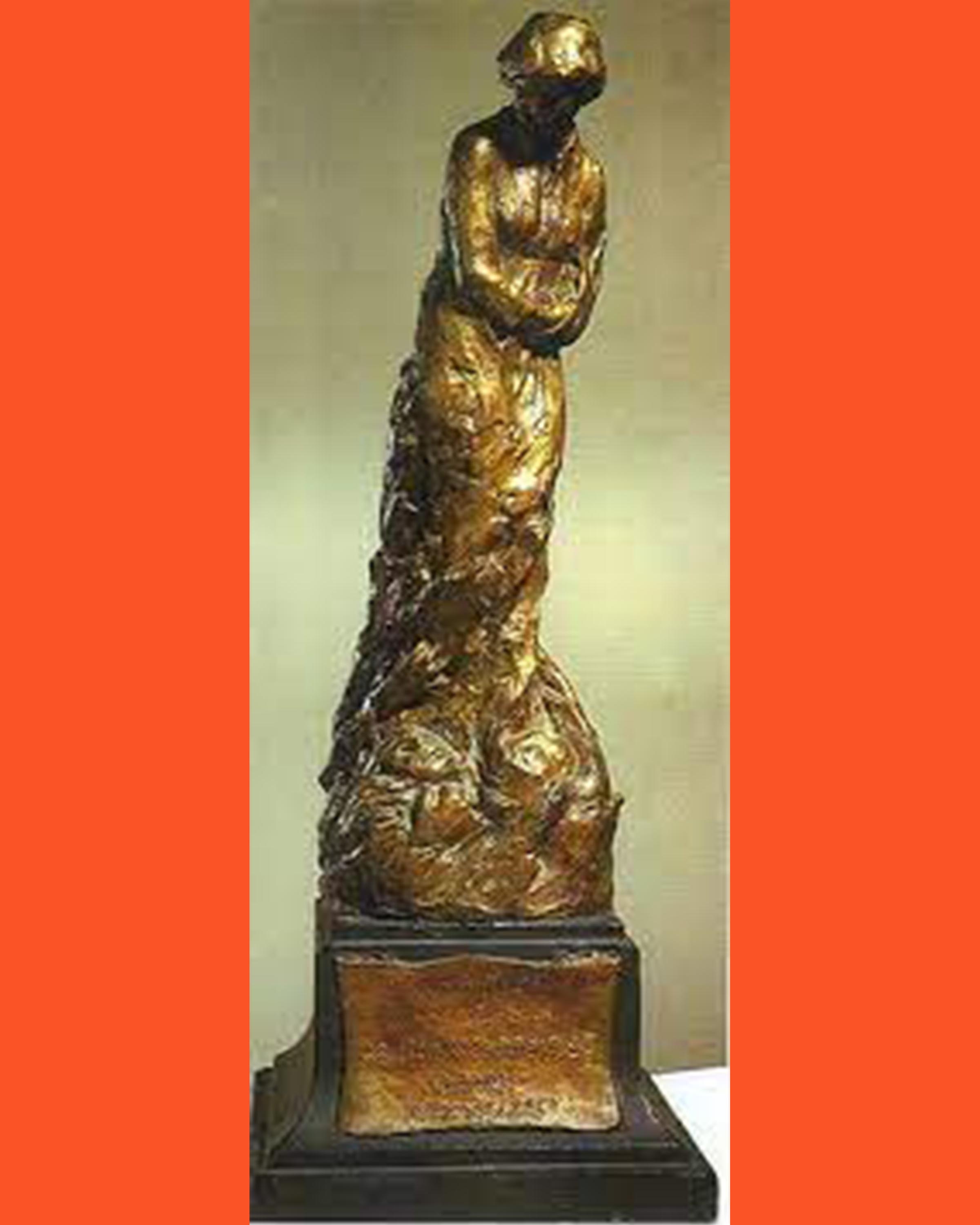
Mother and Child Sorrow by Meta Vaux Warrick Fuller in 1962 and is a bronze cast sculpture. I love that a woman was creating art that spoke to the abuse African Americans received during that time in history. Cheers to women who tell our stories by any means.
When I first saw this work by Warrick I thought WOW.
In Memory of Mary Turner: As a Silent Protest Against Mob Violence
This sculpture, depicting a woman cradling an infant in her arms and leaning away from grasping hands and flames at the base, was created in response to the vicious lynching of a young woman named Mary Turner in 1918. Mary Turner’s husband had been lynched and she publicly denounced his murder. In response, a mob of hundreds captured her, hung her upside down from a tree, and brutally killed her and her unborn child.
Artist Meta Warrick Fuller’s sculpture is one of the first created by an African American specifically depicting the brutality of lynch mobs.
Museum of African American History, Boston & Nantucket
African American stories were not told during her time. At least not the truth. She became known for using her work to address social injustice towards African Americans during her lifetime. Meta Vaux Warrick Fuller was a poet, painter and sculptor at the turn of the 20th Century. Born in Philadelphia in 1877, her parents were able to send her to a good school which helped develop her artistic ability. Her parents were part of the African American middle class with successful businesses.
Fuller’s work was shown in high school projects at the 1893 World’s Columbian Exposition in Chicago. She received a scholarship to a university and after graduation, she moved to Paris, France to study with Raphael Collin. Henry Ossawa Tanner, the first African American painter to gain international fame, was also a family friend.
In 1907 Fuller won a gold medal for her work in an exhibition at the 1907 Jamestown Tercentennial. She created 150 dioramas depicting the progress African Americans had made from when slaves landed in Jamestown to the beginning of 1900.
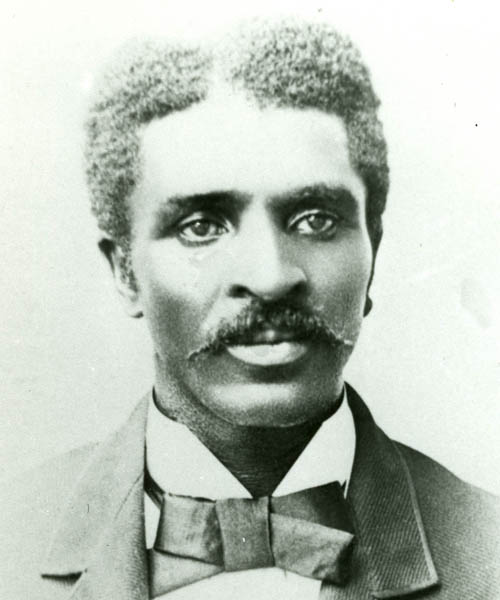
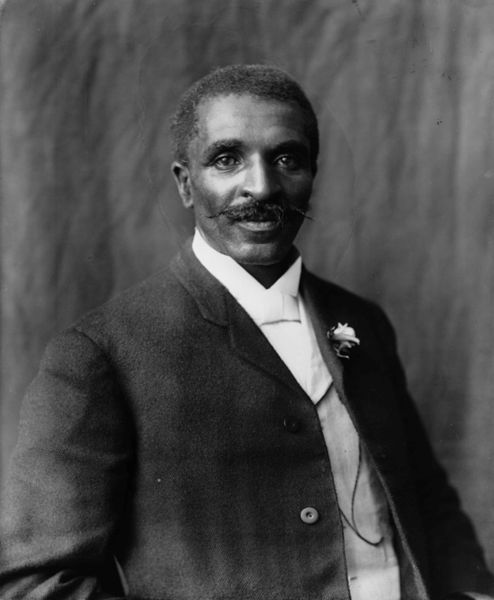
George Washington Carver became one of the leading agronomists of his time, pioneering numerous uses for peanuts, soybeans, and sweet potatoes. Born a slave in Missouri in midst of the Civil War, Carver was fascinated by plants from an early age. As the first African-American undergraduate student at Iowa State, he studied soybean fungi and developed new means of crop rotation. After earning his master’s degree, Carver accepted a job at Alabama’s Tuskegee Institute, a leading university of African Americans. It was at Tuskegee that Carver made his greatest contributions to science, developing more than 300 uses for the peanut alone, including soap, skin lotion, and paint. (information from thoughtco.com)
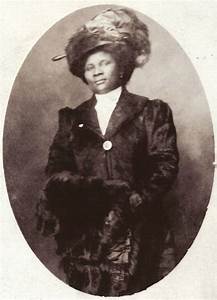
Born Sarah Breedlove, Madame C.J. Walker became the first female African-American millionaire by inventing a line of cosmetics and hair products aimed at black consumers in the first decades of the 20th century. Walker pioneered the use of female sales agents, who traveled door to door across the U.S. and Caribbean selling her products. (information from thoughtco.com)
Madam C.J. Walker’s remarkable career helps tell the story of early black entrepreneurship and philanthropy. Born to former slaves, through her own vision and hard work, she provided education and employment for black women. Walker became a millionaire and was an inspiring role model for several generations.
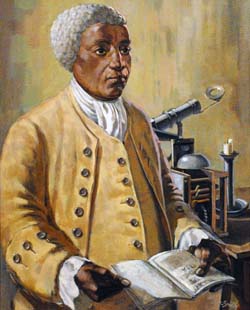
Benjamin Banneker was a self-educated astronomer, mathematician, and farmer. He was among a few hundred free African-Americans living in Maryland, where slavery was legal at the time. Banneker is perhaps best known for a series of almanacs he published between 1792 and 1797 that contained detailed astronomical calculations of his, as well as writings on topics of the day. Banneker also had a small role in helping to survey Washington D.C. in 1791 (this information comes from thoughtco.com)
Jacob Lawrence is renowned for his narrative painting series that chronicles the experiences of African Americans, which he created during a career of more than six decades. Using geometric shapes and bold colors on flattened picture planes to express his emotions, he fleshed out the lives of Tubman, Frederick Douglass, John Brown, and African Americans migrating north from the rural south during and after slavery. Lawrence was 12 in 1929 when his family settled in Harlem, New York, at a time when African American intellectual and artistic life was flourishing there.
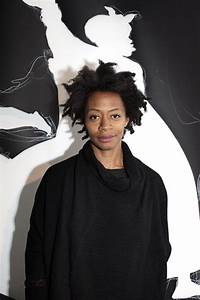
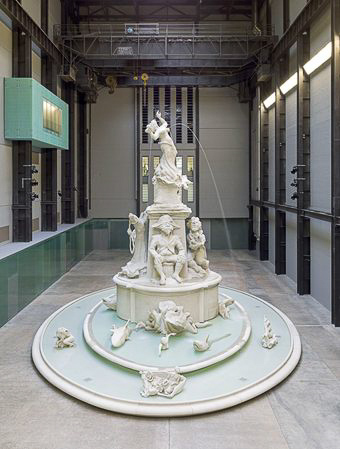
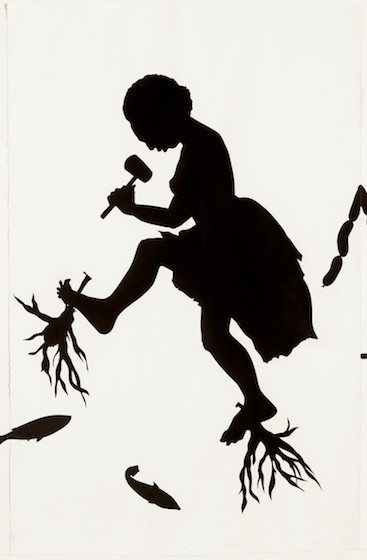
Kara Walker’s art has been exhibited across the globe. Her 1994 room-sized mural, titled Gone: An Historical Romance of a Civil War as It Occurred b’tween the Dusky Thighs of One Young Negress and Her Heart, brought her into the art world spotlight. The work consists of black cut-out silhouettes and depicts narratives of slavery and racism in the history of the south.
Tate Modern Hyundai Commission 2019.
Turbine Hall, Tate Modern.
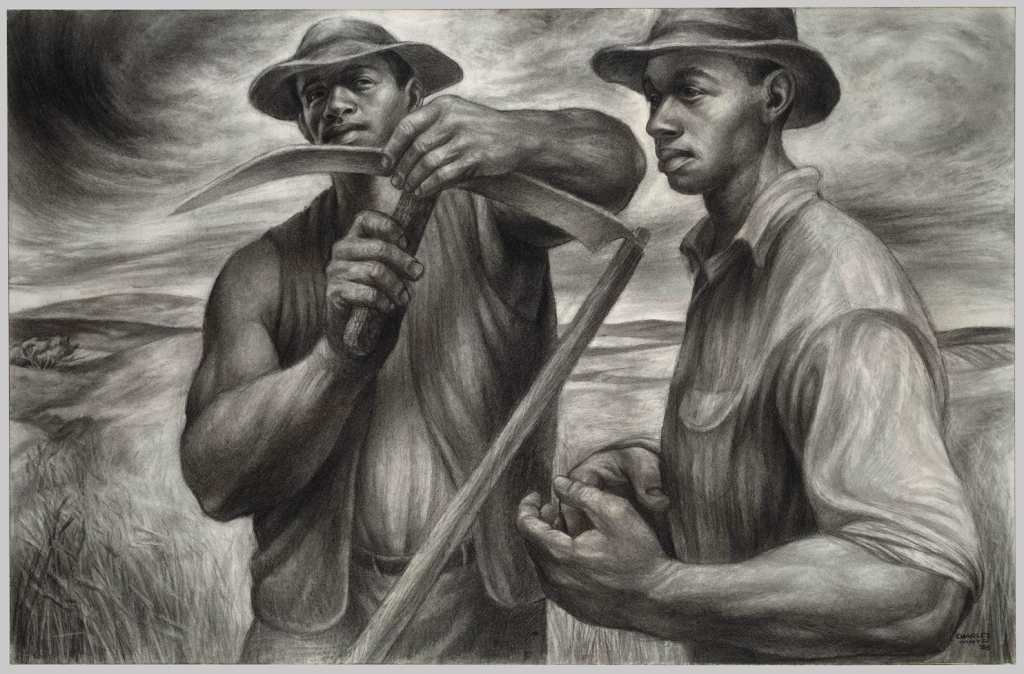
Charles White, the meticulous draftsman used his skill to render human emotion and endurance in the face of such obstacles as discrimination. His works from the 1950s, the decade when the civil rights struggle exploded in the United States, show the cost of such perseverance in images of black men and women fighting for social justice.
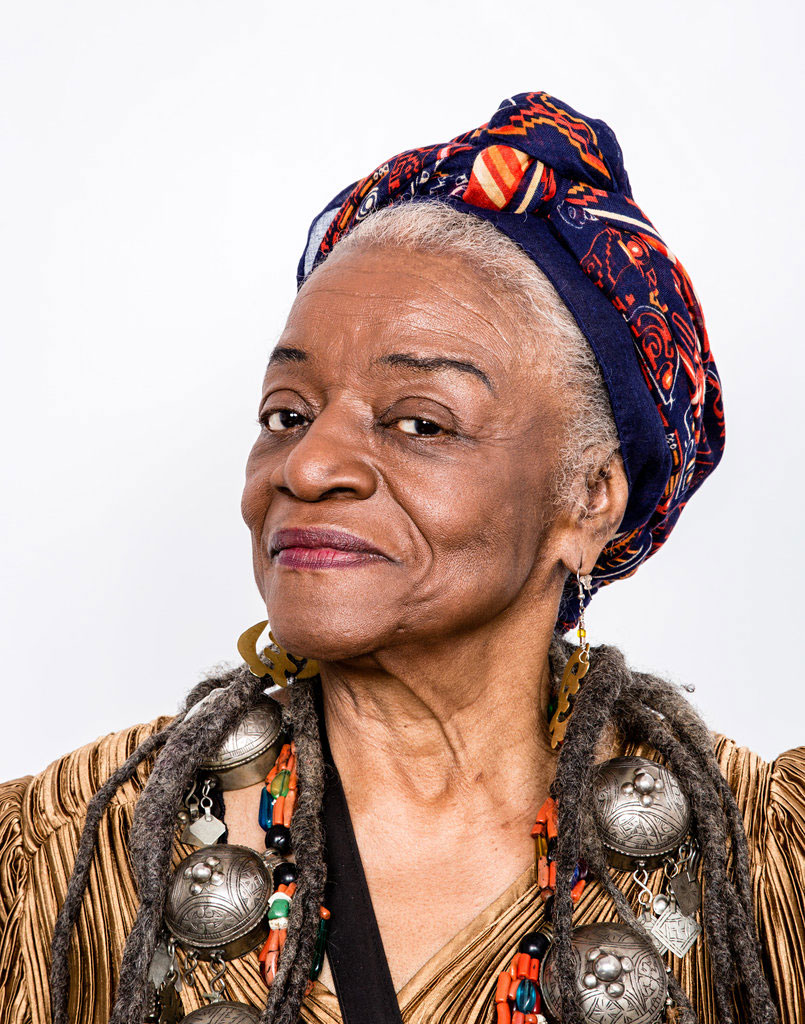
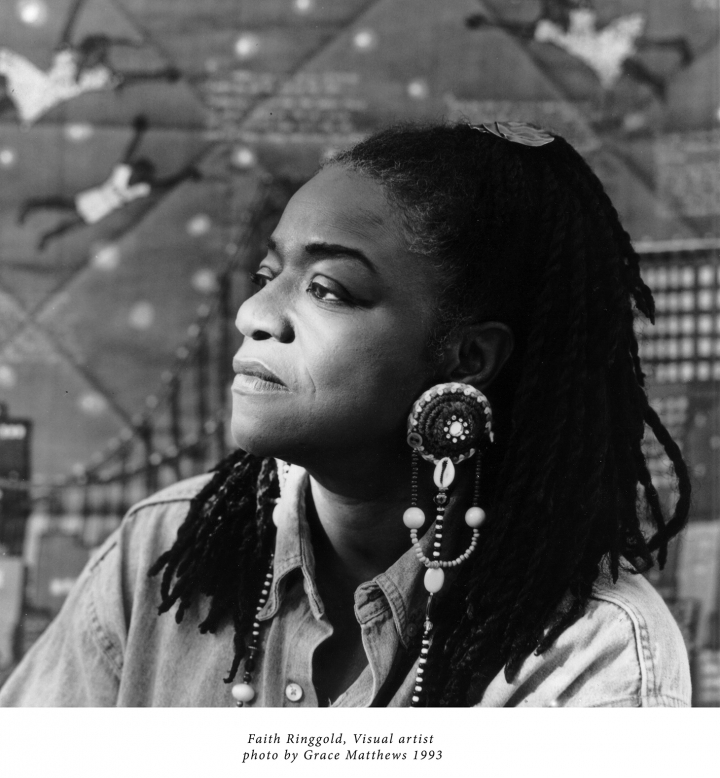
Artist and author Faith Ringgold was inspired by the fabrics used by her mother when she was a child. She has written children’s books, taught visual art, and produced narrative works about gender and race. Notably, Ringgold helped form an activist committee in the 1970s protesting the inequal presence of female artists at the Whitney Biennial. Her mosaics are present in subway stations, and her sculptures and quilts, such as the 1985 Flag Story Quilt, are part of permanent collections in New York City.
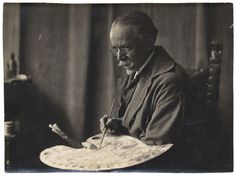
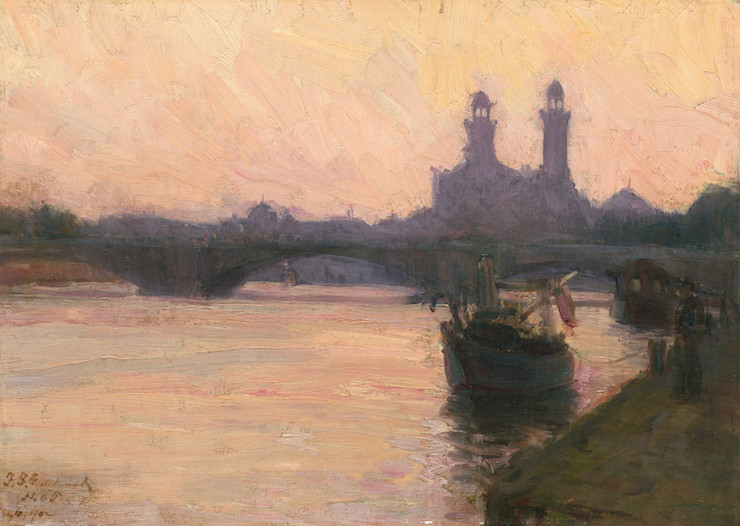
Painted 11 years after Henry Ossawa Tanner first settled in Paris in 1891, this rapidly executed plein-air oil sketch is one of the artist’s rare depictions of the French capital. His vantage point is from the right bank of the Seine looking west toward the towers of the Palais du Trocadéro, the exhibition hall built for the 1878 World’s Fair. A diffuse, hazy light fills the scene, which is free of human activity save for a solitary figure dressed in black at the lower right. With short, loose brushstrokes laden with paint, Tanner captured the scattered reflections of light across both river and sky. (from National Gallery of Art)
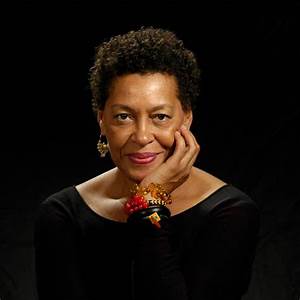
May Flowers, a compelling photograph of three young African American girls, succinctly addresses the issues of race, class, and gender that the American artist Carrie Mae Weems has explored for decades. Related to a video Weems made in 2002 titled May Days Long Forgotten, the photograph evokes both spring’s renewal and May Day, the international workers’ holiday. Befitting these themes, May Flowers depicts girls from working-class families in Syracuse, New York, wearing floral-print dresses. Its tondo format, truncated foreground space, and tight focus on the figures harks back to Renaissance paintings of the Madonna and child, while its subject—adolescent girls with flowers in their hair, lounging on the grass—recalls both 19th-century paintings and photographs, such as those by Édouard Manet and Julia Margaret Cameron. Weems intensified this historical character by printing the photograph in sepia tones and placing it in a circular frame like those gracing the walls of 19th-century parlors. (from National Gallery of Art)



















 UPP Creative Media