
Hello October
Nzinga Mbande was born into the ruling family of Ndongo in 1583 in Central West Africa. Nzinga received military and political training as a child, and she also became an ambassador to the Portuguese Empire. She was a Southwest African ruler who ruled as queen of the Ambundu Kingdoms of Ndongo (1624–1663) and Matamba (1631–1663), located in present-day northern Angola.
She was the daughter of Ngola Kilombo of Ndongo. Her mother, Kengela ka Nkombe, was one of her father’s slave wives and his favorite concubine. According to legend, the birthing process was very difficult for Kengela, her mother; Njinga received her name because the umbilical cord was wrapped around her neck (the Kimbundu verb kujinga means to twist or turn).
Children of the royal household who survived difficult or unusual births were believed to possess spiritual gifts, and some saw their births as an indicator the person would grow to become a powerful and proud person. Njinga had two sisters, Kambu, or Lady Barbara and Funji, or Lady Grace. She also had a brother, Mbandi, who was heir apparent to throne.
The Portuguese first came to Ndongo in 1575 when they established a trading post in Luanda. By the 1580s, large parts of Ndongo had fallen under Portuguese control, who burned villages and took hostages who later turned into slaves. Nzinga’s father, Ngola Kilombo Kia Kasenda became the king of Ndongo in 1583. He had a difficult time fighting the Portuguese and other local kingdoms who tried to take over.
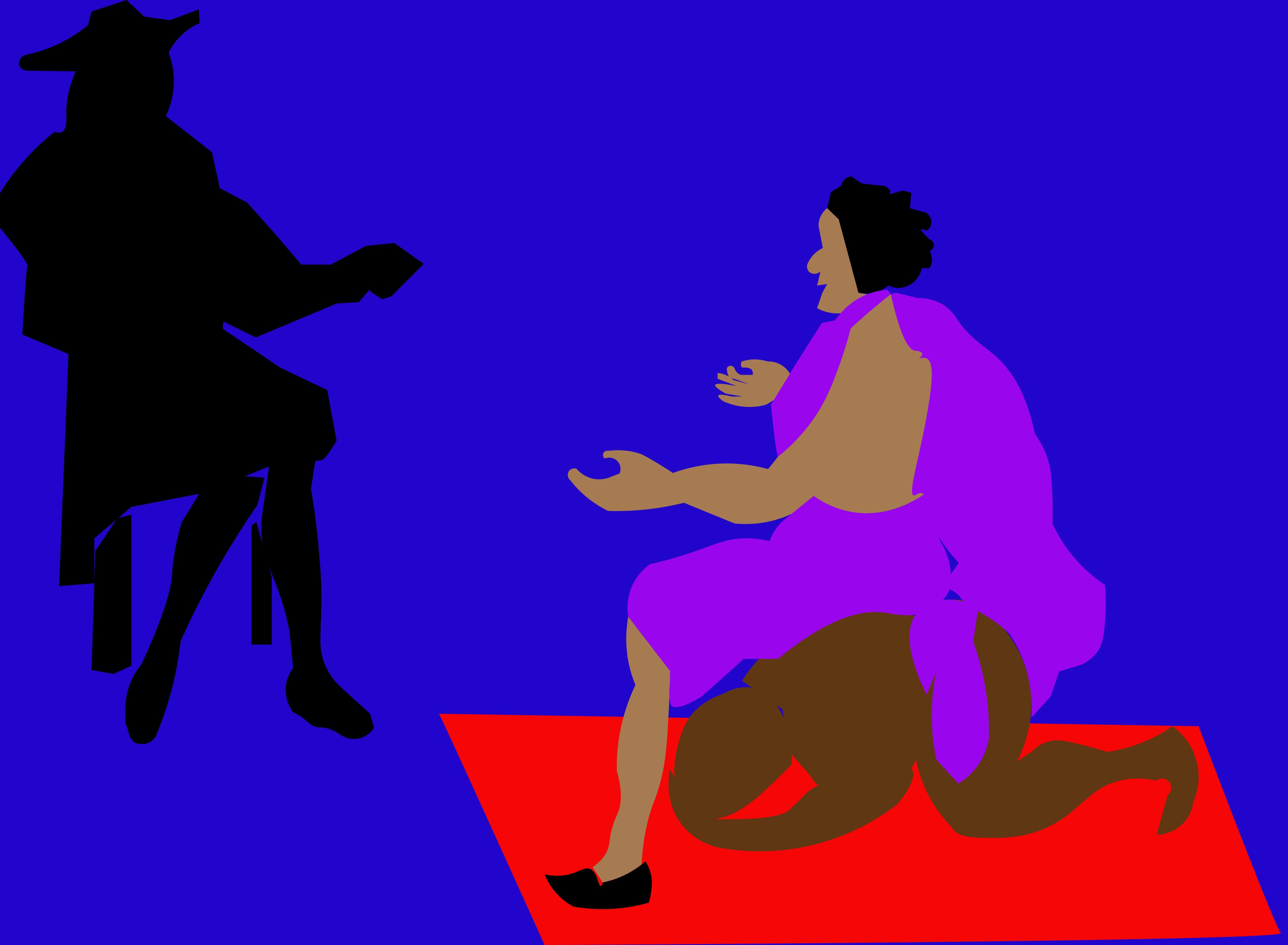
As an ambassador, Nzinga tried to negotiate peace with the Portuguese. She demanded that Portugal remove the forts built inside Ndongan territory and was adamant that Ndongo would not pay tribute to Portugal, noting that only conquered peoples paid tribute and her people had not been defeated. As a power play, the Portuguese would not give her a chair during negotiations. Members of her party would form a human chair so that she was always on the same level as her counterparts.
Nzinga assumed power over Ndongo after the death of her father and brother, who both served as kings, and she went on to conquer Matamba. To weaken the Portuguese colonial administration, Nzinga dispatched messengers (makunzes) to encourage Mbande slaves to flee Portuguese plantations and join her kingdom. This strengthen her kingdom as the escapees joined her kingdom.
She ruled during a period of rapid growth in the African slave trade by the Portuguese Empire in South West Africa. Nzinga fought for the independence of her kingdoms against the Portuguese in a reign that lasted 37 years. She died in 1663.
She is remembered as the Mother of Angola, the fighter of negotiations. Statues were made in her honor
https://en.wikipedia.org/wiki/Nzinga_of_Ndongo_and_Matamba


Nzinga Mbande was born into the ruling family of Ndongo in 1583 in Central West Africa. Nzinga received military and political training as a child, and she also became an ambassador to the Portuguese Empire. She was a Southwest African ruler who ruled as queen of the Ambundu Kingdoms of Ndongo (1624–1663) and Matamba (1631–1663), located in present-day northern Angola.
She was the daughter of Ngola Kilombo of Ndongo. Her mother, Kengela ka Nkombe, was one of her father’s slave wives and his favorite concubine. According to legend, the birthing process was very difficult for Kengela, her mother; Njinga received her name because the umbilical cord was wrapped around her neck (the Kimbundu verb kujinga means to twist or turn).
Children of the royal household who survived difficult or unusual births were believed to possess spiritual gifts, and some saw their births as an indicator the person would grow to become a powerful and proud person. Njinga had two sisters, Kambu, or Lady Barbara and Funji, or Lady Grace. She also had a brother, Mbandi, who was heir apparent to throne.
The Portuguese first came to Ndongo in 1575 when they established a trading post in Luanda. By the 1580s, large parts of Ndongo had fallen under Portuguese control, who burned villages and took hostages who later turned into slaves. Nzinga’s father, Ngola Kilombo Kia Kasenda became the king of Ndongo in 1583. He had a difficult time fighting the Portuguese and other local kingdoms who tried to take over.
As an ambassador, Nzinga tried to negotiate peace with the Portuguese. She demanded that Portugal remove the forts built inside Ndongan territory and was adamant that Ndongo would not pay tribute to Portugal, noting that only conquered peoples paid tribute and her people had not been defeated. As a power play, the Portuguese would not give her a chair during negotiations. Members of her party would form a human chair so that she was always on the same level as her counterparts.
Nzinga assumed power over Ndongo after the death of her father and brother, who both served as kings, and she went on to conquer Matamba. She ruled during a period of rapid growth in the African slave trade by the Portuguese Empire in South West Africa. Nzinga fought for the independence of her kingdoms against the Portuguese in a reign that lasted 37 years.
https://en.wikipedia.org/wiki/Nzinga_of_Ndongo_and_Matamba
Nzinga Mbande was born into the ruling family of Ndongo in 1583 in Central West Africa. Nzinga received military and political training as a child, and she also became an ambassador to the Portuguese Empire. She was a Southwest African ruler who ruled as queen of the Ambundu Kingdoms of Ndongo (1624–1663) and Matamba (1631–1663), located in present-day northern Angola.
She was the daughter of Ngola Kilombo of Ndongo. Her mother, Kengela ka Nkombe, was one of her father’s slave wives and his favorite concubine. According to legend, the birthing process was very difficult for Kengela, her mother; Njinga received her name because the umbilical cord was wrapped around her neck (the Kimbundu verb kujinga means to twist or turn).
Children of the royal household who survived difficult or unusual births were believed to possess spiritual gifts, and some saw their births as an indicator the person would grow to become a powerful and proud person. Njinga had two sisters, Kambu, or Lady Barbara and Funji, or Lady Grace. She also had a brother, Mbandi, who was heir apparent to throne.
The Portuguese first came to Ndongo in 1575 when they established a trading post in Luanda. By the 1580s, large parts of Ndongo had fallen under Portuguese control, who burned villages and took hostages who later turned into slaves. Nzinga’s father, Ngola Kilombo Kia Kasenda became the king of Ndongo in 1583. He had a difficult time fighting the Portuguese and other local kingdoms who tried to take over.
Nzinga assumed power over Ndongo after the death of her father and brother, who both served as kings, and she went on to conquer Matamba. She ruled during a period of rapid growth in the African slave trade by the Portuguese Empire in South West Africa. Nzinga fought for the independence of her kingdoms against the Portuguese in a reign that lasted 37 years.
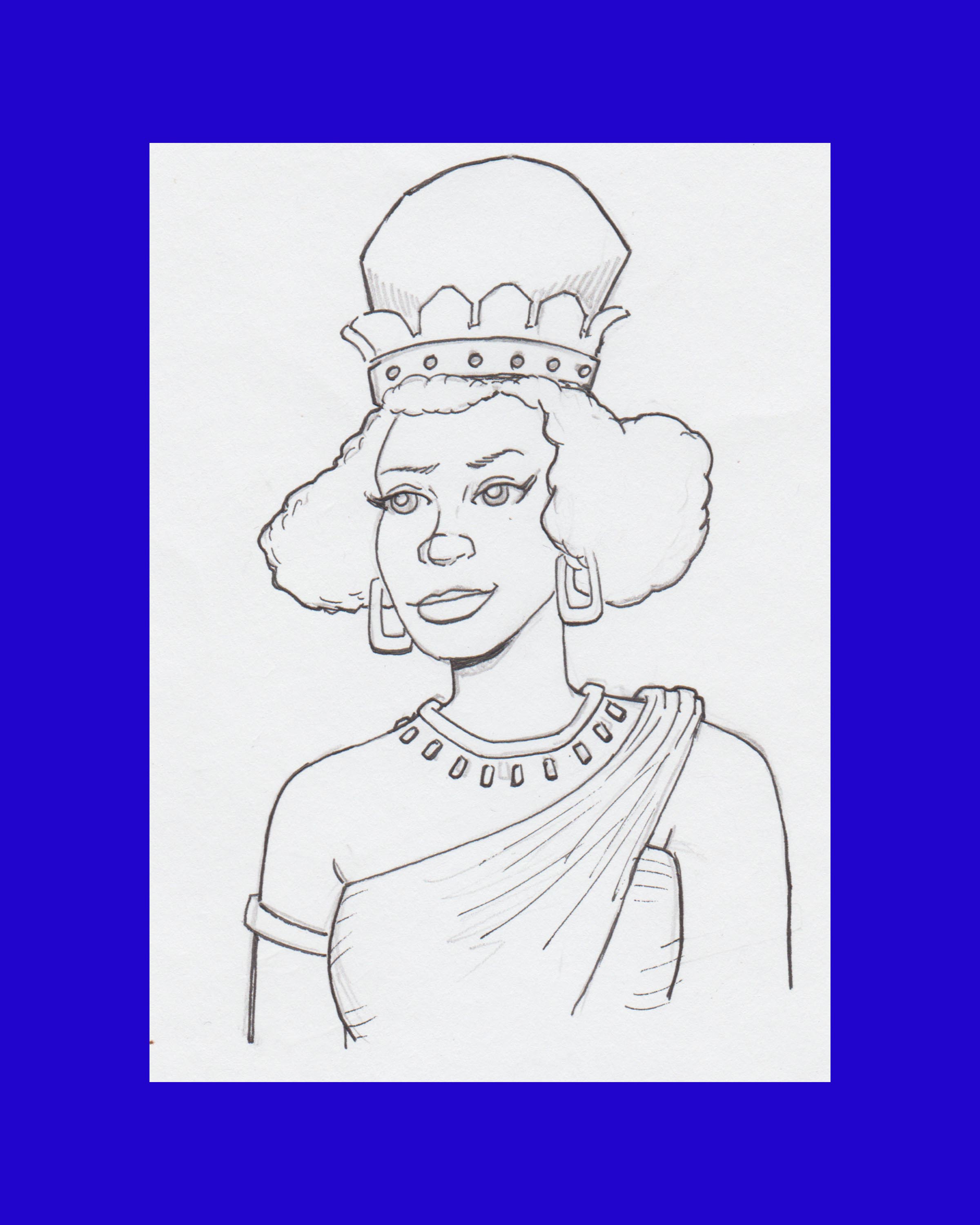
This artwork is by my brother, Devin Anderson
https://en.wikipedia.org/wiki/Nzinga_of_Ndongo_and_Matamba
Nzinga Mbande was born into the ruling family of Ndongo in 1583 in Central West Africa. Nzinga received military and political training as a child, and she also became an ambassador to the Portuguese Empire. She was a Southwest African ruler who ruled as queen of the Ambundu Kingdoms of Ndongo (1624–1663) and Matamba (1631–1663), located in present-day northern Angola.
She was the daughter of Ngola Kilombo of Ndongo. Her mother, Kengela ka Nkombe, was one of her father’s slave wives and his favorite concubine. According to legend, the birthing process was very difficult for Kengela, her mother; Njinga received her name because the umbilical cord was wrapped around her neck (the Kimbundu verb kujinga means to twist or turn).
Children of the royal household who survived difficult or unusual births were believed to possess spiritual gifts, and some saw their births as an indicator the person would grow to become a powerful and proud person. Njinga had two sisters, Kambu, or Lady Barbara and Funji, or Lady Grace. She also had a brother, Mbandi, who was heir apparent to throne.
She assumed power over Ndongo after the death of her father and brother, who both served as kings, and went on to conquer Matamba. She ruled during a period of rapid growth in the African slave trade by the Portuguese Empire in South West Africa. Nzinga fought for the independence of her kingdoms against the Portuguese in a reign that lasted 37 years.
https://en.wikipedia.org/wiki/Nzinga_of_Ndongo_and_Matamba1


Bert Williams was a Bahamian-born American entertainer, one of the pre-eminent entertainers of the Vaudeville era and one of the most popular comedians for all audiences of his time. He was born in the Bahamas in November of 1874.
His parents emigrated when he was 11 years old. He graduated from Riverside High School and attended Stanford with plans to become a civil engineer. He had to abandon his studies to help his family and began to work for Martin and Selig’s Mastodon Minstrels. He met George Walker who would be a lifelong friend for a dynamic comedy team.
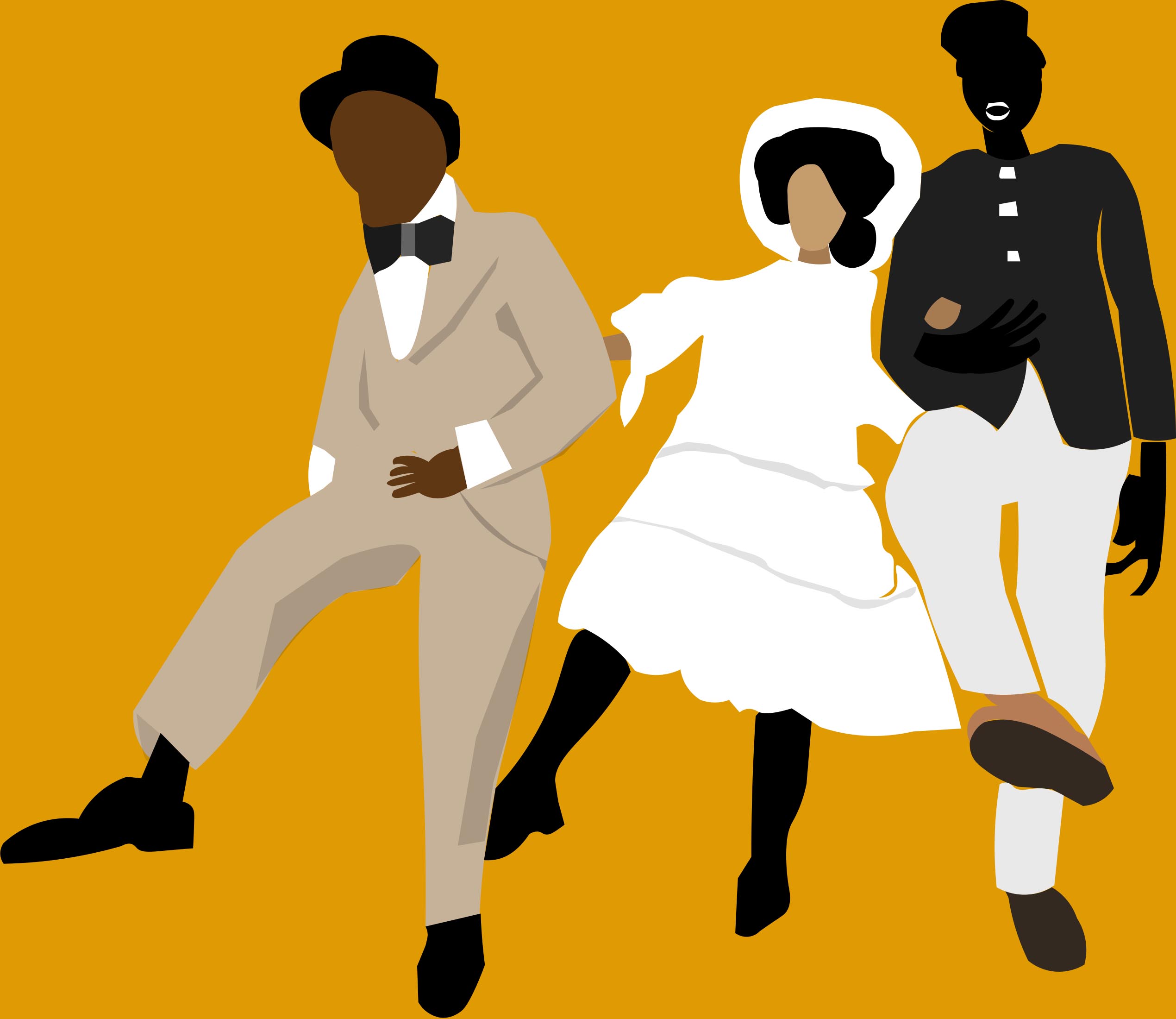
In late 1896, the pair were added to The Gold Bug, a struggling musical. The show did not survive, but Williams & Walker got good reviews, and were able to secure higher profile bookings. They headlined the Koster and Bial’s vaudeville house for 36 weeks in 1896–97, where their spirited version of the cakewalk helped popularize the dance.
The pair performed in burnt-cork blackface, as was customary at the time, billing themselves as “Two Real Coons” to distinguish their act from the many white minstrels also performing in blackface. Williams also made his first recordings in 1896.
Williams & Walker had their greatest success with Sons of Ham, a broad farce that did not include any of the extreme “darkie” stereotypes that were then common. One of the show’s songs, “Miss Hannah from Savannah,” even touched upon class divisions within the black community.
In September 1902, Williams & Walker debuted their next show, In Dahomey, a full-length musical written, directed and performed by an all-black cast. It was an even bigger hit.
Part of the inspiration for the show was Williams’ copy of a 1670 book, Africa, in which author John Ogilby traced the history of the continent’s tribes and peoples. “With this volume, I could prove that every Pullman porter is the descendant of a king,” said Williams.
They were one of the most successful teams in their era, performing in the US and abroad, even delivering a command performance in England for King Goerge in 1903.
The two performed together until Walker was too sick to perform in 1909. He died in 1911. Williams would strike out on his own and it would change everything.
In 1910 Williams joined Flo Ziegfeld as a featured performer in an all-white show. In the beginning the some of the white performers refused to work with Williams. He also faced prejudice from the writers, which made him have to write his own material. But that turned out to be a good thing because when the show opened, he was a sensation.
Williams is credited as being the first Black man to have the leading role in a film: Darktown Jubilee in 1914. And he also signed an exclusive recording contract with Columbia Records.
Known as one of the highest paid African American performers in history, Williams worked in many productions including the Ziegfeld Follies of 1917 with WC Fields, Fannie Brice, Eddie Cantor and more. He worked for the Follies until 1919.
In 1922 during a performance of Under the Bamboo Tree, Williams collapsed on stage during a performance in Detroit, Michigan. He returned to New York and died at his home in March at the age of 47.
https://en.wikipedia.org/wiki/Bert_Williams

Bert Williams
Bert Williams was a Bahamian-born American entertainer, one of the pre-eminent entertainers of the Vaudeville era and one of the most popular comedians for all audiences of his time. He was born in the Bahamas in November of 1874.
His parents emigrated when he was 11 years old. He graduated from Riverside High School and attended Stanford with plans to become a civil engineer. He had to abandon his studies to help his family and began to work for Martin and Selig’s Mastodon Minstrels. He met George Walker who would be a lifelong friend for a dynamic comedy team.
In late 1896, the pair were added to The Gold Bug, a struggling musical. The show did not survive, but Williams & Walker got good reviews, and were able to secure higher profile bookings. They headlined the Koster and Bial’s vaudeville house for 36 weeks in 1896–97, where their spirited version of the cakewalk helped popularize the dance.
The pair performed in burnt-cork blackface, as was customary at the time, billing themselves as “Two Real Coons” to distinguish their act from the many white minstrels also performing in blackface. Williams also made his first recordings in 1896.
Williams & Walker had their greatest success with Sons of Ham, a broad farce that did not include any of the extreme “darkie” stereotypes that were then common. One of the show’s songs, “Miss Hannah from Savannah,” even touched upon class divisions within the black community.
In September 1902, Williams & Walker debuted their next show, In Dahomey, a full-length musical written, directed and performed by an all-black cast. It was an even bigger hit.
Part of the inspiration for the show was Williams’ copy of a 1670 book, Africa, in which author John Ogilby traced the history of the continent’s tribes and peoples. “With this volume, I could prove that every Pullman porter is the descendant of a king,” said Williams.
They were one of the most successful teams in their era, performing in the US and abroad, even delivering a command performance in England for King Goerge in 1903.
The two performed together until Walker was too sick to perform in 1909. He died in 1911. Williams would strike out on his own and it would change everything.
Williams is credited as being the first Black man to have the leading role in a film: Darktown Jubilee in 1914. Known as one of the highest paid African American performers in history, Williams worked in many productions including the Ziegfeld Follies of 1917 with WC Fields, Fannie Brice, Eddie Cantor and more. In 1922 Williams collapsed on stage during a performance in Detroit, Michigan. He returned to New York and died at his home in March at the age of 47.
https://en.wikipedia.org/wiki/Bert_Williams
Bert Williams
Bert Williams was a Bahamian-born American entertainer, one of the pre-eminent entertainers of the Vaudeville era and one of the most popular comedians for all audiences of his time. He was born in the Bahamas in November of 1874.
His parents emigrated when he was 11 years old. He graduated from Riverside High School and attended Stanford with plans to become a civil engineer. He had to abandon his studies to help his family and began to work for Martin and Selig’s Mastodon Minstrels. He met George Walker who would be a lifelong friend for a dynamic comedy team. They were one of the most successful teams in their era, performing in the US and abroad, even delivering a command performance in England for King Goerge in 1903.
The two performed together until Walker was too sick to perform in 1909. He died in 1911. Williams would strike out on his own and it would change everything.
Williams is credited as being the first Black man to have the leading role in a film: Darktown Jubilee in 1914. Known as one of the highest paid African American performers in history, Williams worked in many productions including the Ziegfeld Follies of 1917 with WC Fields, Fannie Brice, Eddie Cantor and more. In 1922 Williams collapsed on stage during a performance in Detroit, Michigan. He returned to New York and died at his home in March at the age of 47.
This portrait was drawn by brother, Devin Anderson
https://en.wikipedia.org/wiki/Bert_Williams

 UPP Creative Media