As you learn to rest, enjoy it. Relax. Don’t let this quiet time become cluttered with a list of things to do, the things you are worried about, or anything that causes you stress. Make sure this is a time of rejuvenation.

As you learn to rest, enjoy it. Relax. Don’t let this quiet time become cluttered with a list of things to do, the things you are worried about, or anything that causes you stress. Make sure this is a time of rejuvenation.
I love a Road Trip. But not as much as I did when I was younger. At my age the trip has to be very defined with reward stops along the way, such as a great restaurant for dinner. Or a historical monument along the way. There is a lot to see across this country. Make sure you hit the road this summer.




Anna Julia Haywood Cooper (1858-1964) was a writer, teacher, and activist who championed education for African Americans and women.
Born into bondage in 1858 in Raleigh, North Carolina, Anna Haywood married George A.G. Cooper, a teacher of theology at Saint Augustine’s, in 1877. When her husband died two years later, Cooper decided to pursue a college degree. She attended Oberlin College in Ohio on a scholarship, earning a BA in 1884 and a masters degree in mathematics in 1887. After graduation, Cooper worked at Wilberforce University and Saint Augustine’s before moving to Washington, D.C. to teach at Washington Colored High School. During her years as a teacher and principal at M Street High School, Cooper also completed her first book, titled A Voice from the South: By a Black Woman of the South, published in 1892, and delivered many speeches calling for civil rights and women’s rights.
On February 27, 1964, Cooper died in Washington, DC at the age of 105.

Tignon Law
By the 1700 The institution of slavery reached around the world. Captured Africans were not passive about the institution. They fought where they stood. In 1786 Governor Don Estevan Miro of New Orleans passed the Tignon Law that stated all Creole women of color must tie up their hair and dress as in the slave class whether they are slave or free. In trying to limit the standards of beauty to this section of the population, they shaped the way women of color would react for centuries.
Haiti Revolution
The Haitian Revolution was a successful insurrection by self-liberated slaves against French colonial rule in Saint-Domingue, now the sovereign state of Haiti. The revolt began on 22 August 1791, and ended in 1804 with the former colony’s independence.
https://en.wikipedia.org/wiki/Haitian_Revolution

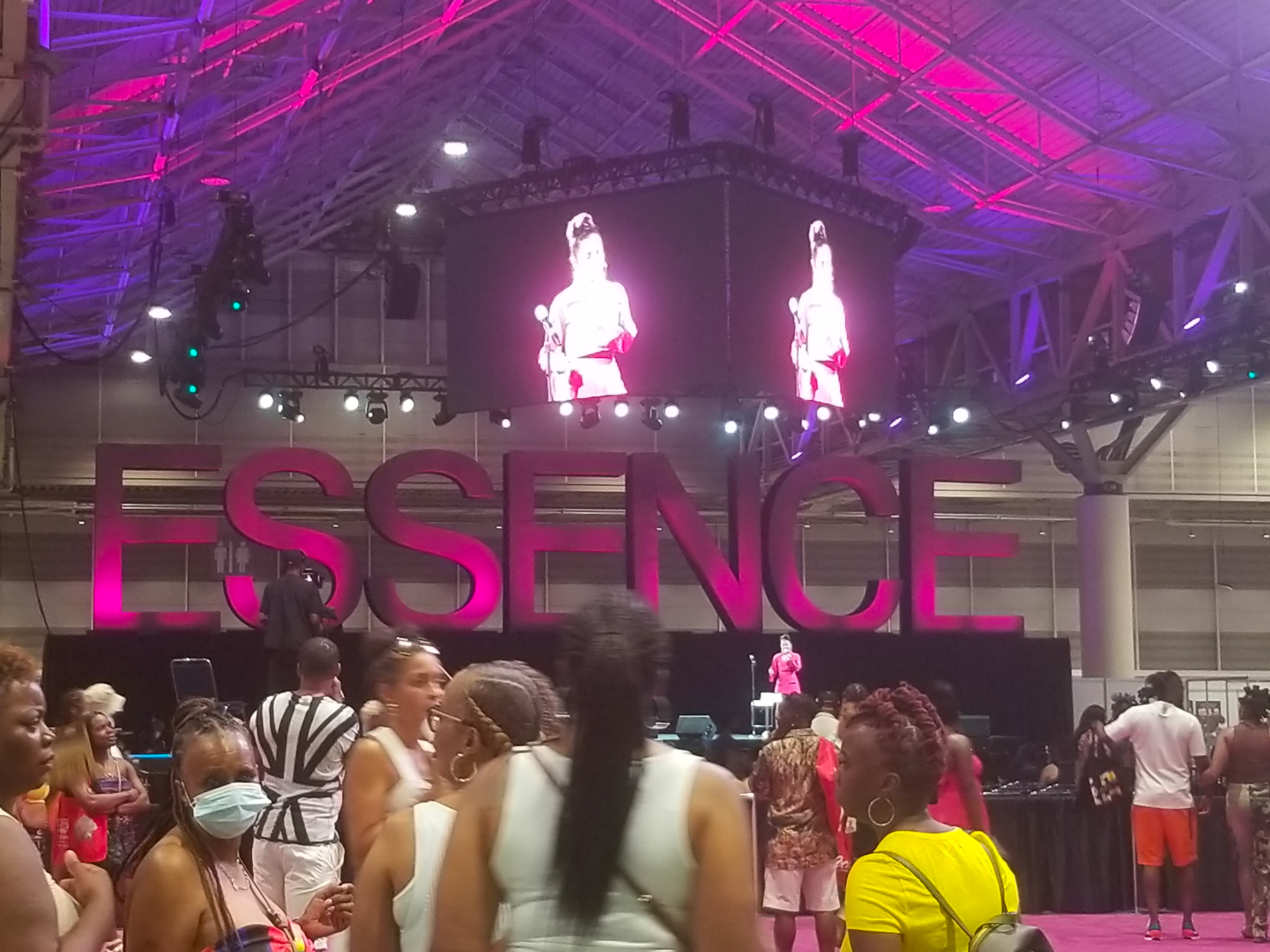
For the first time I went to the Essence Festival of Culture in New Orleans in 2022. It was such a great time and there was so much to do. My sister and I went to the Marketplace which was filled with speakers, companies that had booths about their products and so much more. We did not see most of what was available, but we know it is a world we want to continue to explore.


This month will feature quotes from individuals who were born free.
Egbert “Bert” Austin Williams was one of the greatest entertainers in America’s history. Born in the Bahamas on November 12, 1874, he came to the United States permanently in 1885. Williams met George Walker in San Francisco in 1893 and the two formed what became the most successful comedy team of their time. When Walker retired in 1908 due to illness, Williams starred in Mr. Load of Koal (1909)–the last black musical on Broadway for more than ten years. Unable to continue producing shows without Walker, Williams signed on with the Ziegfeld Follies in 1910–the only black performer in this famous review. He explained this controversial move saying, “… colored show business is at a low ebb just now … it was far better to have joined a large white show than to have starred in a colored show, considering conditions.” Williams stayed with the Follies through 1919, after which he appeared with Eddie Cantor in Broadway Brevities (1920) and Under the Bamboo Tree (1921-22). While on tour with the latter show, his failing health caught up with him and he contracted pneumonia. Williams died in New York City on March 4, 1922.
https://www.loc.gov/item/ihas.200038860/

By the 1700 The institution of slavery reached around the world. Captured Africans were not passive about the institution. They fought where they stood. In 1786 Governor Don Estevan Miro of New Orleans passed the Tignon Law that stated all Creole women of color must tie up their hair and dress as in the slave class whether they are slave or free. In trying to limit the standards of beauty to this section of the population, they shaped the way women of color would react for centuries.

This month I am gonna rest. I am gonna share what I see. When I got on the plane, I saw this and then went straight to sleep until the plane landed. LOL


Harriet Jacobs was an African-American writer whose autobiography, Incidents in the Life of a Slave Girl, published in 1861 under the pseudonym Linda Brent, is now considered an “American classic”. Born into slavery in Edenton, North Carolina, in Feb of 1811 she was sexually harassed by her enslaver. She was the first woman to write a fugitive slave narrative.
https://docsouth.unc.edu/fpn/jacobs/bio.html

 UPP Creative Media