We sing poetry everyday. And we love it.

We sing poetry everyday. And we love it.
1800 Continued
1800 was a century when more of the accomplishments of African Americans are documented. This month will focus on more African Americans and their lives.
Bert Williams
Bert Williams was a Bahamian-born American entertainer, one of the pre-eminent entertainers of the Vaudeville era and one of the most popular comedians for all audiences of his time. He was born in the Bahamas in November of 1874. He is credited as being the first Black man to have the leading role in a film: Darktown Jubilee in 1914. Known as one of the highest paid African American performers in history, Williams worked in many productions including the Ziegfeld Follies of 1917 with WC Fields, Fannie Brice, Eddie Cantor and more. In 1922 Williams collapsed on stage during a performance in Detroit, Michigan. He returned to New York and died at his home in March at the age of 47.
https://en.wikipedia.org/wiki/Bert_Williams
Hattie McDaniel
Hattie McDaniel was an American actress, singer-songwriter, and comedian born Kansas in 1893. She started working in minstrel shows and worked her way into radio. She wrote songs and sang for a record company before her big break came. In 1931 she moved to LA and later got a role in I’m No Angel with Mae West. The success of this movie helped her gain other roles. For her role as Mammy in Gone with the Wind, she won the Academy Award for Best Supporting Actress, becoming the first African American to win an Oscar. McDaniel worked in over 300 films but was only credited in 83. She died in October of 1952 at the age of 59.
https://en.wikipedia.org/wiki/Hattie_McDaniel
Buffalo Soldiers
Buffalo Soldiers originally were members of the 10th Cavalry Regiment of the United States Army, formed on September 21, 1866, at Fort Leavenworth, Kansas. This nickname was given to the Black Cavalry[1] by Native American tribes who fought in the Indian Wars. The term eventually became synonymous with all of the African-American regiments formed in 1866:
Although several African-American regiments were raised during the Civil War as part of the Union Army (including the 54th Massachusetts Volunteer Infantry and the many United States Colored Troops Regiments), the “Buffalo Soldiers” were established by Congress as the first peacetime all-black regiments in the regular U.S. Army.[2]
https://en.wikipedia.org/wiki/Buffalo_Soldier

Songs make the world go round. They inspire and inform us.
1800 Continued
1800 was a century when more of the accomplishments of African Americans are documented. This month will focus on more African Americans and their lives.
Bert Williams
Bert Williams was a Bahamian-born American entertainer, one of the pre-eminent entertainers of the Vaudeville era and one of the most popular comedians for all audiences of his time. He was born in the Bahamas in November of 1874. He is credited as being the first Black man to have the leading role in a film: Darktown Jubilee in 1914. Known as one of the highest paid African American performers in history, Williams worked in many productions including the Ziegfeld Follies of 1917 with WC Fields, Fannie Brice, Eddie Cantor and more. In 1922 Williams collapsed on stage during a performance in Detroit, Michigan. He returned to New York and died at his home in March at the age of 47.
https://en.wikipedia.org/wiki/Bert_Williams
Hattie McDaniel
Hattie McDaniel was an American actress, singer-songwriter, and comedian born Kansas in 1893. She started working in minstrel shows and worked her way into radio. She wrote songs and sang for a record company before her big break came. In 1931 she moved to LA and later got a role in I’m No Angel with Mae West. The success of this movie helped her gain other roles. For her role as Mammy in Gone with the Wind, she won the Academy Award for Best Supporting Actress, becoming the first African American to win an Oscar. McDaniel worked in over 300 films but was only credited in 83. She died in October of 1952 at the age of 59.
https://en.wikipedia.org/wiki/Hattie_McDaniel

In September we will explore quotes from music that moves us. Or moves me.
This first song comes from the musical Cinderella by Rodgers and Hammerstein. It is Impossible.
Many of see the things we want to accomplish as impossible. When someone encourages us to go after it, we usually say something like it’s impossible. This song reminds us that impossible things happen every day.

1800
Nat Turner
Nat was born in October in 1800 in South Hampton County Virginia. He learned to read and write at a young age, grew up reading the Bible. Later he began to preach to African Americans, with some of the Anglos also following him. He had the trust of many and was given permission to travel the area and preach to the enslaved around the county.
In August 1831 Nat led enslaved Virginians in rebellion in in South Hampton County Virginia where they killed around 65 people, mostly Caucasian. It lasted four days before it fell apart. A militia was sent to stop it. They killed more than 120 African Americans, some who had nothing to do with the rebellion.
Nat escaped for about 9 weeks until he was caught, tried and convicted. His story was written by the person who was supposed to defend him. The author had little understanding of Nat’s situation as an enslaved person. He made Nat seem like a fanatic instead of a man held captive all of his life asked to preach the gospel of a sould freeing God.
American Civil War
Triggered by the election of Abraham Lincoln on his party’s platform of anti-slavery expansion, seven slave states succeeded from the union. The slave states did not want the free states to end slavery which was the main portion of their economy. The free labor made them some of the richest people in the world and it was threated. Fighting started in April of 1861 when the southern slave states started at Fort Sumpter in South Carolina. Most of the battles were fought in the south, which was the largest part of the territory at that time. The southern slave states surrendered 1865
Alexander Dumas
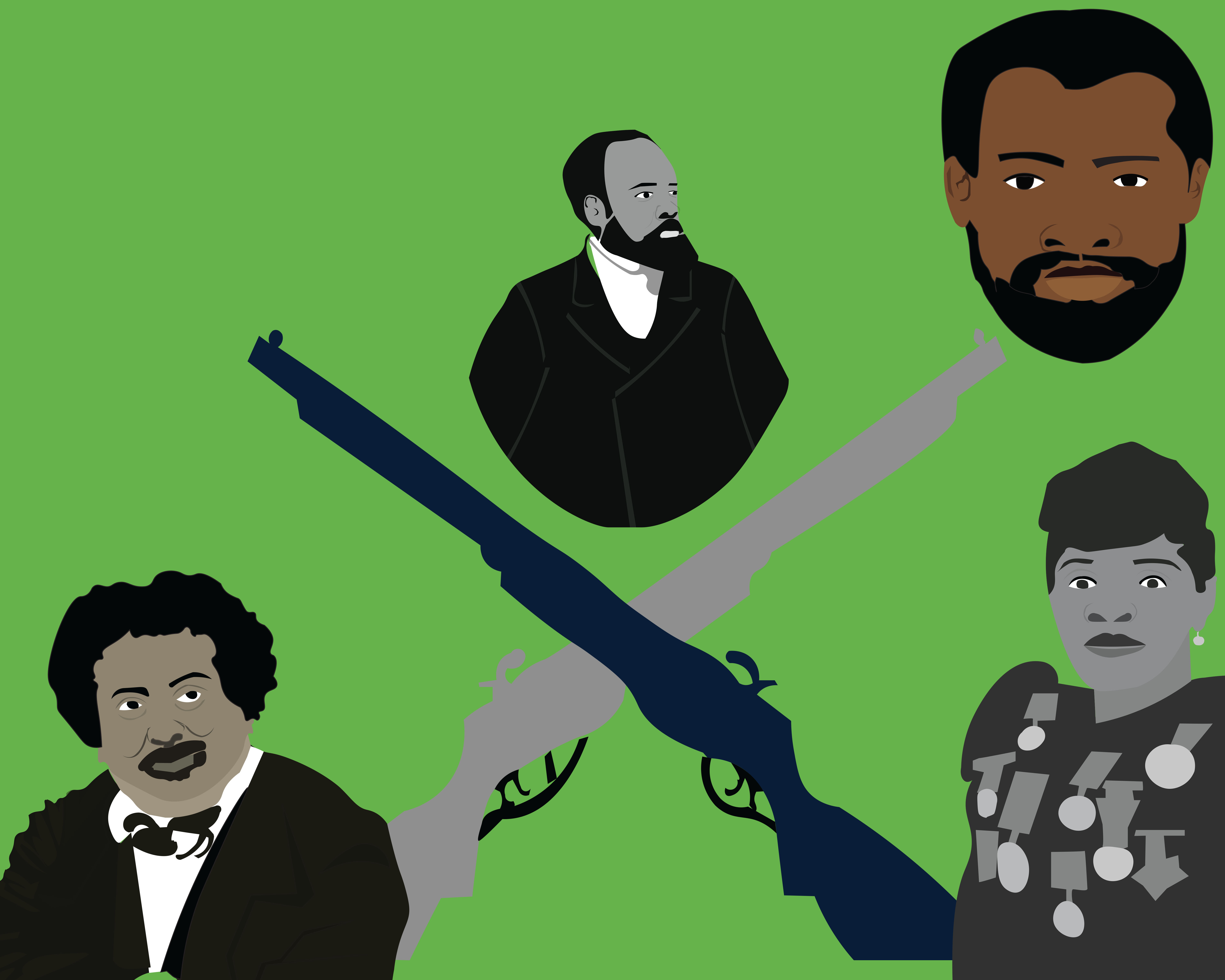
Alexandre Dumas was born Dumas Davy de la Pailleterie , 24 July 1802 – 5 December 1870), also known as Alexandre Dumas père (where père is French for ‘father’, to distinguish him from his son Alexandre Dumas fils), was a French writer. His works have been translated into many languages and he is one of the most widely read French authors. Many of his historical novels of high adventure were originally published as serials, including The Count of Monte Cristo, The Three Musketeers, Twenty Years After and The Vicomte of Bragelonne: Ten Years Later.
Prolific in several genres, Dumas began his career by writing plays, which were successfully produced from the first.
https://en.wikipedia.org/wiki/Alexandre_Dumas
Sissieretta Jones
Matilda Sissieretta Joyner Jones (January 5, 1868 or 1869 – June 24, 1933) was an American soprano. She sometimes was called “The Black Patti” in reference to Italian opera singer Adelina Patti. Jones’ repertoire included grand opera, light opera, and popular music. Trained at the Providence Academy of Music and the New England Conservatory of Music, Jones made her New York debut in 1888 at Steinway Hall, and four years later she performed at the White House for President Benjamin Harrison. She eventually sang for four consecutive presidents and the British royal family, and met with international success. Besides the United States and the West Indies, Jones toured in South America, Australia, India, southern Africa, and Europe.
The highest-paid African-American performer of her time, later in her career she founded the Black Patti Troubadours (later renamed the Black Patti Musical Comedy Company), a musical and acrobatic act made up of 40 jugglers, comedians, dancers and a chorus of 40 trained singers.[2] She remained the star of the Famous Troubadours for around two decades while they established their popularity in the principal cities of the United States and Canada, Jones retired from performing in 1915.
https://en.wikipedia.org/wiki/Sissieretta_Jones
Ira Aldridge
Ira Frederick Aldridge (July 24, 1807 – August 7, 1867) was an American-born British actor, playwright, and theatre manager, known for his portrayal of Shakespearean characters. Born in New York City, Aldridge’s first professional acting experience was in the early 1820s with the African Grove Theatre troupe. Facing discrimination in America, he left in 1824 for England and made his debut at London’s Royal Coburg Theatre. As his career grew, his performances of Shakespeare’s classics eventually met with critical acclaim and he subsequently became the manager of Coventry’s Theatre Royal. From 1852, Aldridge regularly toured much of Continental Europe and received top honours from several heads of state. He died suddenly while on tour in Poland and is buried in Łódź.
https://en.wikipedia.org/wiki/Ira_Aldridge
Bass Reeves
Bass Reeves (July 1838 – January 12, 1910) was an American law enforcement official, historically noted as the first black deputy U.S. marshal west of the Mississippi River. He worked mostly in Arkansas and the Oklahoma Territory.[a] During his long career, he had on his record more than 3,000 arrests of dangerous criminals, and shot and killed 14 of them in self-defense.


1800
Nat Turner
Nat was born in October in 1800 in South Hampton County Virginia. He learned to read and write at a young age, grew up reading the Bible. Later he began to preach to African Americans, with some of the Anglos also following him. He had the trust of many and was given permission to travel the area and preach to the enslaved around the county.
In August 1831 Nat led enslaved Virginians in rebellion in in South Hampton County Virginia where they killed around 65 people, mostly Caucasian. It lasted four days before it fell apart. A militia was sent to stop it. They killed more than 120 African Americans, some who had nothing to do with the rebellion.
Nat escaped for about 9 weeks until he was caught, tried and convicted. His story was written by the person who was supposed to defend him. The author had little understanding of Nat’s situation as an enslaved person. He made Nat seem like a fanatic instead of a man held captive all of his life asked to preach the gospel of a sould freeing God.
American Civil War
Triggered by the election of Abraham Lincoln on his party’s platform of anti-slavery expansion, seven slave states succeeded from the union. The slave states did not want the free states to end slavery which was the main portion of their economy. The free labor made them some of the richest people in the world and it was threated. Fighting started in April of 1861 when the southern slave states started at Fort Sumpter in South Carolina. Most of the battles were fought in the south, which was the largest part of the territory at that time. The southern slave states surrendered 1865
Alexander Dumas
Alexandre Dumas was born Dumas Davy de la Pailleterie , 24 July 1802 – 5 December 1870), also known as Alexandre Dumas père (where père is French for ‘father’, to distinguish him from his son Alexandre Dumas fils), was a French writer. His works have been translated into many languages and he is one of the most widely read French authors. Many of his historical novels of high adventure were originally published as serials, including The Count of Monte Cristo, The Three Musketeers, Twenty Years After and The Vicomte of Bragelonne: Ten Years Later.
Prolific in several genres, Dumas began his career by writing plays, which were successfully produced from the first.
https://en.wikipedia.org/wiki/Alexandre_Dumas
Sissieretta Jones
Matilda Sissieretta Joyner Jones (January 5, 1868 or 1869 – June 24, 1933) was an American soprano. She sometimes was called “The Black Patti” in reference to Italian opera singer Adelina Patti. Jones’ repertoire included grand opera, light opera, and popular music. Trained at the Providence Academy of Music and the New England Conservatory of Music, Jones made her New York debut in 1888 at Steinway Hall, and four years later she performed at the White House for President Benjamin Harrison. She eventually sang for four consecutive presidents and the British royal family, and met with international success. Besides the United States and the West Indies, Jones toured in South America, Australia, India, southern Africa, and Europe.
The highest-paid African-American performer of her time, later in her career she founded the Black Patti Troubadours (later renamed the Black Patti Musical Comedy Company), a musical and acrobatic act made up of 40 jugglers, comedians, dancers and a chorus of 40 trained singers.[2] She remained the star of the Famous Troubadours for around two decades while they established their popularity in the principal cities of the United States and Canada, Jones retired from performing in 1915.
https://en.wikipedia.org/wiki/Sissieretta_Jones
Ira Aldridge
Ira Frederick Aldridge (July 24, 1807 – August 7, 1867) was an American-born British actor, playwright, and theatre manager, known for his portrayal of Shakespearean characters. Born in New York City, Aldridge’s first professional acting experience was in the early 1820s with the African Grove Theatre troupe. Facing discrimination in America, he left in 1824 for England and made his debut at London’s Royal Coburg Theatre. As his career grew, his performances of Shakespeare’s classics eventually met with critical acclaim and he subsequently became the manager of Coventry’s Theatre Royal. From 1852, Aldridge regularly toured much of Continental Europe and received top honours from several heads of state. He died suddenly while on tour in Poland and is buried in Łódź.
https://en.wikipedia.org/wiki/Ira_Aldridge
Bass Reeves
Bass Reeves (July 1838 – January 12, 1910) was an American law enforcement official, historically noted as the first black deputy U.S. marshal west of the Mississippi River. He worked mostly in Arkansas and the Oklahoma Territory.[a] During his long career, he had on his record more than 3,000 arrests of dangerous criminals, and shot and killed 14 of them in self-defense.
https://en.wikipedia.org/wiki/Bass_Reeves

1800
Nat Turner
Nat was born in October in 1800 in South Hampton County Virginia. He learned to read and write at a young age, grew up reading the Bible. Later he began to preach to African Americans, with some of the Anglos also following him. He had the trust of many and was given permission to travel the area and preach to the enslaved around the county.
In August 1831 Nat led enslaved Virginians in rebellion in in South Hampton County Virginia where they killed around 65 people, mostly Caucasian. It lasted four days before it fell apart. A militia was sent to stop it. They killed more than 120 African Americans, some who had nothing to do with the rebellion.
Nat escaped for about 9 weeks until he was caught, tried and convicted. His story was written by the person who was supposed to defend him. The author had little understanding of Nat’s situation as an enslaved person. He made Nat seem like a fanatic instead of a man held captive all of his life asked to preach the gospel of a sould freeing God.
American Civil War
Triggered by the election of Abraham Lincoln on his party’s platform of anti-slavery expansion, seven slave states succeeded from the union. The slave states did not want the free states to end slavery which was the main portion of their economy. The free labor made them some of the richest people in the world and it was threated. Fighting started in April of 1861 when the southern slave states started at Fort Sumpter in South Carolina. Most of the battles were fought in the south, which was the largest part of the territory at that time. The southern slave states surrendered 1865
Alexander Dumas
Alexandre Dumas was born Dumas Davy de la Pailleterie , 24 July 1802 – 5 December 1870), also known as Alexandre Dumas père (where père is French for ‘father’, to distinguish him from his son Alexandre Dumas fils), was a French writer. His works have been translated into many languages and he is one of the most widely read French authors. Many of his historical novels of high adventure were originally published as serials, including The Count of Monte Cristo, The Three Musketeers, Twenty Years After and The Vicomte of Bragelonne: Ten Years Later.
Prolific in several genres, Dumas began his career by writing plays, which were successfully produced from the first.
https://en.wikipedia.org/wiki/Alexandre_Dumas
Sissieretta Jones
Matilda Sissieretta Joyner Jones (January 5, 1868 or 1869 – June 24, 1933) was an American soprano. She sometimes was called “The Black Patti” in reference to Italian opera singer Adelina Patti. Jones’ repertoire included grand opera, light opera, and popular music. Trained at the Providence Academy of Music and the New England Conservatory of Music, Jones made her New York debut in 1888 at Steinway Hall, and four years later she performed at the White House for President Benjamin Harrison. She eventually sang for four consecutive presidents and the British royal family, and met with international success. Besides the United States and the West Indies, Jones toured in South America, Australia, India, southern Africa, and Europe.
The highest-paid African-American performer of her time, later in her career she founded the Black Patti Troubadours (later renamed the Black Patti Musical Comedy Company), a musical and acrobatic act made up of 40 jugglers, comedians, dancers and a chorus of 40 trained singers.[2] She remained the star of the Famous Troubadours for around two decades while they established their popularity in the principal cities of the United States and Canada, Jones retired from performing in 1915.
https://en.wikipedia.org/wiki/Sissieretta_Jones
Ira Aldridge
Ira Frederick Aldridge (July 24, 1807 – August 7, 1867) was an American-born British actor, playwright, and theatre manager, known for his portrayal of Shakespearean characters. Born in New York City, Aldridge’s first professional acting experience was in the early 1820s with the African Grove Theatre troupe. Facing discrimination in America, he left in 1824 for England and made his debut at London’s Royal Coburg Theatre. As his career grew, his performances of Shakespeare’s classics eventually met with critical acclaim and he subsequently became the manager of Coventry’s Theatre Royal. From 1852, Aldridge regularly toured much of Continental Europe and received top honours from several heads of state. He died suddenly while on tour in Poland and is buried in Łódź.
https://en.wikipedia.org/wiki/Ira_Aldridge
 UPP Creative Media