Art of the Month

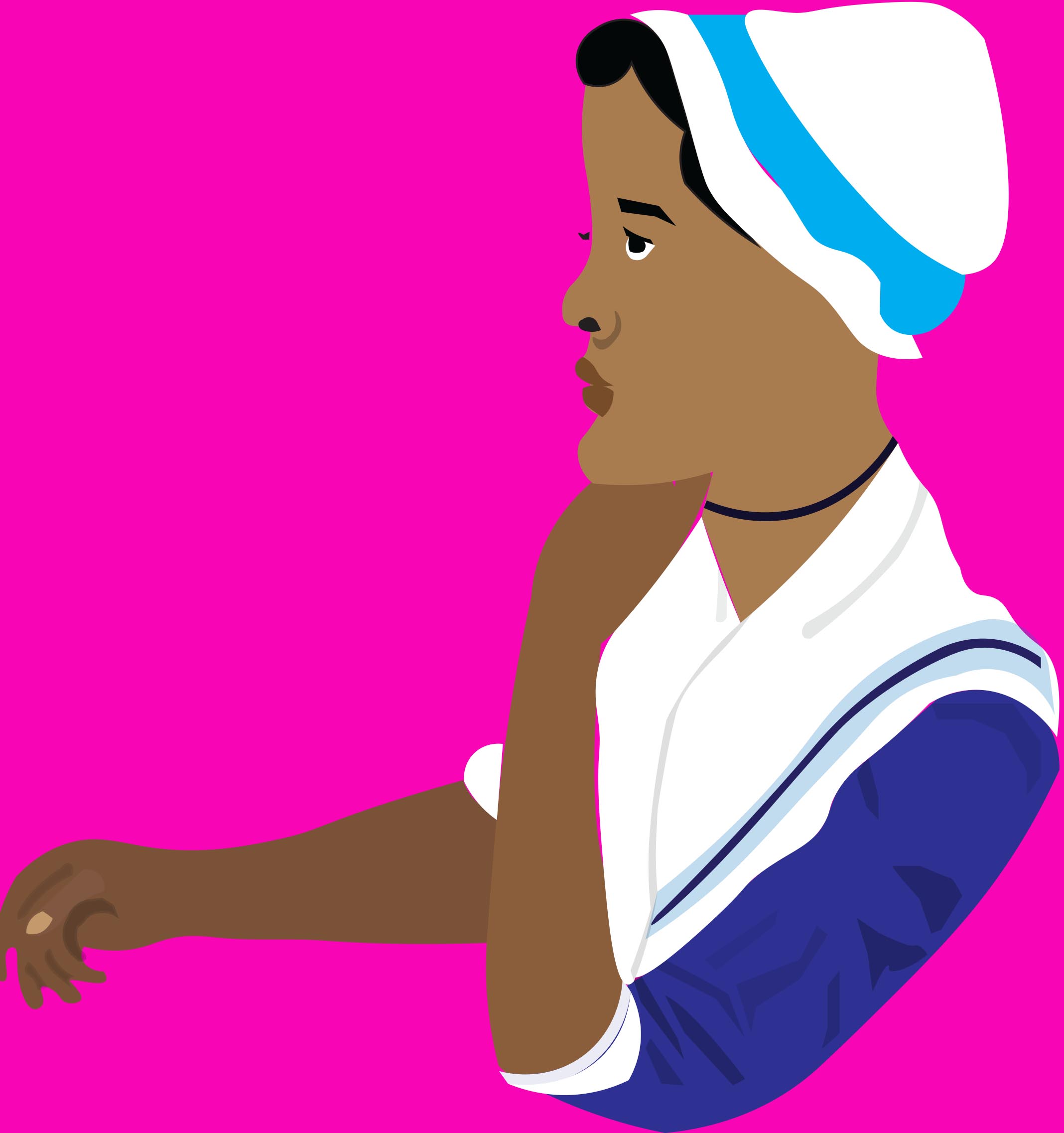
Nzinga Mbande was born into the ruling family of Ndongo in 1583 in Central West Africa. Nzinga received military and political training as a child, and she also became an ambassador to the Portuguese Empire. She was a Southwest African ruler who ruled as queen of the Ambundu Kingdoms of Ndongo (1624–1663) and Matamba (1631–1663), located in present-day northern Angola.

She was the daughter of Ngola Kilombo of Ndongo. Her mother, Kengela ka Nkombe, was one of her father’s slave wives and his favorite concubine. According to legend, the birthing process was very difficult for Kengela, her mother; Njinga received her name because the umbilical cord was wrapped around her neck (the Kimbundu verb kujinga means to twist or turn).

Children of the royal household who survived difficult or unusual births were believed to possess spiritual gifts, and some saw their births as an indicator the person would grow to become a powerful and proud person. Njinga had two sisters, Kambu, or Lady Barbara and Funji, or Lady Grace. She also had a brother, Mbandi, who was heir apparent to throne.

The Portuguese first came to Ndongo in 1575 when they established a trading post in Luanda. By the 1580s, large parts of Ndongo had fallen under Portuguese control, who burned villages and took hostages who later turned into slaves. Nzinga’s father, Ngola Kilombo Kia Kasenda became the king of Ndongo in 1583. He had a difficult time fighting the Portuguese  and other local kingdoms who tried to take over.

Nzinga assumed power over Ndongo after the death of her father and brother, who both served as kings, and she went on to conquer Matamba. She ruled during a period of rapid growth in the African slave trade by the Portuguese Empire in South West Africa. Nzinga fought for the independence of her kingdoms against the Portuguese in a reign that lasted 37 years.

This artwork is by my brother, Devin Anderson

https://en.wikipedia.org/wiki/Nzinga_of_Ndongo_and_Matamba

Art of the Month

Nzinga Mbande was born into the ruling family of Ndongo in 1583 in Central West Africa. Nzinga received military and political training as a child, and she also became an ambassador to the Portuguese Empire. She was a Southwest African ruler who ruled as queen of the Ambundu Kingdoms of Ndongo (1624–1663) and Matamba (1631–1663), located in present-day northern Angola.

She was the daughter of Ngola Kilombo of Ndongo. Her mother, Kengela ka Nkombe, was one of her father’s slave wives and his favorite concubine. According to legend, the birthing process was very difficult for Kengela, her mother; Njinga received her name because the umbilical cord was wrapped around her neck (the Kimbundu verb kujinga means to twist or turn).

Children of the royal household who survived difficult or unusual births were believed to possess spiritual gifts, and some saw their births as an indicator the person would grow to become a powerful and proud person. Njinga had two sisters, Kambu, or Lady Barbara and Funji, or Lady Grace. She also had a brother, Mbandi, who was heir apparent to throne.

She assumed power over Ndongo after the death of her father and brother, who both served as kings, and went on to conquer Matamba. She ruled during a period of rapid growth in the African slave trade by the Portuguese Empire in South West Africa. Nzinga fought for the independence of her kingdoms against the Portuguese in a reign that lasted 37 years.

https://en.wikipedia.org/wiki/Nzinga_of_Ndongo_and_Matamba1

Art of the Month

Bert Williams was a Bahamian-born American entertainer, one of the pre-eminent entertainers of the Vaudeville era and one of the most popular comedians for all audiences of his time. He was born in the Bahamas in November of 1874. 

His parents emigrated when he was 11 years old. He graduated from Riverside High School and attended Stanford with plans to become a civil engineer. He had to abandon his studies to help his family and began to work for Martin and Selig’s Mastodon Minstrels. He met George Walker who would be a lifelong friend for a dynamic comedy team.

In late 1896, the pair were added to The Gold Bug, a struggling musical. The show did not survive, but Williams & Walker got good reviews, and were able to secure higher profile bookings. They headlined the Koster and Bial’s vaudeville house for 36 weeks in 1896–97, where their spirited version of the cakewalk helped popularize the dance.

The pair performed in burnt-cork blackface, as was customary at the time, billing themselves as “Two Real Coons” to distinguish their act from the many white minstrels also performing in blackface. Williams also made his first recordings in 1896.

Williams & Walker had their greatest success with Sons of Ham, a broad farce that did not include any of the extreme “darkie” stereotypes that were then common. One of the show’s songs, “Miss Hannah from Savannah,” even touched upon class divisions within the black community.

In September 1902, Williams & Walker debuted their next show, In Dahomey, a full-length musical written, directed and performed by an all-black cast. It was an even bigger hit.

Part of the inspiration for the show was Williams’ copy of a 1670 book, Africa, in which author John Ogilby traced the history of the continent’s tribes and peoples. “With this volume, I could prove that every Pullman porter is the descendant of a king,” said Williams.

They were one of the most successful teams in their era, performing in the US and abroad, even delivering a command performance in England for King Goerge in 1903.

The two performed together until Walker was too sick to perform in 1909. He died in 1911. Williams would strike out on his own and it would change everything.

In 1910 Williams joined Flo Ziegfeld as a featured performer in an all-white show. In the beginning the some of the white performers refused to work with Williams. He also faced prejudice from the writers, which made him have to write his own material. But that turned out to be a good thing because when the show opened, he was a sensation.

Williams is credited as being the first Black man to have the leading role in a film: Darktown Jubilee in 1914. And he also signed an exclusive recording contract with Columbia Records.

Known as one of the highest paid African American performers in history, Williams worked in many productions including the Ziegfeld Follies of 1917 with WC Fields, Fannie Brice, Eddie Cantor and more. He worked for the Follies until 1919.

In 1922 during a performance of Under the Bamboo Tree, Williams collapsed on stage during a performance in Detroit, Michigan. He returned to New York and died at his home in March at the age of 47.

https://en.wikipedia.org/wiki/Bert_Williams

Art of the Month

Bert Williams

Bert Williams was a Bahamian-born American entertainer, one of the pre-eminent entertainers of the Vaudeville era and one of the most popular comedians for all audiences of his time. He was born in the Bahamas in November of 1874. 

His parents emigrated when he was 11 years old. He graduated from Riverside High School and attended Stanford with plans to become a civil engineer. He had to abandon his studies to help his family and began to work for Martin and Selig’s Mastodon Minstrels. He met George Walker who would be a lifelong friend for a dynamic comedy team.

In late 1896, the pair were added to The Gold Bug, a struggling musical. The show did not survive, but Williams & Walker got good reviews, and were able to secure higher profile bookings. They headlined the Koster and Bial’s vaudeville house for 36 weeks in 1896–97, where their spirited version of the cakewalk helped popularize the dance.

The pair performed in burnt-cork blackface, as was customary at the time, billing themselves as “Two Real Coons” to distinguish their act from the many white minstrels also performing in blackface. Williams also made his first recordings in 1896.

Williams & Walker had their greatest success with Sons of Ham, a broad farce that did not include any of the extreme “darkie” stereotypes that were then common. One of the show’s songs, “Miss Hannah from Savannah,” even touched upon class divisions within the black community.

In September 1902, Williams & Walker debuted their next show, In Dahomey, a full-length musical written, directed and performed by an all-black cast. It was an even bigger hit.

Part of the inspiration for the show was Williams’ copy of a 1670 book, Africa, in which author John Ogilby traced the history of the continent’s tribes and peoples. “With this volume, I could prove that every Pullman porter is the descendant of a king,” said Williams.

They were one of the most successful teams in their era, performing in the US and abroad, even delivering a command performance in England for King Goerge in 1903.

The two performed together until Walker was too sick to perform in 1909. He died in 1911. Williams would strike out on his own and it would change everything.

Williams is credited as being the first Black man to have the leading role in a film: Darktown Jubilee in 1914. Known as one of the highest paid African American performers in history, Williams worked in many productions including the Ziegfeld Follies of 1917 with WC Fields, Fannie Brice, Eddie Cantor and more. In 1922 Williams collapsed on stage during a performance in Detroit, Michigan. He returned to New York and died at his home in March at the age of 47.

https://en.wikipedia.org/wiki/Bert_Williams

Art of the Month

Bert Williams

Bert Williams was a Bahamian-born American entertainer, one of the pre-eminent entertainers of the Vaudeville era and one of the most popular comedians for all audiences of his time. He was born in the Bahamas in November of 1874. 

His parents emigrated when he was 11 years old. He graduated from Riverside High School and attended Stanford with plans to become a civil engineer. He had to abandon his studies to help his family and began to work for Martin and Selig’s Mastodon Minstrels. He met George Walker who would be a lifelong friend for a dynamic comedy team. They were one of the most successful teams in their era, performing in the US and abroad, even delivering a command performance in England for King Goerge in 1903.

The two performed together until Walker was too sick to perform in 1909. He died in 1911. Williams would strike out on his own and it would change everything.

Williams is credited as being the first Black man to have the leading role in a film: Darktown Jubilee in 1914. Known as one of the highest paid African American performers in history, Williams worked in many productions including the Ziegfeld Follies of 1917 with WC Fields, Fannie Brice, Eddie Cantor and more. In 1922 Williams collapsed on stage during a performance in Detroit, Michigan. He returned to New York and died at his home in March at the age of 47.

This portrait was drawn by brother, Devin Anderson

https://en.wikipedia.org/wiki/Bert_Williams

Art of the Month

Bert Williams

Bert Williams was a Bahamian-born American entertainer, one of the pre-eminent entertainers of the Vaudeville era and one of the most popular comedians for all audiences of his time. He was born in the Bahamas in November of 1874. 

His parents emigrated when he was 11 years old. He graduated from Riverside High School and attended Stanford with plans to become a civil engineer. He had to abandon his studies to help his family and began to work for Martin and Selig’s Mastodon Minstrels. He met George Walker who would be a lifelong friend for a dynamic comedy team. They were one of the most successful teams in their era, performing in the US and abroad, even delivering a command performance in England for King Goerge in 1903.

The two performed together until Walker was too sick to perform in 1909. He died in 1911. Williams would strike out on his own and it would change everything.

Williams is credited as being the first Black man to have the leading role in a film: Darktown Jubilee in 1914. Known as one of the highest paid African American performers in history, Williams worked in many productions including the Ziegfeld Follies of 1917 with WC Fields, Fannie Brice, Eddie Cantor and more. In 1922 Williams collapsed on stage during a performance in Detroit, Michigan. He returned to New York and died at his home in March at the age of 47.

https://en.wikipedia.org/wiki/Bert_Williams

Art of the Month

Bert Williams

Bert Williams was a Bahamian-born American entertainer, one of the pre-eminent entertainers of the Vaudeville era and one of the most popular comedians for all audiences of his time. He was born in the Bahamas in November of 1874.  He is credited as being the first Black man to have the leading role in a film: Darktown Jubilee in 1914. Known as one of the highest paid African American performers in history, Williams worked in many productions including the Ziegfeld Follies of 1917 with WC Fields, Fannie Brice, Eddie Cantor and more. In 1922 Williams collapsed on stage during a performance in Detroit, Michigan. He returned to New York and died at his home in March at the age of 47.

https://en.wikipedia.org/wiki/Bert_Williams

Art of the Month

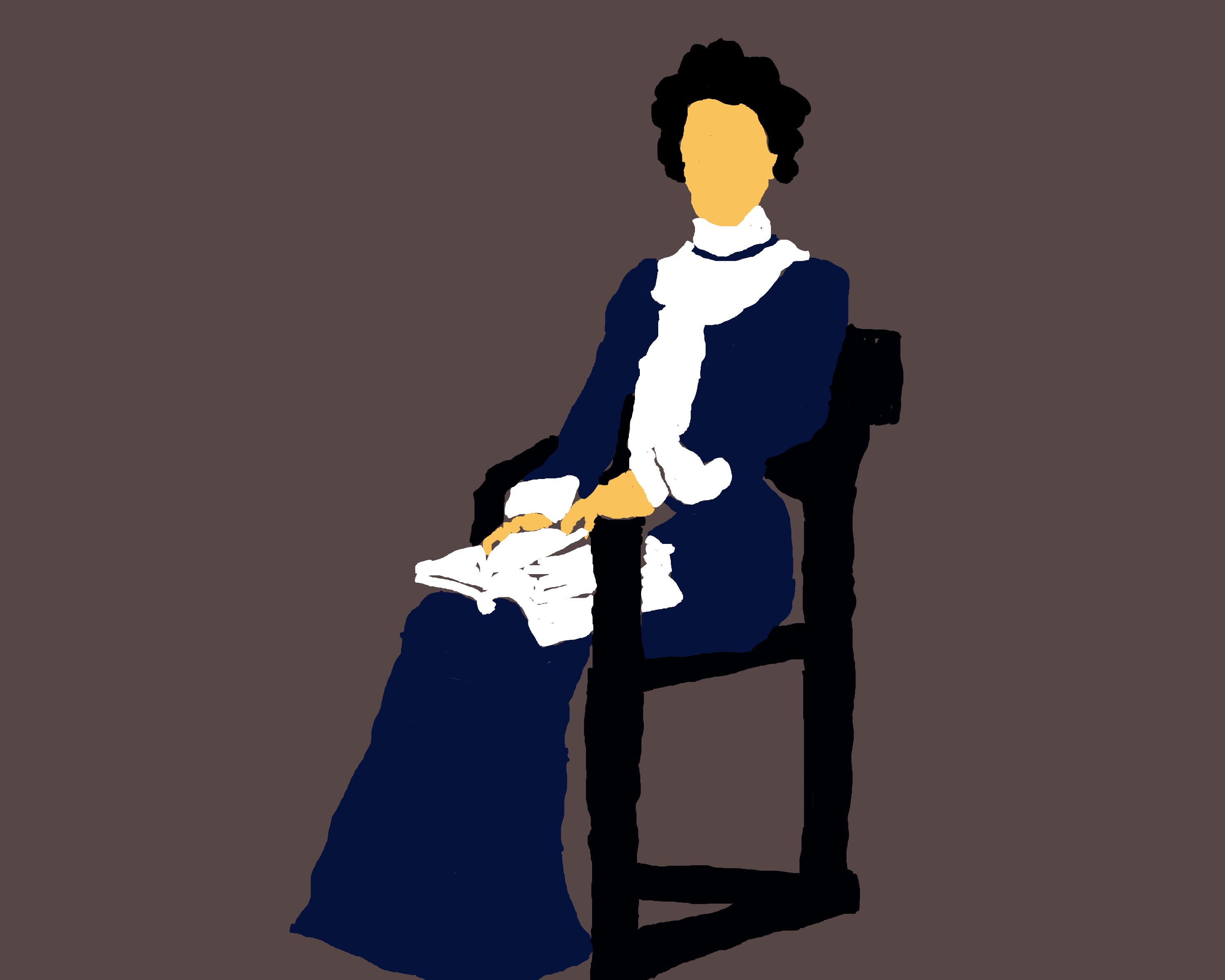
Matilda Sissieretta Joyner Jones (January 5, 1868 or 1869 was an American soprano. She sometimes was called “The Black Patti” in reference to Italian opera singer Adelina Patti. Jones’ repertoire included grand opera, light opera, and popular music. Trained at the Providence Academy of Music and the New England Conservatory of Music, Jones made her New York debut in 1888 at Steinway Hall, and four years later she performed at the White House for President Benjamin Harrison. She sang for four consecutive presidents and the British royal family, and was met with international success. Besides the United States and the West Indies, Jones toured in South America, Australia, India, southern Africa, and Europe.

The highest-paid African-American performer of her time, later in her career she founded the Black Patti Troubadours (later renamed the Black Patti Musical Comedy Company), a musical and acrobatic act made up of 40 jugglers, comedians, dancers and a chorus of 40 trained singers.[2] She remained the star of the Famous Troubadours for around two decades while they established their popularity in the principal cities of the United States and Canada, Jones retired from performing in 1915. In 2013, she was inducted into the Rhode Island Music Hall of Fame.

Matilda Sissieretta Joyner was born on January 5, 1869, in a house on Bart. She was the oldest of three children, although her siblings died when they were young. Matilda Joyner was nicknamed as Sissy or Tilly by her family and friends, and began singing around the house at a young age. When she was six years old, her family moved to Providence, Rhode Island, where she began singing at an early age in her father’s Pond Street Baptist Church. She attended Meeting Street and Thayer Schools. In 1883, Joyner began the formal study of music at the Providence Academy of Music. She studied with Ada Baroness Lacombe. In the late 1880s, Jones was accepted at the New England Conservatory of Music in Boston, studying under Flora Batson of the Bergen Star Company. She also studied at the Boston Conservatory. Street in Portsmouth, Virginia.

On October 29, 1885, Jones gave a solo performance in Providence as an opening act to a production of Richard III staged by John A. Arneaux’s theatre troupe. In 1887, she performed at Boston’s Music Hall before an audience of 5,000. Jones made her New York debut on April 5, 1888, at Steinway Hall. During a performance at Wallack’s Theater in New York, Jones came to the attention of Adelina Patti’s manager, who recommended that Jones tour the West Indies with the Fisk Jubilee Singers. Jones made successful tours of the Caribbean in 1888 and 1892. Around this time one critic at the theatrical journal the New York Clipper dubbed her “the Black Patti” after Adelina Patti, an epithet that Jones disliked, preferring Madame Jones. She later told a reporter that the name “rather annoys me… I am afraid people will think I consider myself the equal to Patti herself. I assure you I don’t think so, but I have a voice and I am striving to win the favor of the public by honest merit and hard work.”

In February 1892, Jones performed at the White House for President Benjamin Harrison. She also sang for four consecutive presidents — Harrison, Grover Cleveland, William McKinley, and Theodore Roosevelt — and the British royal family. For three of her White House performances, Jones had to enter the building through the back. She was finally allowed to enter through the front door for the Roosevelt performance.

https://en.wikipedia.org/wiki/Sissieretta_Jones

This piece is a little more complicated and still needs work. But I wanted to celebrate the accomplishments of Jones life.

Art of the Month

Matilda Sissieretta Joyner Jones (January 5, 1868 or 1869 was an American soprano. She sometimes was called “The Black Patti” in reference to Italian opera singer Adelina Patti. Jones’ repertoire included grand opera, light opera, and popular music. Trained at the Providence Academy of Music and the New England Conservatory of Music, Jones made her New York debut in 1888 at Steinway Hall, and four years later she performed at the White House for President Benjamin Harrison. She sang for four consecutive presidents and the British royal family, and was met with international success. Besides the United States and the West Indies, Jones toured in South America, Australia, India, southern Africa, and Europe.

The highest-paid African-American performer of her time, later in her career she founded the Black Patti Troubadours (later renamed the Black Patti Musical Comedy Company), a musical and acrobatic act made up of 40 jugglers, comedians, dancers and a chorus of 40 trained singers.[2] She remained the star of the Famous Troubadours for around two decades while they established their popularity in the principal cities of the United States and Canada, Jones retired from performing in 1915. In 2013, she was inducted into the Rhode Island Music Hall of Fame.

Matilda Sissieretta Joyner was born on January 5, 1869, in a house on Bart. She was the oldest of three children, although her siblings died when they were young. Matilda Joyner was nicknamed as Sissy or Tilly by her family and friends, and began singing around the house at a young age. When she was six years old, her family moved to Providence, Rhode Island, where she began singing at an early age in her father’s Pond Street Baptist Church. She attended Meeting Street and Thayer Schools. In 1883, Joyner began the formal study of music at the Providence Academy of Music. She studied with Ada Baroness Lacombe. In the late 1880s, Jones was accepted at the New England Conservatory of Music in Boston, studying under Flora Batson of the Bergen Star Company. She also studied at the Boston Conservatory. Street in Portsmouth, Virginia.

On October 29, 1885, Jones gave a solo performance in Providence as an opening act to a production of Richard III staged by John A. Arneaux’s theatre troupe. In 1887, she performed at Boston’s Music Hall before an audience of 5,000. Jones made her New York debut on April 5, 1888, at Steinway Hall. During a performance at Wallack’s Theater in New York, Jones came to the attention of Adelina Patti’s manager, who recommended that Jones tour the West Indies with the Fisk Jubilee Singers. Jones made successful tours of the Caribbean in 1888 and 1892. Around this time one critic at the theatrical journal the New York Clipper dubbed her “the Black Patti” after Adelina Patti, an epithet that Jones disliked, preferring Madame Jones. She later told a reporter that the name “rather annoys me… I am afraid people will think I consider myself the equal to Patti herself. I assure you I don’t think so, but I have a voice and I am striving to win the favor of the public by honest merit and hard work.”

In February 1892, Jones performed at the White House for President Benjamin Harrison. She also sang for four consecutive presidents — Harrison, Grover Cleveland, William McKinley, and Theodore Roosevelt — and the British royal family. For three of her White House performances, Jones had to enter the building through the back. She was finally allowed to enter through the front door for the Roosevelt performance.

https://en.wikipedia.org/wiki/Sissieretta_Jones

Art of the Month

Sissieretta Jones

Matilda Sissieretta Joyner Jones (January 5, 1868 or 1869 was an American soprano. She sometimes was called “The Black Patti” in reference to Italian opera singer Adelina Patti. Jones’ repertoire included grand opera, light opera, and popular music. Trained at the Providence Academy of Music and the New England Conservatory of Music, Jones made her New York debut in 1888 at Steinway Hall, and four years later she performed at the White House for President Benjamin Harrison. She sang for four consecutive presidents and the British royal family, and was met with international success. Besides the United States and the West Indies, Jones toured in South America, Australia, India, southern Africa, and Europe.

The highest-paid African-American performer of her time, later in her career she founded the Black Patti Troubadours (later renamed the Black Patti Musical Comedy Company), a musical and acrobatic act made up of 40 jugglers, comedians, dancers and a chorus of 40 trained singers.[2] She remained the star of the Famous Troubadours for around two decades while they established their popularity in the principal cities of the United States and Canada, Jones retired from performing in 1915. In 2013, she was inducted into the Rhode Island Music Hall of Fame.

Matilda Sissieretta Joyner was born on January 5, 1869, in a house on Bart. She was the oldest of three children, although her siblings died when they were young. Matilda Joyner was nicknamed as Sissy or Tilly by her family and friends, and began singing around the house at a young age. When she was six years old, her family moved to Providence, Rhode Island, where she began singing at an early age in her father’s Pond Street Baptist Church. She attended Meeting Street and Thayer Schools. In 1883, Joyner began the formal study of music at the Providence Academy of Music. She studied with Ada Baroness Lacombe. In the late 1880s, Jones was accepted at the New England Conservatory of Music in Boston, studying under Flora Batson of the Bergen Star Company. She also studied at the Boston Conservatory. Street in Portsmouth, Virginia.

https://en.wikipedia.org/wiki/Sissieretta_Jones