Art of the Month

Ida Bell Wells-Barnett was an American investigative journalist, educator, and early leader in the civil rights movement. She was one of the founders of the National Association for the Advancement of Colored People (NAACP) Wells dedicated her career to combating prejudice and violence, and advocating for African-American equality—especially that of women.

Wells was born into slavery in Holly Springs, Mississippi on July 26, 1862. At the age of 16, she lost both her parents and her infant brother in the 1878 yellow fever epidemic. She went to work and kept the rest of the family together with the help of her grandmother. Later, moving with some of her siblings to Memphis, Tennessee, Wells found better pay as a teacher.

Wells co-owned and wrote for the Memphis Free Speech and Headlight newspaper, where her reporting covered incidents of racial segregation and inequality. Subjected to continued threats and criminal violence, including when a white mob destroyed her newspaper office and presses, Wells left Memphis for Chicago, Illinois.

https://en.wikipedia.org/wiki/Ida_B._Wells


Art of the Month

Ida Bell Wells-Barnett was an American investigative journalist, educator, and early leader in the civil rights movement. She was one of the founders of the National Association for the Advancement of Colored People (NAACP) Wells dedicated her career to combating prejudice and violence, and advocating for African-American equality—especially that of women.

Wells was born into slavery in Holly Springs, Mississippi on July 26, 1862. At the age of 16, she lost both her parents and her infant brother in the 1878 yellow fever epidemic. She went to work and kept the rest of the family together with the help of her grandmother. Later, moving with some of her siblings to Memphis, Tennessee, Wells found better pay as a teacher.

Wells co-owned and wrote for the Memphis Free Speech and Headlight newspaper, where her reporting covered incidents of racial segregation and inequality. Subjected to continued threats and criminal violence, including when a white mob destroyed her newspaper office and presses, Wells left Memphis for Chicago, Illinois.

https://en.wikipedia.org/wiki/Ida_B._Wells

Art of the Month

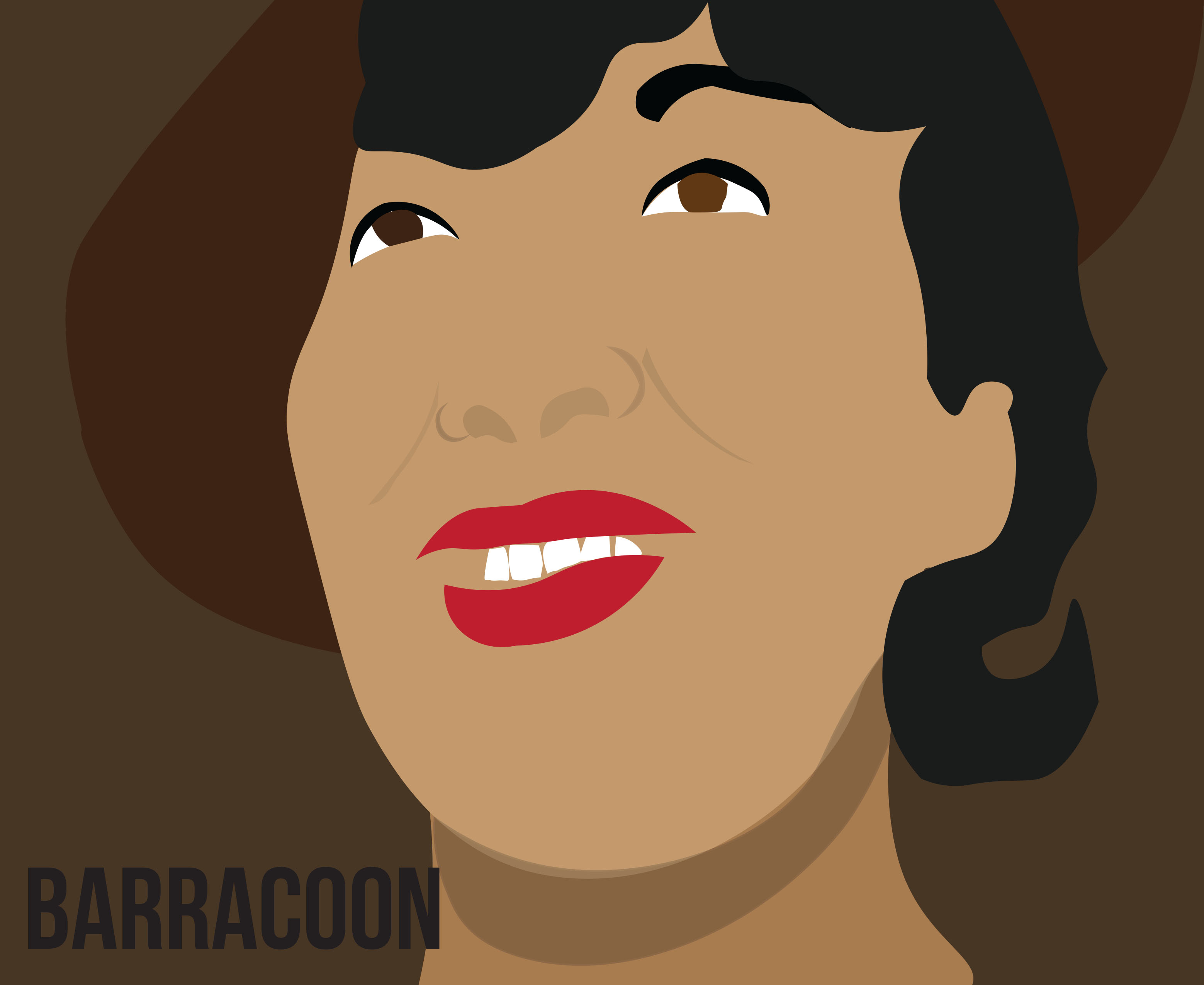
Josephine Baker

Josephine Baker (3 June 1906 – 12 April 1975) was an American-born French dancer, singer and actress. Her career was centered primarily in Europe, mostly in her adopted France. She was the first black woman to star in a major motion picture, the 1927 silent film Siren of the Tropics, directed by Mario Nalpas and Henri Étiévant.

She was born in St Louis, Missouri, as Freda Josephine McDonald where she had a very rough beginning. She dropped out of school at age 12 and had two failed marriages at ages 13 and 15.  Then she joined a vaudeville troupe that took her to New York City. She later became part of a show, Shuffle Along in the chorus line. This would be one of the first steps to her success. She joined the cast in the chorus.

She used comedy to make herself stand out in the chorus line, and later launch a career that sent her overseas because prejudice limited what she could accomplish in the United States. In Paris she became a success which led to a career that spanned all over Europe.  Some have called her the first Beyonce in that she starred in theater and movies in France and became a standout star.

She did not limit her life to performance, during World War II she became a spy for the French Resistance and later received a medal for her work. In the 1950s became active in the Civil Rights Movement traveling throughout the southern part of the United States. Ever the humanitarian, she also adopted 12 children from around the world and raise them.

She died in Pitié-Salpêtrière Hospital, at age 68, on April 12, 1975. She is the only American-born woman to receive full French military honors at her funeral. In August 2021 the French President, Emmanuel Macron, announced that Baker’s remains would be reburied at the Panthéon in November 2021.

Her son Claude Bouillon-Baker told Agence France-Presse that her body would remain in Monaco and only a plaque would be installed at the Panthéon. It was later announced that a symbolic casket containing soil from various locations where Baker had lived, including St. Louis, Paris, the South of France and Monaco, would be carried by the French Air and Space Force in a parade in Paris before a ceremony at the Panthéon where the casket was interred.

https://en.wikipedia.org/wiki/Josephine_Baker

Art of the Month


Josephine Baker (3 June 1906 – 12 April 1975) was an American-born French dancer, singer and actress. Her
career was centered primarily in Europe, mostly in her adopted France. She was the first black woman to star in a major motion picture, the 1927 silent film Siren of the Tropics, directed by Mario Nalpas and Henri Étiévant.
She was born in St Louis, Missouri, as Freda Josephine McDonald where she had a very rough beginning. She dropped out of school at age 12 and had two failed marriages at ages 13 and 15.  Then she joined a vaudeville troupe that took her to New York City. She later became part of a show, Shuffle Along in the chorus line. This would be one of
the first steps to her success. She joined the cast in the chorus.She used comedy to make herself stand out in the chorus line, and later launch a career that sent her overseas because prejudice limited what she could accomplish in the United States. In Paris she became a success which led to a career that spanned all over Europe.  Some have called her the first Beyonce in that she starred in theater and movies in France and became a standout star.She did not limit her life to performance, during World War II she became a spy for the French Resistance and later received a medal for her work. In the 1950s became active in the Civil Rights Movement traveling throughout the southern part of the United States. Ever the humanitarian, she also adopted 12 children from around the world and raise them.
She died in Pitié-Salpêtrière Hospital, at age 68, on April 12, 1975. She is the only American-born woman to receive full French military honors at her funeral. In August 2021 the French President, Emmanuel Macron, announced that Baker’s remains would be reburied at the Panthéon in November 2021.Her son Claude Bouillon-Baker told Agence France-Presse that her body would remain in Monaco and only a plaque would be installed at the Panthéon. It was later announced that a symbolic casket containing soil from various locations where Baker had lived, including St. Louis, Paris, the South of France and Monaco, would be carried by the French Air and Space Force in a parade in Paris before a ceremony at the Panthéon where the casket was interred.https://en.wikipedia.org/wiki/Josephine_Baker

Art of the Month

Josephine Baker (3 June 1906 – 12 April 1975) was an American-born French dancer, singer and actress. Her career was centered primarily in Europe, mostly in her adopted France. She was the first black woman to star in a major motion picture, the 1927 silent film Siren of the Tropics, directed by Mario Nalpas and Henri Étiévant.

She was born in St Louis, Missouri, as Freda Josephine McDonald where she had a very rough beginning. She dropped out of school at age 12 and had two failed marriages at ages 13 and 15.  Then she joined a vaudeville troupe that took her to New York City. She later became part of a show, Shuffle Along in the chorus line. This would be one of the first steps to her success. She joined the cast in the chorus.

She used comedy to make herself stand out in the chorus line, and later launch a career that sent her overseas because prejudice limited what she could accomplish in the United States. In Paris she became a success which led to a career that spanned all over Europe.  Some have called her the first Beyonce in that she starred in theater and movies in France and became a standout star.

https://en.wikipedia.org/wiki/Josephine_Baker

Art of the Month


Josephine Baker (3 June 1906 – 12 April 1975) was an American-born French dancer, singer and actress. Her career was centered primarily in Europe, mostly in her adopted France. She was the first black woman to star in a major motion picture, the 1927 silent film Siren of the Tropics, directed by Mario Nalpas and Henri Étiévant.

She was born in St Louis, Missouri, as Freda Josephine McDonald where she had a very rough beginning. She dropped out of school at age 12 and had two failed marriages at ages 13 and 15.  Then she joined a vaudeville troupe that took her to New York City. She later became part of a show, Shuffle Along in the chorus line. This would be one of the first steps to her success. She joined the cast in the chorus.

She used comedy to make herself stand out in the chorus line, and later launch a career that sent her overseas because prejudice limited what she could accomplish in the United States. In Paris she became a success which led to a career that spanned all over Europe.  Some have called her the first Beyonce in that she starred in theater and movies in France and became a standout star.


Art of the Month


Nannie Helen Burroughs meets us at the
intersection of gender, race, and profession. She was an educator, civil rights
activists, feminist, and businesswoman

Burroughs was born May 2, 1879, in Orange Virginia.  Her parents were formerly slaves, and her
father was a farmer and Baptist preacher. 
Her father died when she was young, so Burroughs and her mother moved to
Washing DC.

She attended high school in DC where she met Anna Julia
Cooper and Mary Church Terrell, who were suffragists and civil rights
activists.

After graduation she applied for a job with the District
but could not get one because her skin was too dark. This set in her the
determination to ensure women of her skin tone could improve their situation.

From 1898 to 1909 Burroughs went to work for the National
Baptist Convention in Kentucky. She was one of the founders of the Women’s
Convention and served as president for 13 years. She also found the National
Training School in 1908 that provided evening classes for women who had no
other means of education.

In 1908 she opened the National Training School. Her goal
was to uplift the race.  The main themes
of the school was the three B’s: the Bible, the bath, and the broom.

In 1920 she wrote two plays, one The Slabtown District
Convention and Where is My Wandering Boy Tonight?

In 1928, Burroughs was appointed committee chairwoman by
the Hoover Administration  for the White
House Conference 1931 Home Building and Ownership. She also spoke at
conferences.

She died in May of 1961

https://www.nps.gov/people/nannie-helen-burroughs.htm

https://en.wikipedia.org/wiki/Nannie_Helen_Burroughs


Art of the Month

Nannie Helen Burroughs meets us at the intersection of gender, race, and profession. She was an educator, civil rights activists, feminist, and businesswoman.

Burroughs was born May 2, 1879, in Orange Virginia.  Her parents were formerly slaves, and her father was a farmer and Baptist preacher.  Her father died when she was young, so Burroughs and her mother moved to Washing DC.

She attended high school in DC where she met Anna Julia Cooper and Mary Church Terrell, who were suffragists and civil rights activists.

After graduation she applied for a job with the District but could not get one because her skin was too dark. This set in her the determination to ensure women of her skin tone could improve their situation.

From 1898 to 1909 Burroughs went to work for the National Baptist Convention in Kentucky. She was one of the founders of the Women’s Convention and served as president for 13 years. She also found the National Training School in 1908 that provided evening classes for women who had no other means of education.

https://www.nps.gov/people/nannie-helen-burroughs.htm

https://en.wikipedia.org/wiki/Nannie_Helen_Burroughs

Art of the Month

Nannie Helen Burroughs meets us at the intersection of gender, race, and profession. She was an educator, civil rights activists, feminist, and businesswoman.

Burroughs was born May 2, 1879, in Orange Virginia.  Her parents were formerly slaves, and her father was a farmer and Baptist preacher.  Her father died when she was young, so Burroughs and her mother moved to Washing DC.

She attended high school in DC where she met Anna Julia Cooper and Mary Church Terrell, who were suffragists and civil rights activists.

After graduation she applied for a job with the District but could not get one because her skin was too dark. This set in her the determination to ensure women of her skin tone could improve their situation.

https://www.nps.gov/people/nannie-helen-burroughs.htm

https://en.wikipedia.org/wiki/Nannie_Helen_Burroughs