Style. Class. And an X chromosome. These are the ingredients for a successful detective.
Phryne Fisher and Jessica Fletcher. dynamic crime fighters whose attention to detail have foiled the plans of many criminals
These damsels are not in distress they are in fact applying stress to all who dare to break the law. Listen as the Sistas explain what makes them so good.
This was one of the first pieces of Kerry James Marshall that I saw live in a museum. I loved it and could not wait to show it to anyone who would come with me. Africa Restored (Cheryl as Cleopatra) (2003) There are a million little stories in buttons and memorabilia across this work. They each tell a story of a history of a people.
Kerry James Marshall describes Africa Restored (Cheryl as Cleopatra) as “the shape of Africa reconfigured as a cubist sculpture.” Reversing art-historical narratives of modernist painting’s appropriation of African sculpture, it offers a complex meditation on African ancestry and black aesthetics. Africa Restored formally references the nkisi nkondi, or power figures, of the Democratic Republic of Congo. These sculptures were crafted as basic armatures into which accretions of metals, mirrors, and nails were driven to activate their force. (Art Institute of Chicago)
Peace, Love and Crime Fighting! 1970 brought us some of the hippest, coolest crime fighters in the hottest threads! They kept the streets crime free and dazzled all the foxy ladies” or at least that is what the Sistas thought. Listen to this episode to find out who these great crime fighters were.
“While the tonal values of Marshall’s figures are universal, their impressions are extremely varied— Marshall’s figures assume all facets of black life. Marshall’s 2012 painting, School of Beauty, School of Culture portrays a scene inspired by the cosmetology school “Your School of Beauty Culture” located in the Bronzeville neighborhood of Chicago’s South Side. The world defined in Marshall’s painting designates a space in which black women determine their own images of ideal beauty. With a nod to Hans Holbein the Younger’s The Ambassadors, Marshall uses the anamorphic Sleeping Beauty head to register Euro-centric standards of beauty, populated in the academy for centuries, as a distorted reality. “
I didn’t think I was going to like this movie, but I was wrong. It is cute, quirky and fun. If you need something light and Christmasy, this is good. I also like it because it has a diverse cast. Check it and let me know what you think.
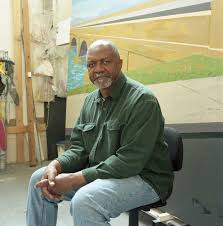
Kerry James Marshall is an American artist and professor, known for his paintings of Black figures. He previously taught painting at the School of Art and Design at the University of Illinois at Chicago. In 2017, Marshall was included on the annual Time 100 list of the most influential people in the world. (Wikipedia)
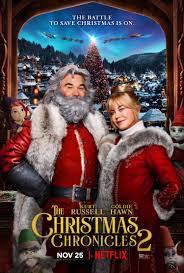
Lets get this party started with some fun. Christmas Chronicles 2. Starring Kurt Russell, Goldie Hawn, and Darby Camp. There is a threat to cancel Christmas. I enjoyed it and could even watch it again.
I remember as a kid hanging clothes on the line to dry. It was made of wire strung from one point to another. You would hang your things out to dry, even though the world would see it. Your important things. You insignificant things. Things that meant something to you.
For 2022, I am gonna keep wearing my masks and my bonnet. What are you taking into 2022?
From Victorian England to New York City, crimes are solved, criminals are nabbed, with Watson riding shot gun it is all elementary. The Sistas try to determine who is the greatest Holmes of all. Check out the various interpretations of the world-famous detective Sherlock Holmes
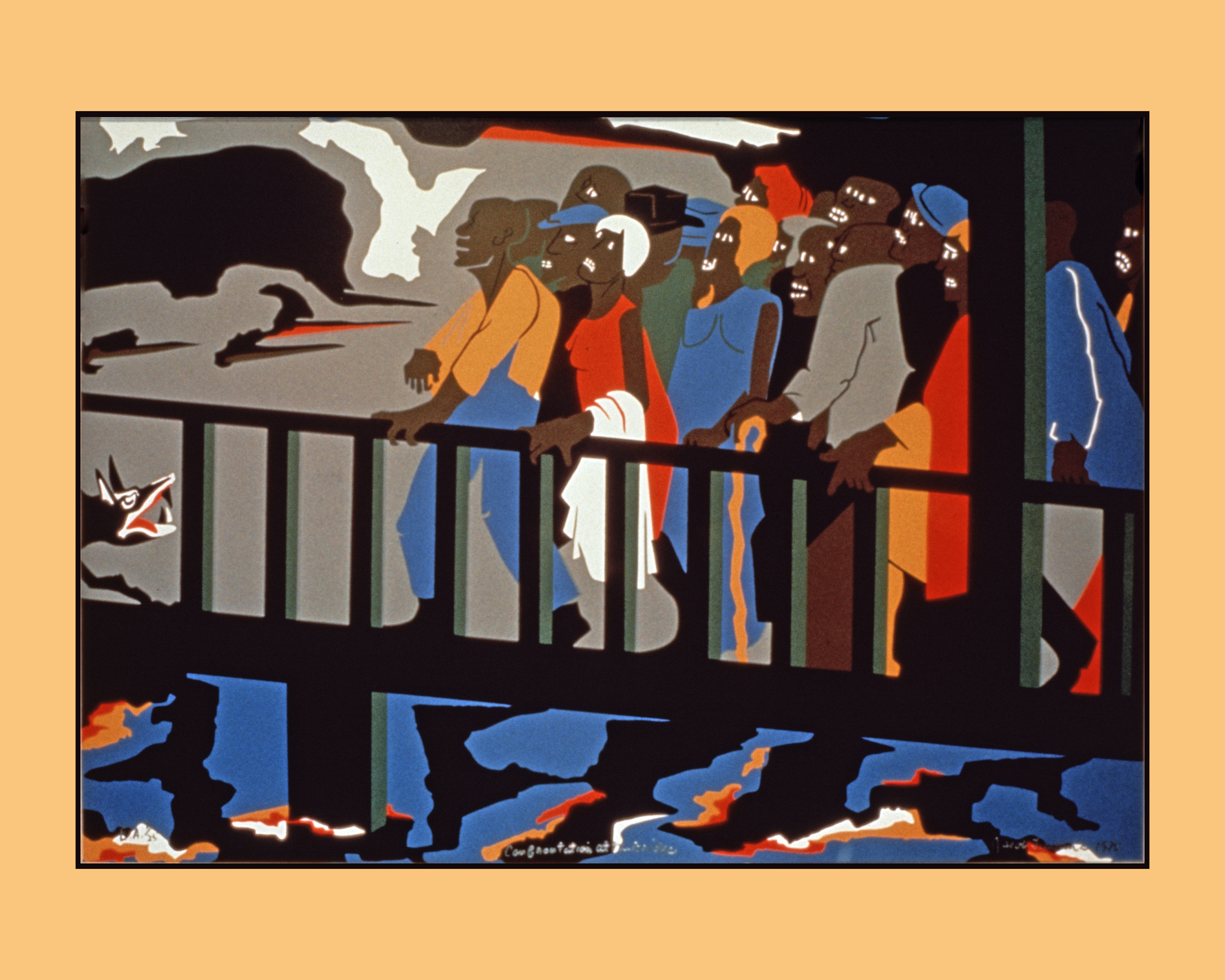
Artist Jacob Lawrence’s powerful Confrontation at the Bridgedepicts the 1965 Selma to Montgomery marches for voting rights that would enable African Americans to register and vote without harassment.
Lawrence uses strong colors and expressive composition to highlight the strength and courage of the peaceful African-American marchers. They dominate the image with their forward movement. The unarmed marchers were confronted on the Edmund Pettus Bridge by state troopers who violently attacked and beat them. Lawrence clearly shows a mood of violence by the snarling dog, the dark sky, and the marchers’ worried faces. His choice to not show any state troopers is important and we know they are right there, just outside of the image. He focuses the artwork on the brave act of the African-American marchers who are taking (dangerous) action for their future.
The Selma to Montgomery marches were three protest marches in 1965 for voting rights and racial justice. The first march took place on March 7. State troopers and locals attacked the unarmed marchers with billy clubs and tear gas after they passed over the Edmund Pettus Bridge. Photos of the beaten and bloodied African-American marchers were seen around the world. The event became known as “Bloody Sunday”. The second march took place March 9. Troopers and marchers confronted each other at the bridge, but Martin Luther King Jr. led the marchers back to Selma. The third march started on March 21 after President Johnson committed to protecting the marchers with 1,900 members of the National Guard and FBI agents. Alabama Governor Wallace refused to do this. Over 25,000 people joined the marchers to the Alabama State Capitol in Montgomery, arriving on March 25. The Voting Rights Act became law on August 6, 1965.
This print was created by Jacob Lawrence when he was commissioned to produce a print to celebrate the United States’ bicentennial in 1976.




 UPP Creative Media